Florida Seaweed Nuisance Becomes Food Ingredient
Scientists at Florida State University have found a way to turn pelagic sargassum, the smelly seaweed choking beaches across Florida, into a valuable food ingredient. The breakthrough could transform millions of tons of coastal waste into a sustainable resource.
Imagine turning the stinky seaweed that ruins beach vacations into an ingredient for your salad dressing. That's exactly what Florida researchers just figured out how to do.
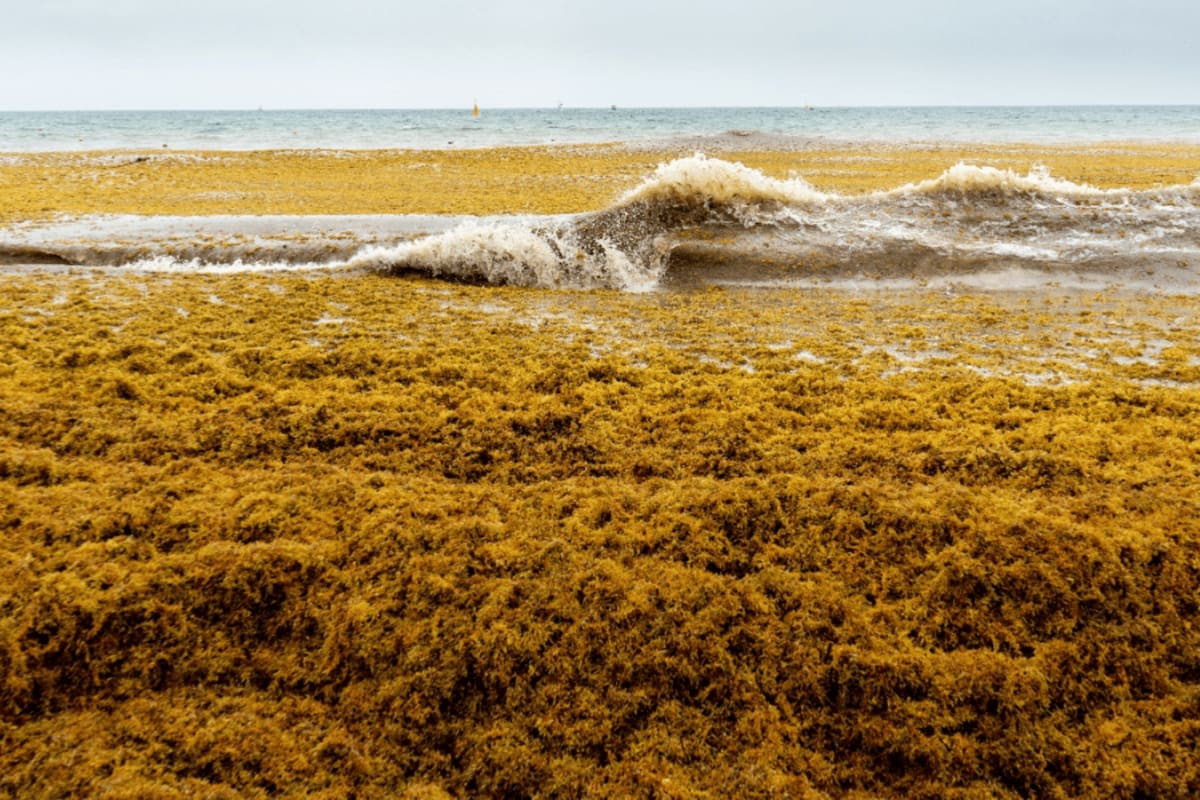
Each year, massive mats of pelagic sargassum drift across the Atlantic and wash ashore along Florida's coast. The seaweed smothers beaches, disrupts marine life, and smells like rotten eggs as it decays.
Miami-Dade County alone spends about $35 million annually just cleaning it up. This year's bloom is expected to be the largest ever recorded, potentially surpassing 37.5 million metric tons.
But scientists at Florida State University saw opportunity in the mess. Working with teams from Florida Atlantic University and Florida International University, they discovered how to extract sodium alginate from the seaweed.
Sodium alginate is a naturally occurring compound already used in foods as a thickener and stabilizer. You'll find it in salad dressings, desserts, and plant-based meat alternatives.
The research team developed a selective extraction process that isolates the alginate while removing unwanted materials like salt, heavy metals, and tough fibers. Tests showed the recovered alginate works just as well as the commercial versions food companies already use.
"Right now, most washed ashore sargassum is treated as waste," said Qinchun Rao, lead researcher and professor at FSU's Department of Health, Nutrition, and Food Sciences. "We wanted to explore whether this abundant biomass could be responsibly transformed into something useful."
The timing couldn't be better. As of February 2025, more than 13 million metric tons of sargassum were already drifting toward Florida and the Caribbean, forming earlier than usual due to warming ocean temperatures.
Why This Inspires
This research represents a fundamental shift in thinking. Instead of viewing environmental problems as burdens requiring expensive cleanup, scientists are finding ways to turn challenges into resources.
The approach addresses two problems at once: It provides a use for massive amounts of coastal waste while creating a sustainable source of food ingredients. If scaled up, it could reduce cleanup costs, create new industries, and support more circular approaches to managing natural resources.
The team emphasizes more work remains before large-scale adoption, including safety monitoring and real-world food testing. But the foundation is solid.
With climate change driving bigger sargassum blooms each year, solutions like this are becoming essential. The research was supported by the U.S. Department of Agriculture's National Institute of Food and Agriculture and published in the journal Food Hydrocolloids.
Florida's beaches may still get covered in seaweed this summer, but now there's hope that waste could become worth something.
Based on reporting by Google News - Researchers Find
This story was written by BrightWire based on verified news reports.
Spread the positivity!
Share this good news with someone who needs it