Forest Carbon Credits Work But Oversell Impact by 90%
A breakthrough study finds most forest protection projects do work, but developers issue 11 times more carbon credits than they actually earn. Better methods could fix the system and save tropical forests that hold back 1°C of global warming.
Scientists just confirmed what both sides of the carbon credit debate suspected: forest protection projects actually work, but the math has been wildly off.
A rigorous new study from the University of Cambridge examined 44 rainforest protection projects and found that 36 successfully reduced deforestation. The catch? They sold credits for almost 11 times more saved forest than they actually protected.
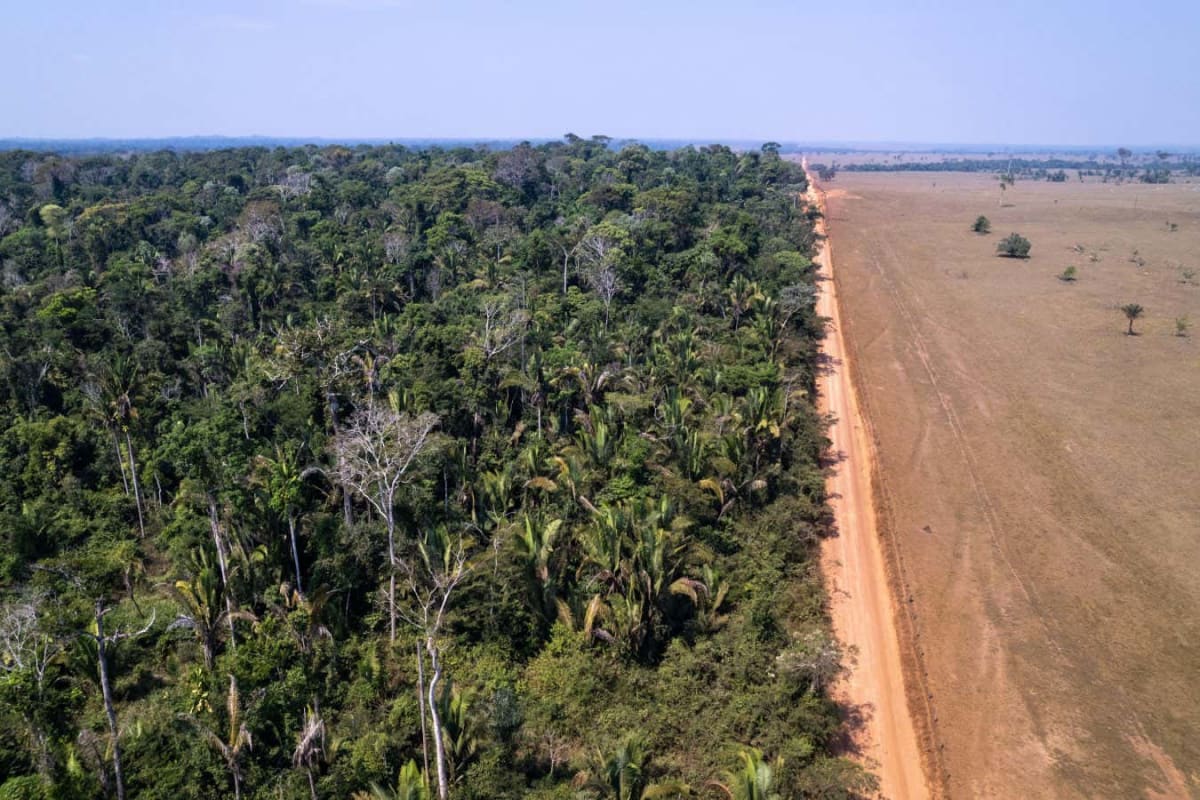
This matters because tropical forests absorb about half of humanity's fossil fuel emissions and hold back 1°C of global warming on their own. But these vital carbon sponges sit mostly in lower-income countries where trees fall fast to cattle ranching and palm oil plantations.
The good news hidden in the data is genuinely encouraging. Only one project made deforestation worse, and when researchers excluded the worst offenders, about one-quarter of credits from the remaining projects were legitimate. That means the system can work with better rules.
Lead researcher Tom Swinfield discovered the overcounting came from two fixable mistakes. Developers compared their protected forests to reference areas closer to roads and on flatter land, places naturally more vulnerable to logging. They also chose worst-case deforestation scenarios instead of realistic middle-ground predictions.
One Peruvian Amazon project designed to help 18 communities abandon slash-and-burn farming picked a reference area that was lower, less steep, and half as close to roads. The comparison was like measuring your diet success against someone eating fast food daily.
The fix is straightforward: use the accurate methodology Swinfield's team outlined. The trade-off? Fewer credits mean higher prices, but that reflects the true cost of protecting forests.
Right now, an avoided deforestation credit claiming to represent one tonne of prevented CO2 emissions sells for as little as a few dollars. High-quality projects charge tens of dollars, still far below what genuine forest protection costs.
The Bright Side
This research gives the carbon credit market a roadmap to rebuild trust. After investigations in 2023 found 90 percent of major rainforest credits were largely worthless, the market collapsed by 60 percent. Companies walked away, and forests lost a crucial funding source.
But forests desperately need financial help. More than 40,000 square kilometers of tropical trees were cut or burned in 2025 despite some progress. Closing the gap to meet the 2030 goal of halting deforestation requires an additional $216 billion per year.
Brazil launched the Tropical Forests Forever Facility before the last climate summit, aiming to pay countries for each hectare left standing. So far it has raised $6.6 billion toward its $125 billion goal, showing government funding alone won't solve this.
Julia Jones at Bangor University says the era of cheap carbon offsets is over, and that's actually good news. "You can't deliver equitable and effective forest conservation for a low price," she notes.
Companies serious about reaching net zero now have a clear path: pay fair prices for properly verified credits that truly protect forests and support the communities living in them.
More Images
Based on reporting by New Scientist
This story was written by BrightWire based on verified news reports.
Spread the positivity!
Share this good news with someone who needs it