Volcano Accidentally Ate 900 Tons of Methane Daily
Scientists discovered that the 2022 Tonga volcano eruption accidentally destroyed greenhouse gases in its plume, offering hope for future climate solutions. This first-ever observation could help researchers develop new ways to clean up atmospheric pollution.
A massive underwater volcano just taught scientists something nobody expected: how to clean pollution from the sky.
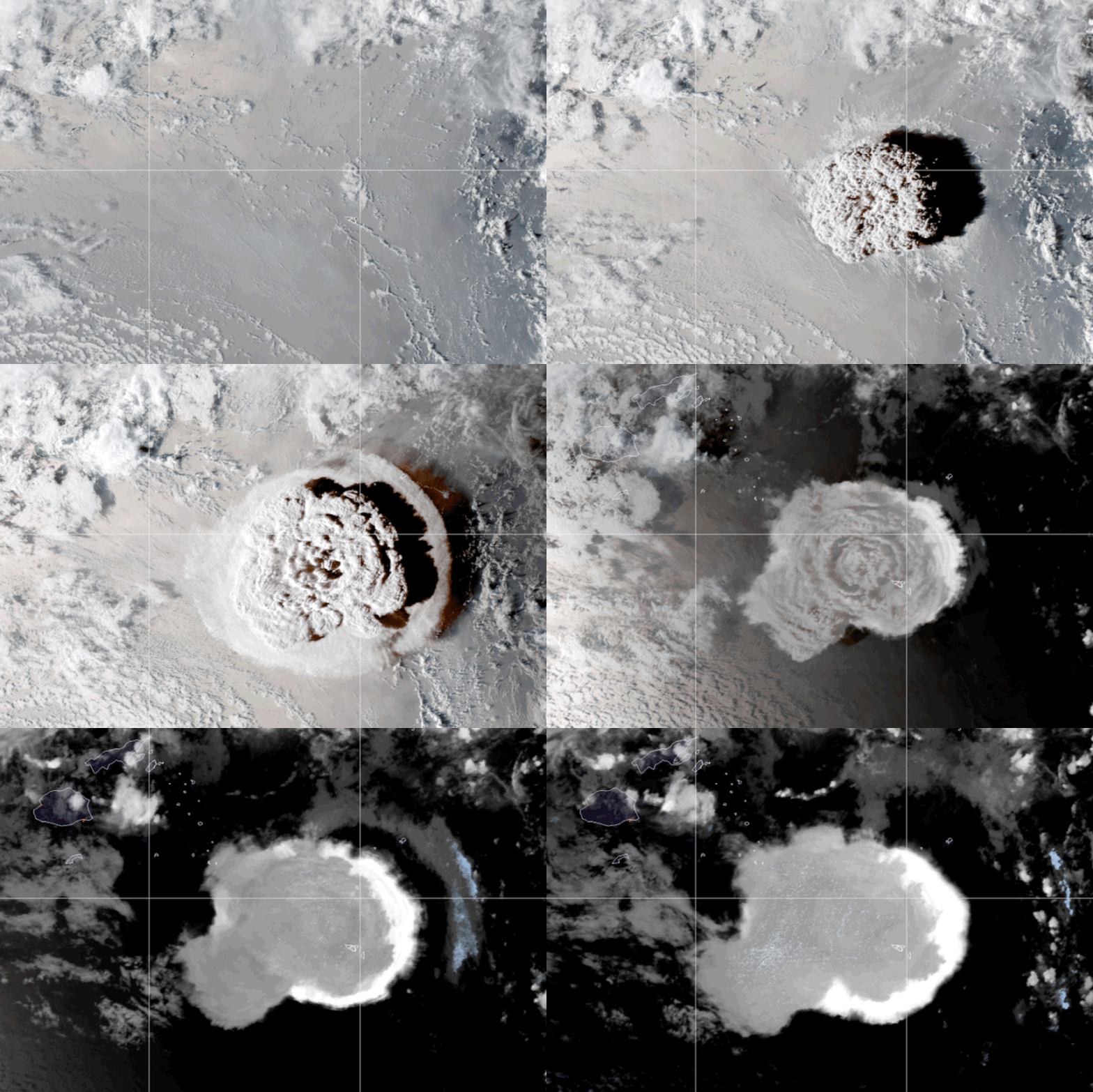
When Hunga Tonga-Hunga Ha'apai erupted in 2022, it created the tallest volcanic plume ever recorded, punching through the atmosphere all the way to the mesosphere. The explosion was catastrophic, but satellites picked up something surprising happening inside that massive ash cloud.
The volcano was eating its own pollution.
Scientists detected formaldehyde in the plume, which meant something remarkable was happening. Methane, a powerful greenhouse gas released by the eruption, was being rapidly destroyed by reactive chlorine formed when sunlight hit the mix of seawater, salt, and volcanic particles.
"When we analyzed the satellite images, we were surprised to see a cloud with a record-high concentration of formaldehyde," says atmospheric scientist Maarten van Herpen. The team tracked the cloud for 10 days as it drifted toward South America, continuously breaking down methane the entire journey.
The volcano destroyed about 900 metric tons of its own methane pollution every single day. That's not enough to clean up all the methane it released (around 330 kilotons total), but it proved something crucial: we can observe and measure methane removal happening in real time.
The discovery builds on earlier research from 2023, when van Herpen's team first spotted this chlorine-triggered breakdown process using Sahara dust and ocean spray. The Tonga eruption provided nature's largest experiment yet.
Why This Inspires
This finding offers more than just fascinating volcano science. It provides proof of concept that chlorine-based methane cleanup could work on a larger scale.
Methane is a major climate concern because it traps heat far more effectively than carbon dioxide. Human activities like farming and fossil fuel use pump tons of it into the atmosphere daily. Finding ways to break it down faster could help slow global warming.
The volcano essentially ran a massive atmospheric chemistry experiment that would be impossible to recreate safely on Earth. By studying how nature accidentally cleaned up its own mess, scientists now have a roadmap for potential human solutions.
"It's an obvious idea for industry to try to replicate this natural phenomenon, but only if it can be proven to be safe and effective," says chemist Matthew Johnson of the University of Copenhagen. "Our satellite method could offer a way to help figure out how humans might slow global warming."
The research doesn't promise an easy fix, but it shows that measuring and tracking atmospheric cleanup is possible using existing satellite technology. Every solution to climate change starts with understanding what works, and this volcano just handed scientists an unexpected lesson in pollution control.
Sometimes the most destructive forces on Earth can point us toward hope.
More Images



Based on reporting by Google News - Science
This story was written by BrightWire based on verified news reports.
Spread the positivity!
Share this good news with someone who needs it