Founder Cuts Steel Emissions 50% With New Furnace Tech
A 34-year-old engineer invented a furnace that makes steel cleaner and cheaper, slashing emissions by half while cutting costs by 25%. Her company just hit a major milestone that could help transform one of the world's dirtiest industries.
Steel production pumps out 7% of all climate emissions worldwide, but an MIT-trained engineer just found a way to make it cleaner without making it more expensive.
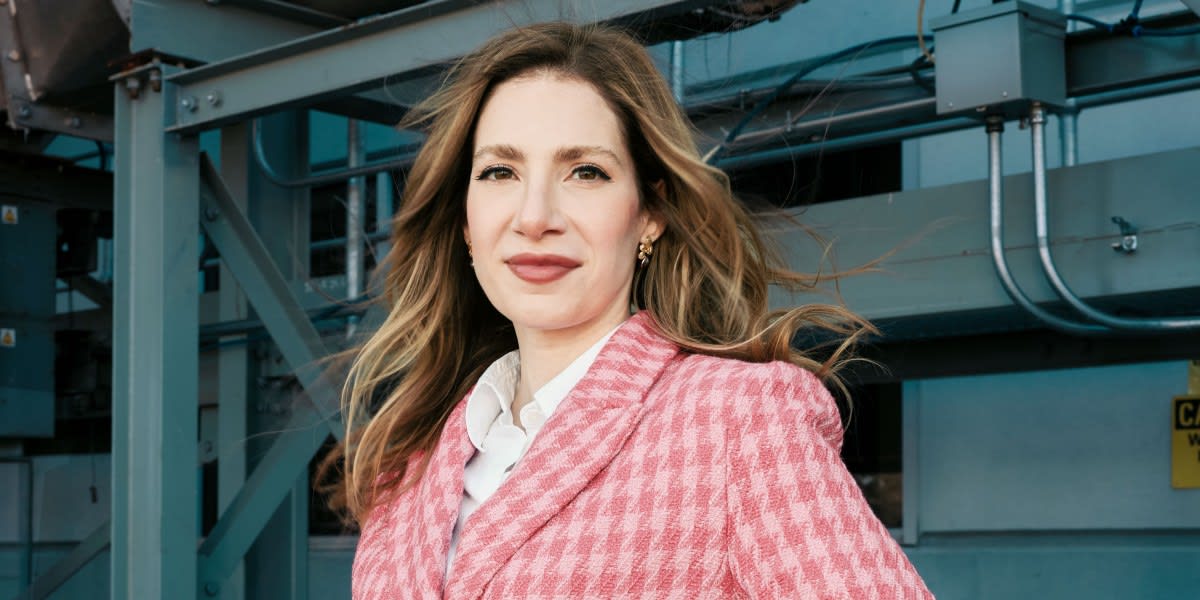
Laureen Meroueh founded Hertha Metals with a bold idea: completely rethink how we turn iron ore into steel. Traditional steelmaking hasn't changed much since the 1850s, relying on massive coal-fired blast furnaces that operate at extreme temperatures. It's dirty, expensive, and incredibly hard to improve because the equipment lasts for decades and profit margins are razor-thin.
Meroueh's invention simplifies everything. Her new furnace turns iron ore into refined liquid steel in a single step instead of multiple stages, and it swaps coal for natural gas. The result? At least 50% fewer emissions and 25% lower costs compared to traditional methods.
At just 12 years old, Meroueh was already taking college courses through Florida Atlantic University instead of traditional high school. She fell in love with engineering while spending her free time surfing and climbing trees, which sparked a deep desire to protect the natural world. "I don't know how you can't be drawn toward trying to help protect that," she says.
Now 34, the first-generation Lebanese-American has turned that passion into real progress. After earning her PhD in mechanical engineering at MIT and leading a green hydrogen startup, she founded Hertha in 2022. Her pilot plant in Conroe, Texas, now produces one metric ton of steel per day.
The Ripple Effect
That one-ton milestone might sound small, but investors say it's massive for the steel industry. Hertha achieved it with just $20 million in funding, while competitors have produced far less steel with $50 million to $100 million, according to Rajesh Swaminathan of Khosla Ventures.
The company isn't waiting for perfect zero-carbon technology before making an impact. While other green steel startups focus on hydrogen-based methods that remain expensive, Hertha chose to cut emissions dramatically right now with technology that actually saves money. The furnace could eventually switch to fully clean hydrogen fuel without major changes if costs come down.
A new facility next door is already in the works. It will produce 10,000 metric tons of high-purity steel per year and reach full capacity by the end of 2027. By 2030, Meroueh believes Hertha can scale up to 500,000 metric tons annually with a third site.
That's still just a fraction of the 80 million metric tons the US produces each year, but experts say even small steps matter in an industry this entrenched. Iryna Zenyuk, director of the National Fuel Cell Research Center at UC Irvine, points out that traditional steel plants are "massive, inefficient and require a lot of energy input," so any improvement creates value.
Meroueh knows the world won't stop needing steel for buildings, cars, and infrastructure. Instead of fighting that reality, she's asking a better question: "How can we be smarter about how we make things so that it's also not going to harm us in the long term?"
Based on reporting by MIT Technology Review
This story was written by BrightWire based on verified news reports.
Spread the positivity!
Share this good news with someone who needs it