Framework CEO Shows $599 Laptop You Can Actually Repair
Framework's CEO tore down his company's laptop alongside Apple's new MacBook Neo to reveal a striking difference: one is built to last through repairs and upgrades, while the other locks users into fixed specs. The side-by-side comparison is sparking conversations about who really owns the tech we buy.
When Framework CEO Nirav Patel bought Apple's new $599 MacBook Neo, he wasn't shopping for himself. He wanted to show students and budget-conscious buyers what they're really getting for their money.
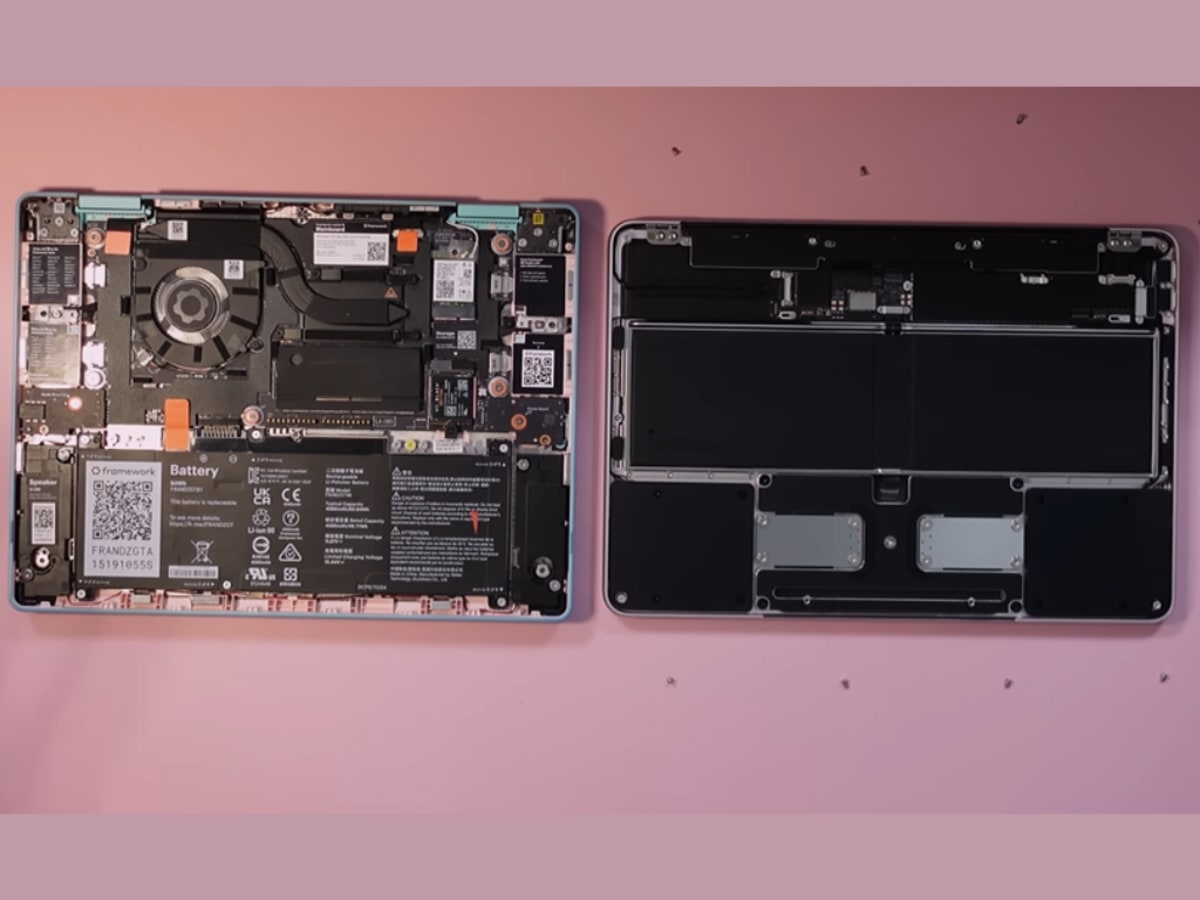
In a 33-minute YouTube teardown video, Patel placed the MacBook Neo next to Framework's own $599 laptop. The differences tell two completely opposite stories about how long a computer should last and who gets to decide.
Apple's MacBook Neo earned praise as the company's most repairable laptop in 14 years, scoring 6 out of 10 from repair experts at iFixit. Users can access the touchpad, battery, speakers, and ports without much trouble. But there's a catch: the 8GB of RAM and storage (256GB or 512GB) are permanently soldered to the motherboard, meaning you're stuck with what you bought on day one.
The Framework Laptop 12 takes the opposite approach. Every component inside is clearly labeled and designed to pop out easily using simple connectors. Users can swap the motherboard, memory, storage, cooling system, screen, and keyboard whenever they want or need to upgrade.
Patel pointed to one example that shows the difference clearly. If you crack a MacBook Neo screen, you'll need to replace the entire top chassis. On a Framework laptop, the display slides out and can be swapped in minutes.
The Ripple Effect
The impact goes far beyond individual laptop owners. Schools buying hundreds of devices face a tough choice between replacement cycles and repair costs.
Patel explained that Framework's philosophy centers on eliminating electronic waste. When a laptop can be upgraded part by part, it doesn't need to end up in a landfill when one component becomes outdated. Students can add more memory for demanding coursework, swap in a bigger hard drive, or replace a broken screen without buying an entirely new machine.
Apple's approach serves a different purpose, Patel noted. The MacBook Neo introduces young users to the Apple ecosystem at an affordable price point. When those users eventually need more storage, speed, or ports, they're already comfortable with macOS and more likely to upgrade to pricier MacBook Air or Pro models.
Framework wants to break that cycle entirely. Their goal isn't to create a stepping stone to fancier products but to build one laptop that grows with its owner for as long as they need it.
The debate touches something deeper than specs and price tags. It asks a fundamental question about our relationship with technology: when you buy a computer, do you really own it, or are you just renting it until it becomes too slow or broken to use?
Both laptops cost the same $599, but they represent vastly different answers to that question.
Based on reporting by Google News - Technology
This story was written by BrightWire based on verified news reports.
Spread the positivity!
Share this good news with someone who needs it