Gene Edit Cuts Huntington's Toxic Proteins 60% in Mice
University of Illinois researchers created a precise gene-editing tool that reduced toxic brain proteins in mice with Huntington's disease by 60 percent, offering fresh hope for treating the fatal disorder. The breakthrough approach keeps healthy proteins working while stopping toxic fragments from forming. #
Scientists at the University of Illinois just took a major step toward treating Huntington's disease, a fatal brain disorder that slowly destroys nerve cells and steals people's ability to move and think clearly.
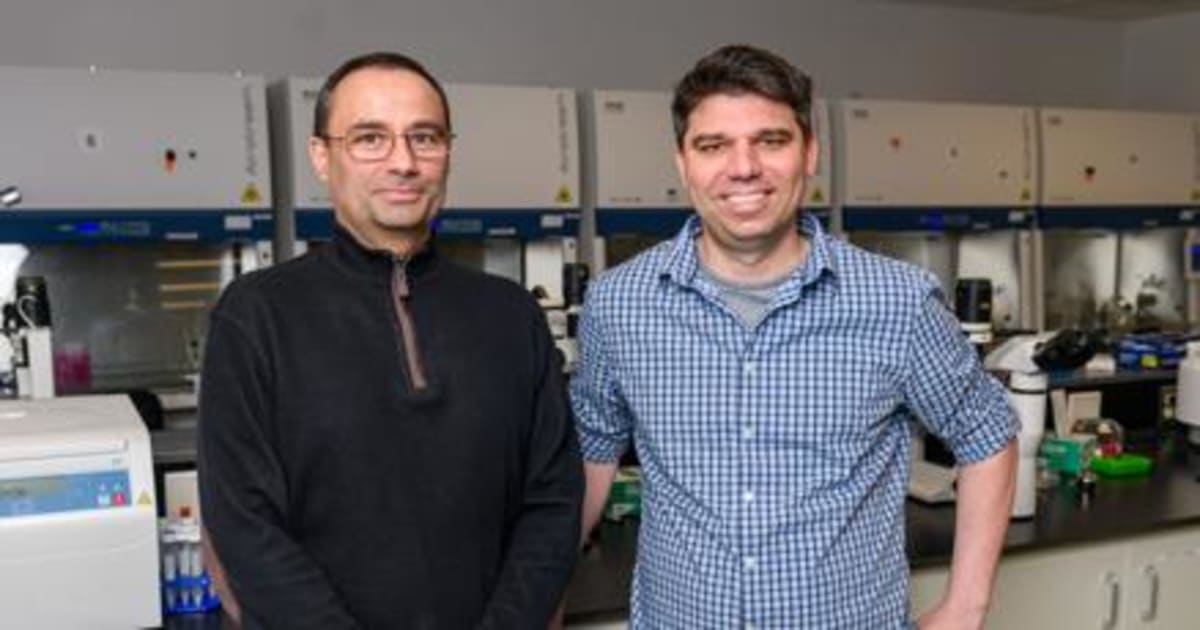
Bioengineering professors Thomas Gaj and Pablo Perez-Pinera led a team that created a molecular tool called an adenine base editor. Think of it as a precise red pen that rewrites a tiny section of genetic code.
The tool targets huntingtin, a protein essential for brain function. In Huntington's patients, this protein breaks apart into toxic fragments that kill brain cells. The editor prevents those deadly splits while keeping the helpful parts of the protein intact.
"The treatment reduces the toxic protein fragments more strongly than it reduces full-length huntingtin," Gaj explained. The approach works on both mutated and healthy genes, creating a safer version that can't generate toxic byproducts.
The results in mice were striking. Toxic protein fragments dropped by 60 percent in treated brain areas. Clumped protein deposits, which damage cells, fell by 63 percent.
Those cellular improvements translated to real physical gains. At one year old, treated mice showed 52 percent stronger grip strength and performed 48 percent better on balance tests. Abnormal limb movements, a hallmark of the disease, decreased by 38 percent.
The team delivered the editor using a harmless virus that acts like a microscopic delivery truck, carrying the genetic tool directly into the striatum. That's the brain region controlling movement, which Huntington's hits hardest.
Because the editor was too large for one viral vehicle, researchers split it across two and injected them into the mouse brains. When given to one-month-old mice, the benefits lasted through their first birthday, spanning 11 months after a single treatment.
"Since changes in DNA are expected to be permanent, we do not anticipate that further fluctuations would occur at later time points," Perez-Pinera said.
Why This Inspires
This approach could help nearly everyone with Huntington's disease. Unlike treatments targeting specific mutations, this editor works on a universal genetic sequence shared by all patients.
Safety checks showed no significant unintended edits and no signs of brain inflammation or cellular stress. The treatment appears both effective and gentle.
Human trials remain years away. Researchers must first refine delivery methods for the much larger human brain, test in bigger animals, complete safety studies, and secure regulatory approval. The team is also working on non-invasive delivery methods that wouldn't require brain surgery.
But for families watching loved ones decline from Huntington's, this research represents something precious: a new path forward that keeps hope alive while scientists work toward a cure.
#
More Images


Based on reporting by Google News - Researchers Find
This story was written by BrightWire based on verified news reports.
Spread the positivity!
Share this good news with someone who needs it