Your Brain's Language Skills Don't Fade With Age, MIT Finds
MIT researchers discovered that older adults' language processing remains just as sharp as young people's, even while other mental abilities decline. The finding offers hope that specialized brain networks may be more resilient to aging than scientists previously understood.
While your ability to multitask might slow down with age, your way with words stays sharp as ever.
MIT and Boston University researchers just uncovered why older adults retain their vocabulary and language skills even as other mental abilities decline. Using brain imaging, they found that the language processing network in people aged 41 to 80 works almost identically to that of people aged 17 to 39.
"In the language network, we couldn't find any differences between older and younger groups," says Anne Billot, who led the study while completing her PhD at Boston University. The research appears in Nature Communications.
The team compared two brain systems to understand aging's effects. The multiple demand network handles executive functions like decision-making, working memory, and problem-solving. The language network processes words, sentences, and stories.
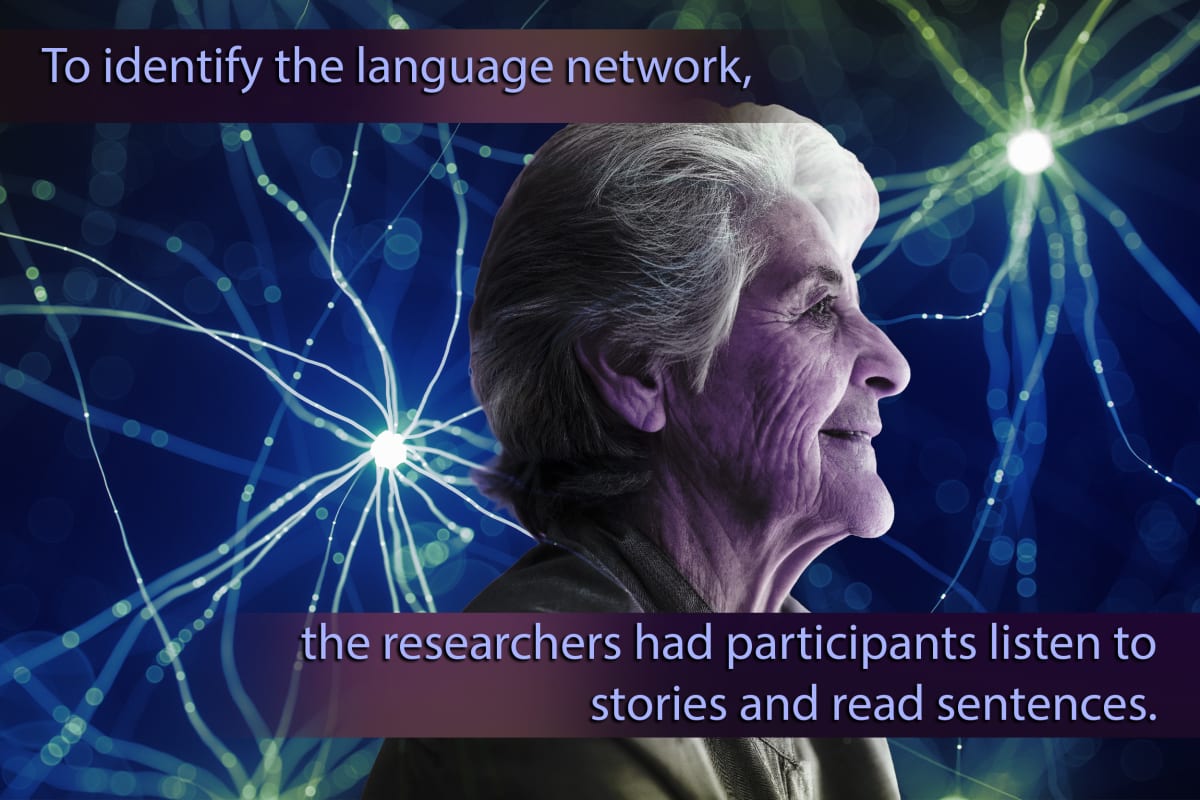
They asked participants to complete spatial memory tasks and listen to stories with tricky grammar or unfamiliar words. The results painted two very different pictures.
In older adults, the multiple demand network showed clear signs of aging. Activity became less synchronized, the network shrank, and overall activation weakened. These changes matched the well-known decline in multitasking and attention that comes with age.
But the language network told an entirely different story. Older participants showed the same strong responses to linguistic challenges as younger ones. Their networks remained just as synchronized and active when processing complex sentences or new vocabulary.
Even better, the language network didn't blur together with other brain systems, contradicting some scientists' theories about aging brains becoming less specialized. The networks stayed distinct and focused on their jobs.
Why This Inspires
This research suggests that brain regions specialized for specific tasks may be tougher than general-purpose networks. Your language abilities aren't just holding steady by accident. They're protected by a resilient system that resists the aging process.
The findings also challenge the assumption that all mental decline is inevitable. While some cognitive functions naturally slow down, others remain vibrant. Many older adults even expand their vocabulary throughout their lives, and now we know their brains support this growth.
For the millions worried about keeping their minds sharp, this offers genuine reassurance. The part of your brain that lets you tell stories, share ideas, and connect through conversation stays strong for the long haul.
Based on reporting by Google News - Researchers Find
This story was written by BrightWire based on verified news reports.
Spread the positivity!
Share this good news with someone who needs it