Georgia EV Plants Adapt and Keep Growing Despite Setbacks
Despite federal policy shifts and economic headwinds, Georgia's electric vehicle manufacturers are pivoting to hybrids and battery storage while continuing billions in clean energy investment. The state's EV industry proves resilient as companies adjust their production lines to meet changing market demands.
Georgia's electric vehicle industry is proving it can weather a storm by doing what manufacturers do best: adapting.
Over the past 18 months, Georgia's booming EV sector has faced serious challenges. Federal tax credits for car buyers disappeared. Immigration raids at a coastal battery plant arrested over 400 workers. Tariffs hit battery components hard, and some companies scaled back investments.
But the $74 billion in manufacturing projects still moving forward tells a different story than the $4 billion in canceled plans. Georgia's EV makers aren't retreating. They're evolving.
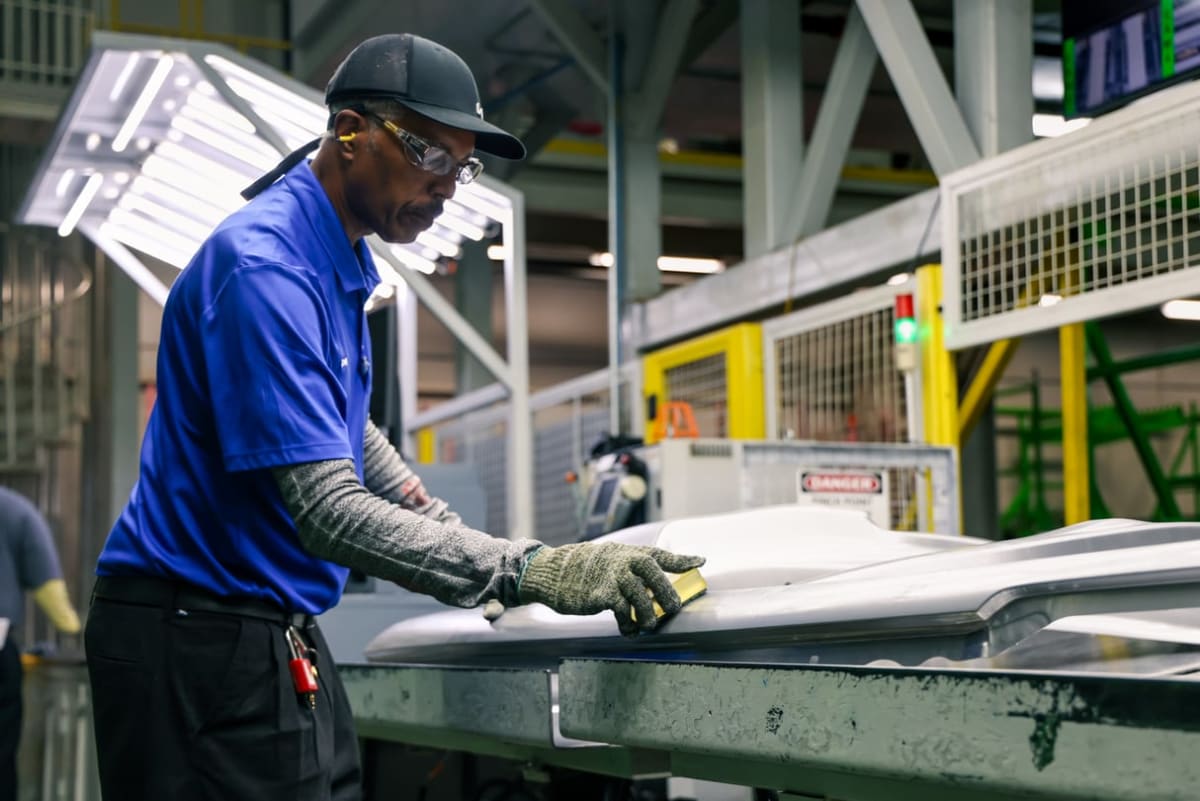
At Kia's West Point plant, the assembly line now looks like a short-order kitchen, pumping out gas, hybrid, and electric vehicles in whatever mix customers want. Factory CEO Stuart Countess says they've ramped up hybrid production as consumer preferences shift, showing the kind of flexibility that keeps workers employed and production humming.
Hyundai made a similar move at its massive Savannah plant, originally designed exclusively for EVs. Now hybrids roll off that line too, protecting the investment and jobs that make it one of Georgia's biggest economic development wins ever.
Battery makers across the state found their own smart pivot, adding electricity storage batteries to their vehicle battery production. When one market softens, they've got another to lean on.
The charging infrastructure gap that's kept many buyers from going electric is finally closing. Kia and Hyundai joined a consortium called IONNA, installing charging stations around Georgia, including right at the West Point factory. Regional utilities boosted EV charging investment by 14% this year, building the network drivers need.
The Ripple Effect
Georgia's manufacturing muscle is creating something bigger than just cars and batteries. As people take jobs at these plants, they're becoming familiar with the products they build, which industry analyst Stephanie Valdez-Streaty says naturally leads to more local adoption.
Blue Bird has been quietly selling electric buses since 2018 and expanded its electric bus factory in 2023. Rivian broke ground on its Atlanta-area plant, another massive economic project moving ahead despite uncertainty.
The Southern Alliance for Clean Energy notes that Georgia leads the entire region in EV and battery manufacturing. That position didn't vanish when policies changed. It just required companies to be smarter about production mix and market timing.
Private investment keeps flowing because the fundamentals remain strong: Georgia's worker training programs, tax incentives, and manufacturing expertise make it an ideal home for clean energy production. The temporary policy turbulence hasn't erased those advantages.
As Valdez-Streaty puts it, the industry is adjusting through "a messy period," but the adjustment is happening, and Georgia's EV future is still being built one flexible production line at a time.
More Images



Based on reporting by Google News - Electric Vehicle
This story was written by BrightWire based on verified news reports.
Spread the positivity!
Share this good news with someone who needs it