German Device Converts 31% of Sunlight Into Clean Hydrogen
Scientists in Germany achieved a record 31.3% efficiency turning direct sunlight into hydrogen fuel during real-world outdoor tests. The breakthrough could make clean energy storage cheaper and help decarbonize industries like steelmaking and shipping.
German researchers just turned nearly one-third of sunlight into storable hydrogen fuel, setting a new efficiency record that could help solve one of clean energy's biggest challenges.
Scientists at the Fraunhofer Institute for Solar Energy Systems in Freiburg built a compact device that converted 31.3 percent of incoming sunlight into hydrogen during outdoor testing. That's the highest solar-to-hydrogen efficiency ever measured under real conditions, not in a lab.
The secret lies in eliminating wasted steps. Instead of sending solar power through multiple conversions before reaching the water-splitting equipment, the team connected advanced solar cells directly to the electrolyzer that produces hydrogen.
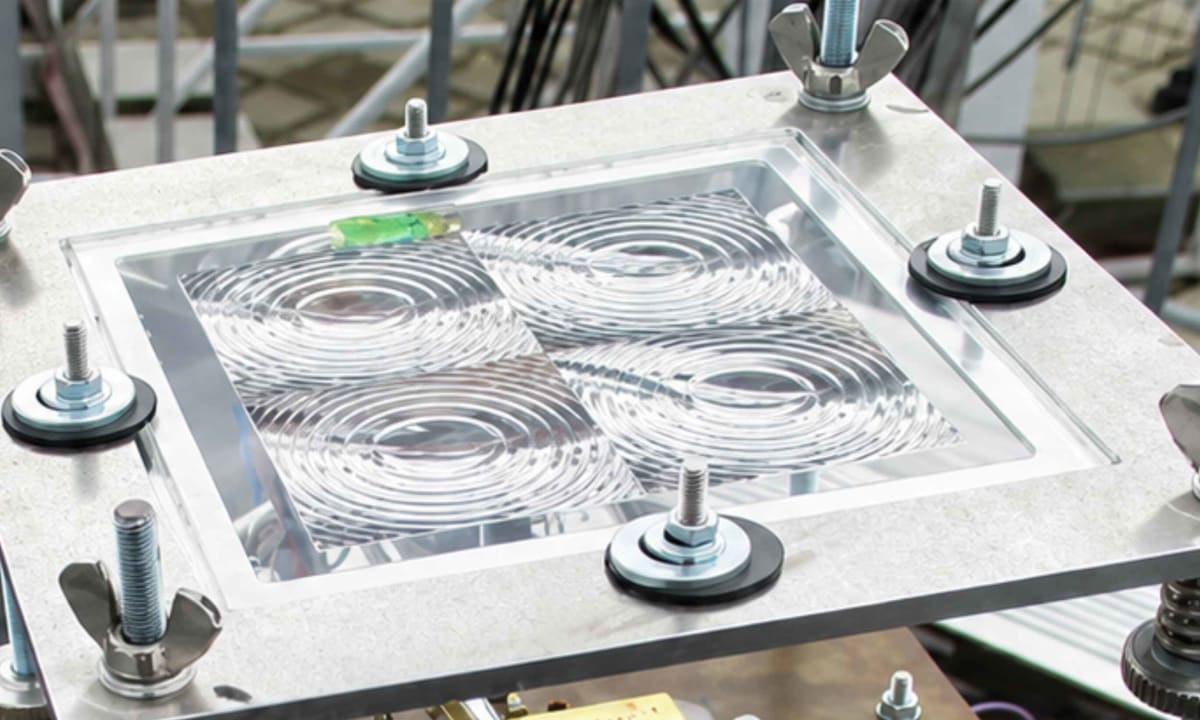
The device uses special lenses to focus sunlight onto four-junction solar cells, the same high-performance technology used in spacecraft. Those cells feed electricity directly into a water-splitting system that separates H2O into hydrogen and oxygen.
Project leader Juan F. Martínez and his team tested the prototype for over 107 hours across 13 summer days. During peak performance, efficiency stayed above 31 percent even as sunlight conditions changed throughout the day.
The numbers tell an impressive story. The solar section reached 34.7 percent efficiency while the electrolyzer hit 91.1 percent, combining for that record-breaking result.
The Ripple Effect
Green hydrogen could transform industries where batteries and direct electricity fall short. Steel manufacturing, chemical production, and long-distance shipping all need energy-dense fuels that don't exist yet at scale.
Think of this technology as bottling sunshine for later use. Solar panels generate power only when the sun shines, but hydrogen can store that energy for weeks or months.
The current prototype is tiny, covering just 10 square inches. Scaling it to industrial size remains the big challenge, along with reducing costs and proving the equipment can last for years in real-world conditions.
The team is now seeking investors for a planned spin-off called Clearsun Energy to develop larger pilot systems. Low-emissions hydrogen currently represents only about 1 percent of global hydrogen production, but better efficiency could help it compete with fossil fuel-based hydrogen on price.
The technology works best in strong, direct sunlight, unlike regular solar panels that can use scattered light on cloudy days. That means location matters, favoring sunny regions for deployment.
Engineers still need to demonstrate heat recycling, improve durability, and slash manufacturing costs before this becomes commercially viable. But crossing the 30 percent efficiency threshold in outdoor conditions proves the concept works where it counts: in the real world, not just on paper.
This breakthrough won't change energy bills tomorrow, but it marks real progress toward making clean hydrogen affordable and practical for the industries that need it most.
Based on reporting by Google News - Solar Power Record
This story was written by BrightWire based on verified news reports.
Spread the positivity!
Share this good news with someone who needs it