German Scientists Hit 31% Solar-to-Hydrogen Record Outdoors
German researchers just cracked the solar hydrogen puzzle by wiring satellite-grade solar cells directly to water splitters, hitting 31.3% efficiency in real weather. The breakthrough could finally make green hydrogen cheap enough to compete with fossil fuels.
A team in Germany just turned more sunlight into clean hydrogen fuel than anyone has ever done in real outdoor conditions, and the secret was almost embarrassingly simple: they skipped the middleman.
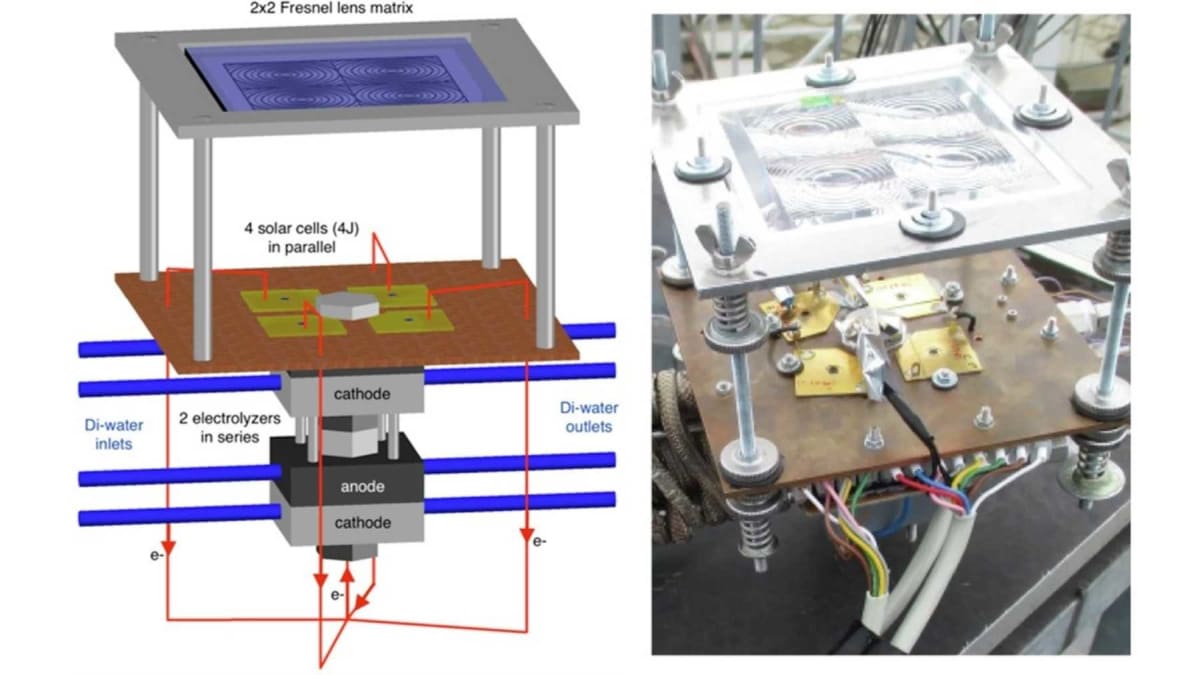
Researchers at Fraunhofer ISE in Freiburg converted 31.3% of raw solar energy into hydrogen fuel using a device the size of a dessert plate. That shatters the previous outdoor record of 19.8% and even beats most indoor lab results.
The breakthrough wasn't fancy new chemistry. The team just wired two existing technologies straight into each other and let physics do the rest.
They pointed satellite-grade solar cells at concentrated sunlight using a lens array, then connected those cells directly to water-splitting electrolyzer units. No inverters, no power converters, no energy lost in translation between components.
Dr. Tom Smolinka, who leads the institute's membrane electrolysis department, says the trick was matching the electrical characteristics of both sides perfectly. When sunlight hits the cells, electricity flows straight through to split water molecules into hydrogen and oxygen with nothing skimming efficiency off the top.
The demonstrator ran across 13 summer days in Freiburg, proving it works in actual weather, not just on one perfect sunny afternoon. The results appeared Monday in Communications Engineering.
Why This Inspires
Green hydrogen has been the industry's favorite promise for years. Split water with clean electricity and you get fuel for steel plants, shipping, fertilizer production, and everything batteries can't handle.
But the economics kept killing it. Traditional systems chain solar farms to inverters, substations, and separate electrolyzers. Each handoff bleeds efficiency, and the final fuel costs more than just burning fossil hydrogen.
Every percentage point of efficiency gained means less land, fewer components, and lower costs per kilogram of fuel. In an industry where a Nature Energy study found only 7% of promised 2023 projects actually got built on schedule, cost is everything.
The technology works best where direct sunlight is abundant: Spain's industrial south, North Africa, the Persian Gulf, the American Southwest. That's where concentrator systems shine compared to standard flat solar panels.
The team is now seeking investors for their planned spinoff company, Clearsun Energy. Dr. Frank Dimroth, who heads the III-V photovoltaics department, told reporters the proof of concept works but needs pilot funding to scale up from a dessert plate to something that could power real industry.
The race is heating up. Competitors are already pumping naturally occurring hydrogen from underground deposits, and massive hydrogen-burning engines are feeding Spain's power grid right now.
This German team just proved that artificial photosynthesis can work outdoors at record efficiency when you stop overcomplicating the plumbing.
More Images


Based on reporting by Google News - World Record
This story was written by BrightWire based on verified news reports.
Spread the positivity!
Share this good news with someone who needs it


