Germany Debuts Vertical Floating Solar Panels
A German company just flipped solar energy on its head with the world's first vertical floating solar plant that generates power exactly when people need it most. The innovative design could reshape how the world thinks about renewable energy.
Solar panels have always faced the same problem: they produce the most energy at noon when nobody needs it. A groundbreaking plant in Bavaria just solved that puzzle in the most unexpected way.
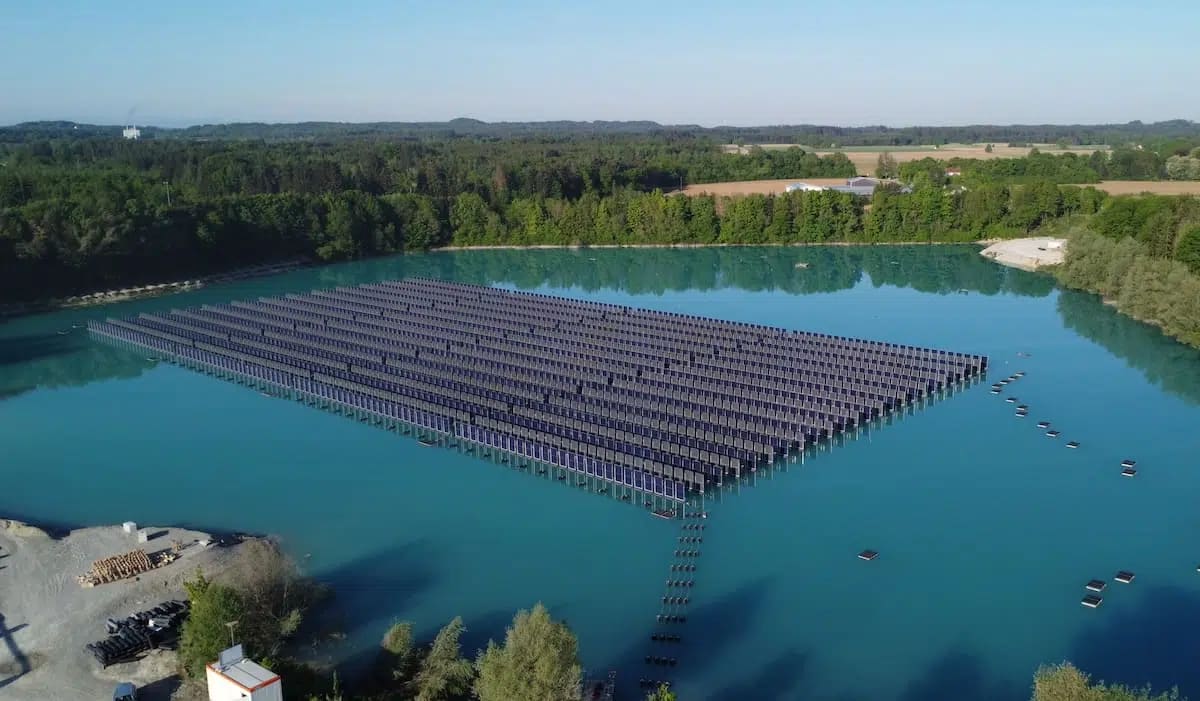
German company SINN Power inaugurated the world's first vertically installed floating solar farm at Starnberg gravel pit. The 1.87-megawatt facility uses 2,500 panels arranged east to west, creating two daily energy peaks that match morning and evening demand perfectly.
The innovation defies everything we thought we knew about solar design. Traditional panels tilt south to catch midday sun, forcing utilities to store excess energy in expensive batteries or let it go to waste.
SINN Power's vertical panels face both directions at once. The east side captures sunrise while the west side soaks up afternoon light, delivering power precisely when homes fire up coffee makers and factories run evening shifts.
The water beneath adds another stroke of genius. Light bouncing off the lake surface hits the underside of bifacial panels, boosting production by up to 30 percent through what scientists call the albedo effect.
The floating platform stays cooler too. Water and air circulation keep panels from overheating, extending their lifespan beyond land-based installations.
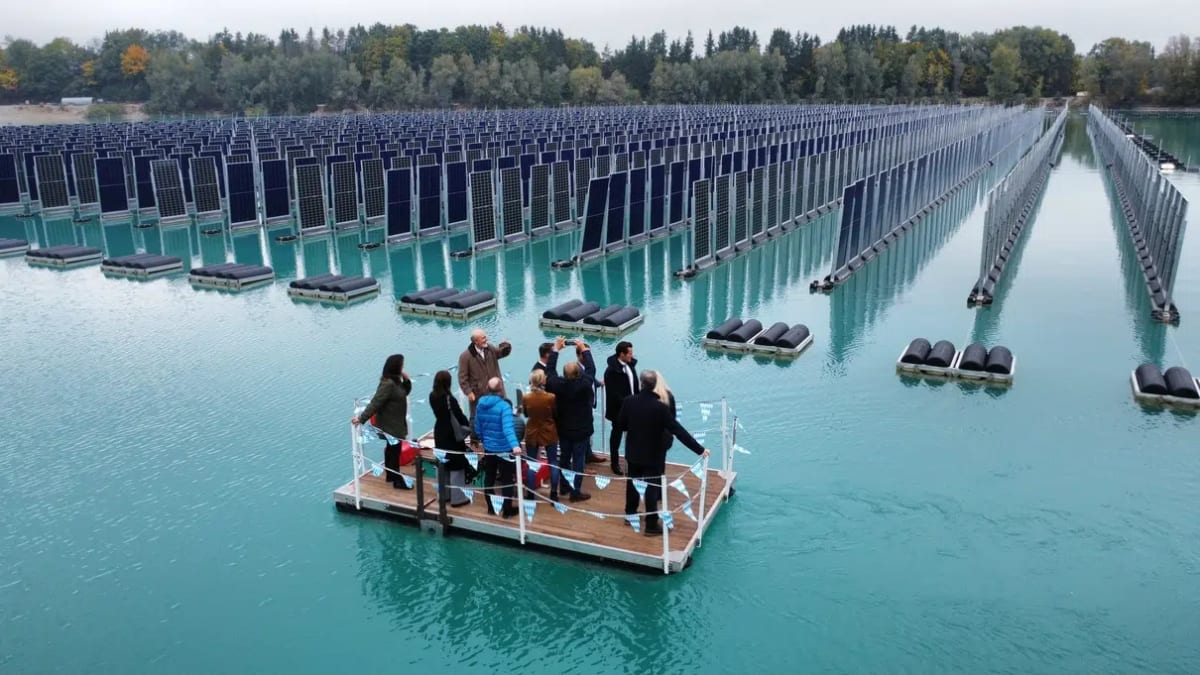
Engineers designed each floating unit with a 1.6-meter keel and high-strength cables that flex with wind and waves, similar to how modern skyscrapers sway safely during storms. The modules sit four meters apart, allowing sunlight and oxygen to reach the water below.
The Ripple Effect
This breakthrough arrives as countries worldwide race to find space for renewable energy without sacrificing farmland or forests. Floating solar taps into unused water surfaces at reservoirs, quarries, and lakes.
Japan, China, and the Netherlands already experiment with floating panels, but Germany's vertical approach represents a fundamental shift. Matching generation to actual consumption could reduce strain on electrical grids and slash the need for costly battery storage.
The plant currently powers a nearby industrial facility while serving as a living laboratory. Scientists will monitor the lake ecosystem for years, studying effects on nutrients and aquatic life to ensure the technology protects nature while harnessing it.
The higher upfront costs compared to ground installations get balanced by superior efficiency and longer panel life. More importantly, the design offers developing nations a path to clean energy without competing for scarce land.
This floating forest of vertical panels proves innovation sometimes means turning convention sideways and letting it float.
More Images
Based on reporting by Google News - Germany Innovation
This story was written by BrightWire based on verified news reports.
Spread the positivity!
Share this good news with someone who needs it