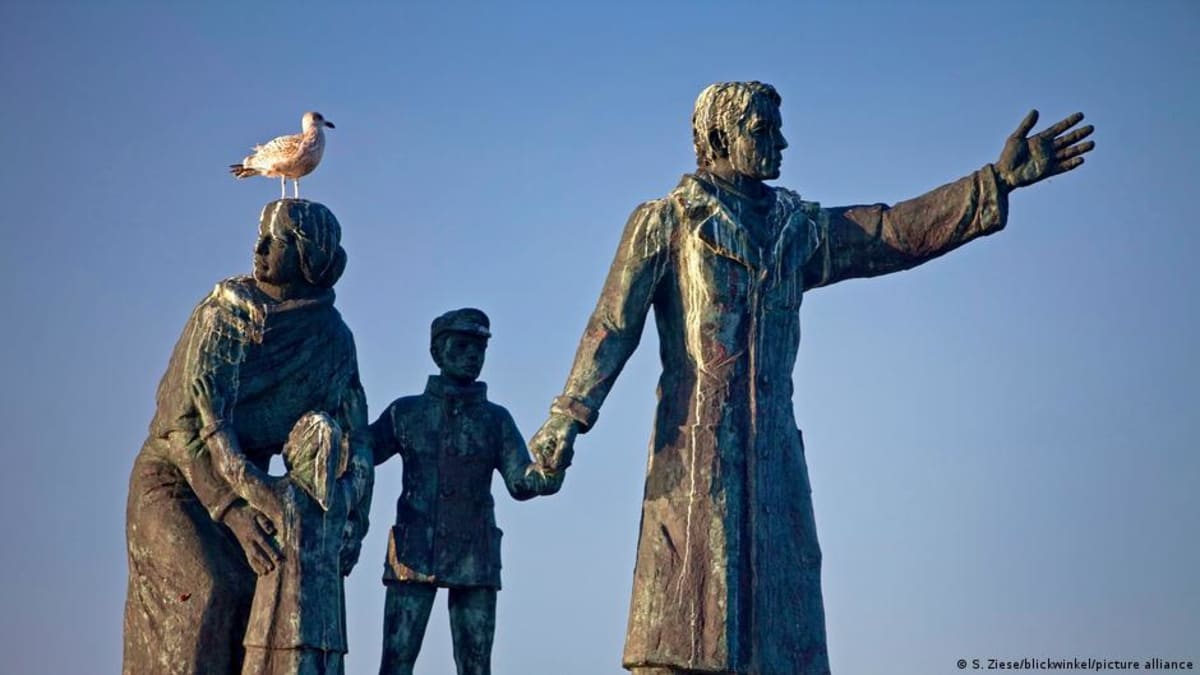
Germany: From Emigration Hub to Immigration Success
Germany, once home to millions who fled poverty for America, now welcomes over 30% of its population with immigrant roots. The nation that Benjamin Franklin once feared would refuse to integrate has become one of Europe's most diverse immigration destinations.
The irony is almost too perfect: Benjamin Franklin, a Founding Father who helped write the Declaration of Independence, once warned that German immigrants would "swarm" into America and refuse to adopt its customs.
Today, Germany faces the exact same rhetoric about newcomers to its own shores. But the country's transformation from a place people fled to one they choose reveals an inspiring truth about progress.
For most of the 19th and early 20th centuries, Germany was a country people left behind. Between 1820 and World War I, around 6 million Germans sailed to America alone, part of a massive wave of 60 million Europeans seeking better lives abroad. They sold everything they owned to afford the journey, enduring weeks below deck plagued by disease and often arriving as bonded laborers.
Others followed Catherine the Great's 1763 invitation to Russia, lured by promises of free land and tax exemptions. Failed harvests, famines, and a job market crushed by a doubling population made staying home feel impossible.
Then something remarkable happened. By the mid-20th century, the tide reversed completely.
West Germany's economic boom in the 1950s and 60s transformed the nation into a destination. Between 1956 and 1973, around 14 million "guest workers" arrived from Italy, Greece, Spain, Turkey, and beyond, attracted by well-paid jobs. About 3 million stayed permanently, though Germany was slow to see itself as an immigration country.
The Ripple Effect
Today's Germany tells a different story. More than 30% of the country's population now has immigrant roots, according to Germany's Federal Statistical Office. The nation that once sent desperate families across dangerous oceans has become a beacon for people seeking the same opportunities Germans once pursued.
This shift matters beyond Germany's borders. It shows how nations can evolve from places of departure to destinations of hope within just a few generations. The harsh judgments Franklin made about German immigrants refusing to integrate never came true, just as today's fears about new arrivals likely won't either.
Migration researcher Jochen Oltmer notes that for decades, Germany clung to the belief that foreign workers "don't belong" and would eventually leave. That mindset has finally shifted, replaced by recognition that diversity strengthens rather than weakens a nation.
The full circle is complete: the descendants of those who fled poverty now welcome others fleeing the same struggles their ancestors knew.
More Images

Based on reporting by DW News
This story was written by BrightWire based on verified news reports.
Spread the positivity!
Share this good news with someone who needs it