Germany Launches AI Cloud to Power Its Manufacturing Future
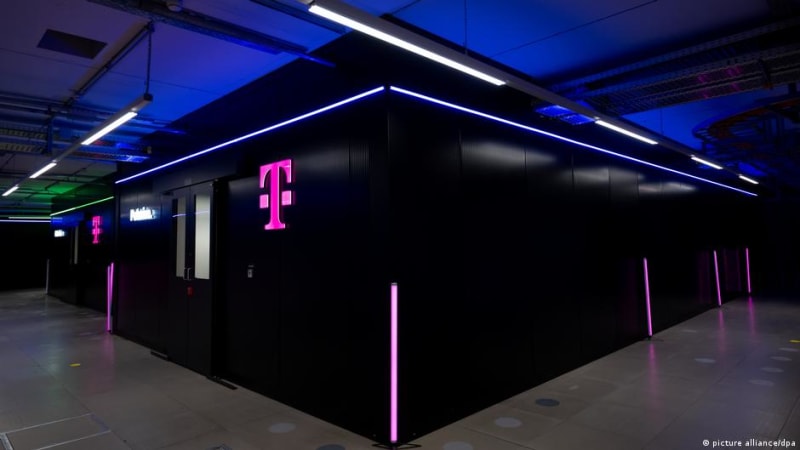
Germany just opened Europe's fastest-built AI data center in Munich, taking only six months to complete. The Industrial AI Cloud gives German manufacturers a homegrown alternative to US tech giants while playing to the country's manufacturing strengths.
Germany just proved it can move fast when it matters, launching a massive AI data center in half the time it usually takes.
The Industrial AI Cloud opened in Munich this month after just six months of planning and construction. Most similar projects take one to two years. Deutsche Telekom repurposed an existing facility and packed it with nearly 10,000 NVIDIA Blackwell GPUs, the cutting-edge chips that are currently in short supply worldwide.
The timing couldn't be better. Germany has watched the US and China pour trillions into consumer-facing AI while European companies remained dependent on American cloud providers. Now German manufacturers have a powerful homegrown option.
The new cloud isn't designed for everyday users checking the weather or asking chatbots questions. Instead, it targets Germany's industrial powerhouses like BMW, Siemens, and the thousands of small and medium manufacturers known as the Mittelstand. These companies have spent decades collecting specialized production data that's now gold for training AI systems.
"We are investing in AI, in Germany as a business location and in Europe," said Tim Höttges, CEO of Deutsche Telekom. "We are proving here that Europe can do AI."
The computing power is impressive. Telekom says the system could handle all 450 million EU citizens using an AI assistant at the same time. That capacity will help robotics companies, research labs, government agencies, and startups develop new AI applications without sending their data overseas.
The Ripple Effect
Germany's approach is smart because it doesn't try to beat Silicon Valley at its own game. Instead of chasing consumer apps, German companies are focusing on what they do best: making things.
Antonio Krüger, who leads Germany's Research Center for Artificial Intelligence, sees this as Germany's chance to catch up without gambling trillions. "Industrial AI allows Germany to play to its strengths: designing smaller, specialized AI models" that tap into decades of manufacturing expertise, he told reporters.
The strategy goes beyond just building infrastructure. Germany is marketing itself as the home of "trustworthy AI," turning Europe's strict AI regulations into a selling point rather than a handicap. Companies worried about data security and ethical AI development now have clear rules to follow.
Major players are already betting big on this vision. Siemens recently expanded its partnership with NVIDIA to build an Industrial AI Operating System. Bosch is spending $2.9 billion to add AI-powered quality control across its factories.
Germany's Economy Ministry projects these investments could add at least one full percentage point to the country's annual economic growth starting this year. For a mature economy like Germany's, that's substantial.
The real test will be whether German executives embrace the technology quickly enough. The country's leaders have a reputation for moving cautiously, which has held back previous tech initiatives. But if the speed of this data center's construction signals a new urgency, Germany might just carve out its own lane in the global AI race.
Based on reporting by DW News
This story was written by BrightWire based on verified news reports.
Spread the positivity!
Share this good news with someone who needs it