Scientists Build AI Models That Predict How Cells Work
Researchers are creating "virtual cells" using AI that could revolutionize how we understand disease and discover new treatments. These computer models simulate real cell behavior by learning from massive biological datasets.
Scientists are teaching computers to simulate living cells, and the breakthrough could transform how we fight disease.
For years, researchers struggled to build realistic cell models using traditional math. Cells are incredibly complex, with thousands of molecules interacting in ways scientists still don't fully understand. But artificial intelligence is changing everything.
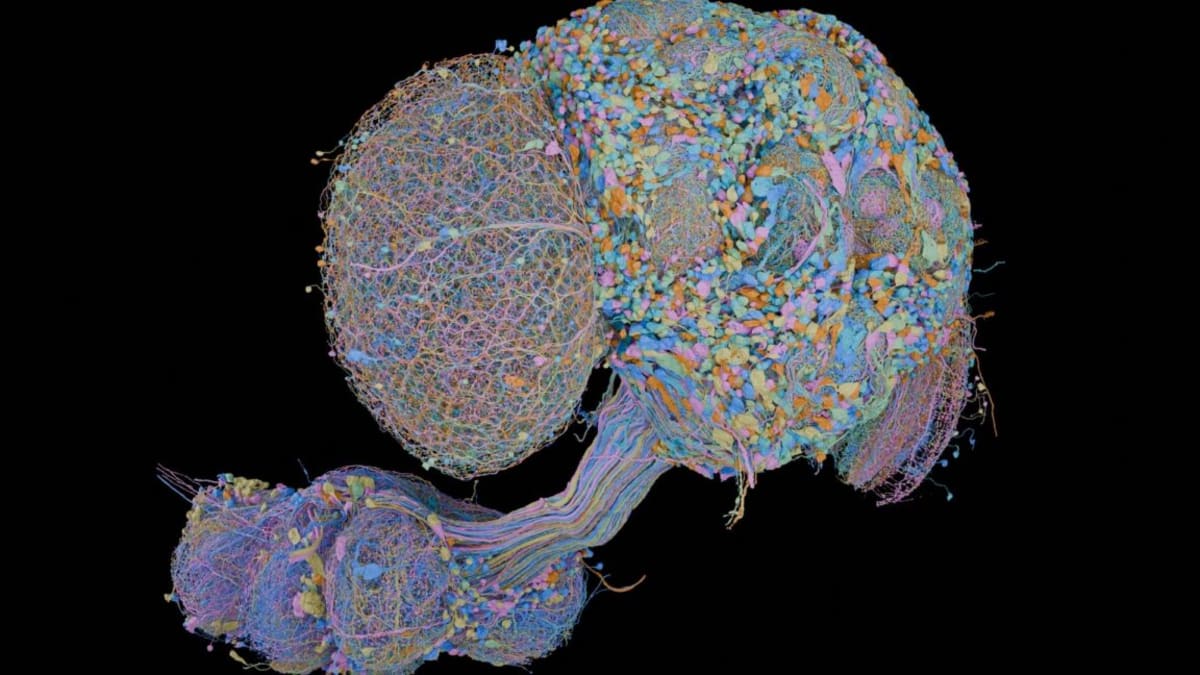
Teams at Stanford University, the Arc Institute, and other leading research centers are now building "virtual cells" that learn from vast collections of real biological data. Instead of trying to manually program every cellular function, these AI models discover patterns by analyzing gene expression data from hundreds of millions of cells.
"We have to think about virtual cells as a means of getting towards a specific goal, and for me, that goal is to be able to accelerate the hypothesis search process," says Yusuf Roohani, a machine learning researcher at the Arc Institute in California. His team created a database called scBaseCount that includes around half a billion cells, making it several times larger than any other single-cell data repository.
The technology works similarly to ChatGPT, but instead of learning language patterns from internet text, these models learn biological patterns from cell data. Once trained, they can predict how different cell types might respond to new conditions they've never encountered before.
Emma Lundberg, a bioengineer at Stanford University, points out that despite their complexity, cells follow predictable rules. "The cell is a complex system, and a highly robust and resilient system," she says. "But it's also a highly structured system. The cell has an architecture."
Some teams have already achieved impressive results using traditional mathematical approaches. In March, researchers at the University of Illinois successfully simulated cell division in modified bacteria. Another team at Indiana University developed PhysiCell, a framework that models how human cells and tissues respond to different environments, including cancer treatments.
Why This Inspires
These virtual cells could dramatically speed up medical research by helping scientists test thousands of potential treatments on computers before ever entering a lab. Instead of years of trial and error, researchers might identify promising drug candidates in months or even weeks.
The models could also reveal hidden connections between genes, proteins, and diseases that human researchers might never spot on their own. By exploring millions of possible molecular combinations, AI can suggest entirely new angles for treating conditions from cancer to rare genetic disorders.
While today's models still struggle to capture the full dynamic complexity of living cells, the field is advancing rapidly. Researchers are continuously adding more diverse data types, including protein levels and genetic modifications, to make their simulations more realistic and useful.
These digital twins of our cells represent a new frontier where artificial intelligence meets the oldest questions in biology, bringing hope for faster cures and deeper understanding of life itself.
More Images
Based on reporting by Nature News
This story was written by BrightWire based on verified news reports.
Spread the positivity!
Share this good news with someone who needs it