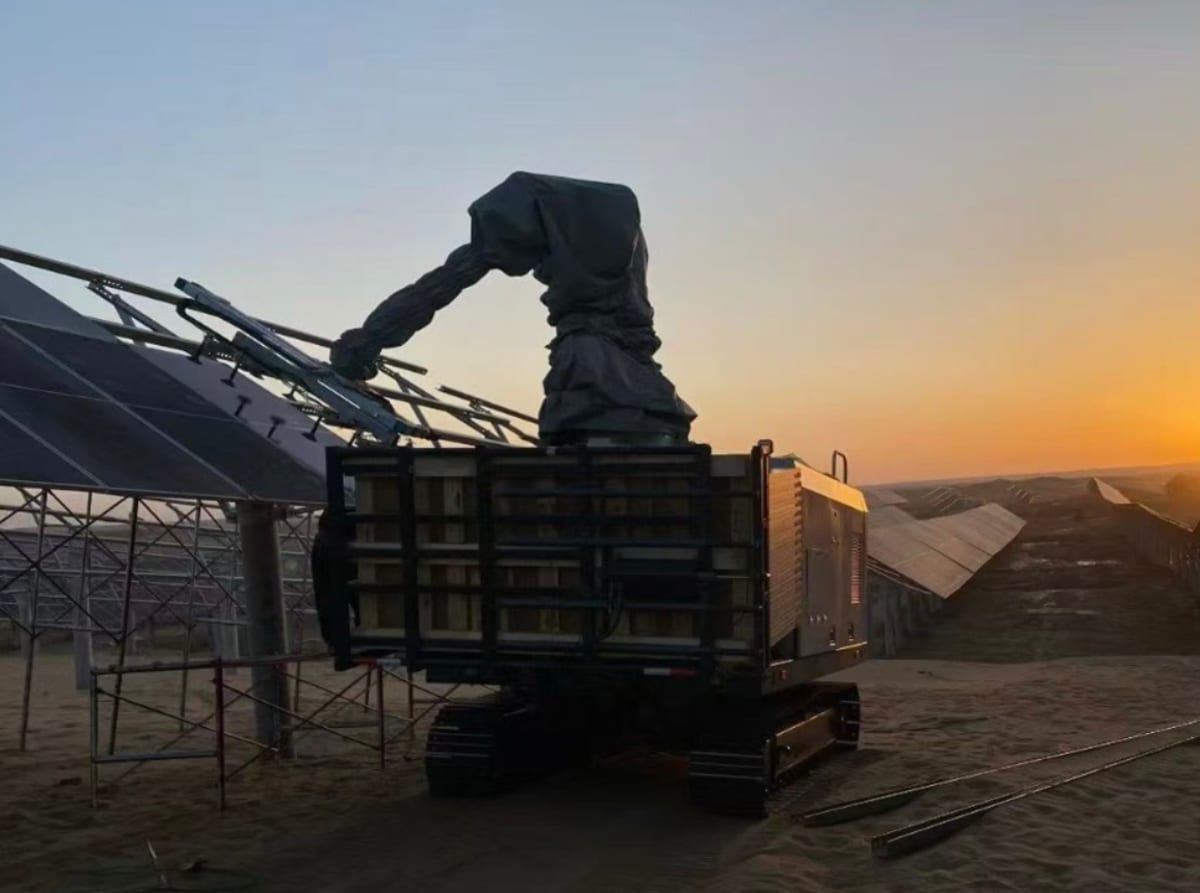
9-Ton Solar Robot Builds Power Plant in Algerian Desert
A massive AI-powered robot is installing solar panels in Algeria's harsh desert, working through sandstorms and extreme heat to build clean energy infrastructure. The autonomous machine can operate for 10 days straight without refueling.
Building solar farms in remote deserts just got easier thanks to a 9-ton robot that works through sandstorms, extreme temperatures, and rough terrain without breaking a sweat.
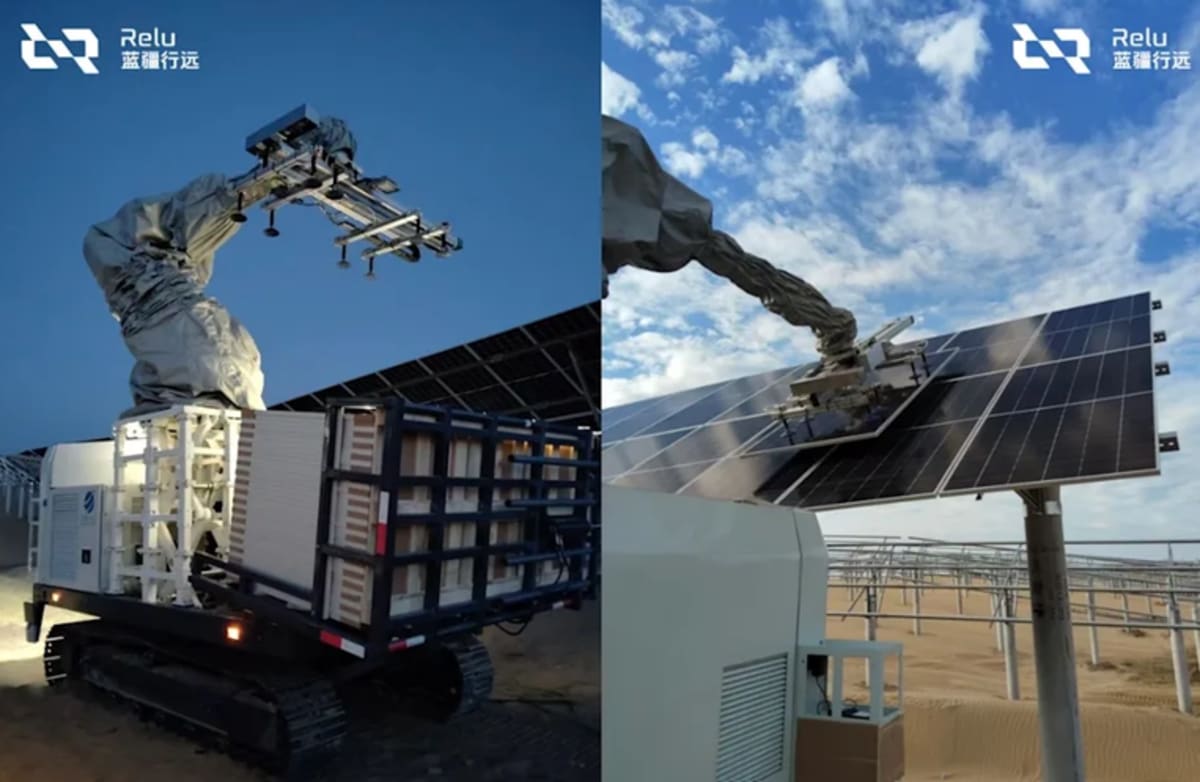
Beijing Relu Robotics has deployed its Bison Series robot at a large-scale solar construction site in Algeria. The tracked machine uses artificial intelligence to handle the demanding work of installing solar panels in one of the world's most challenging environments.
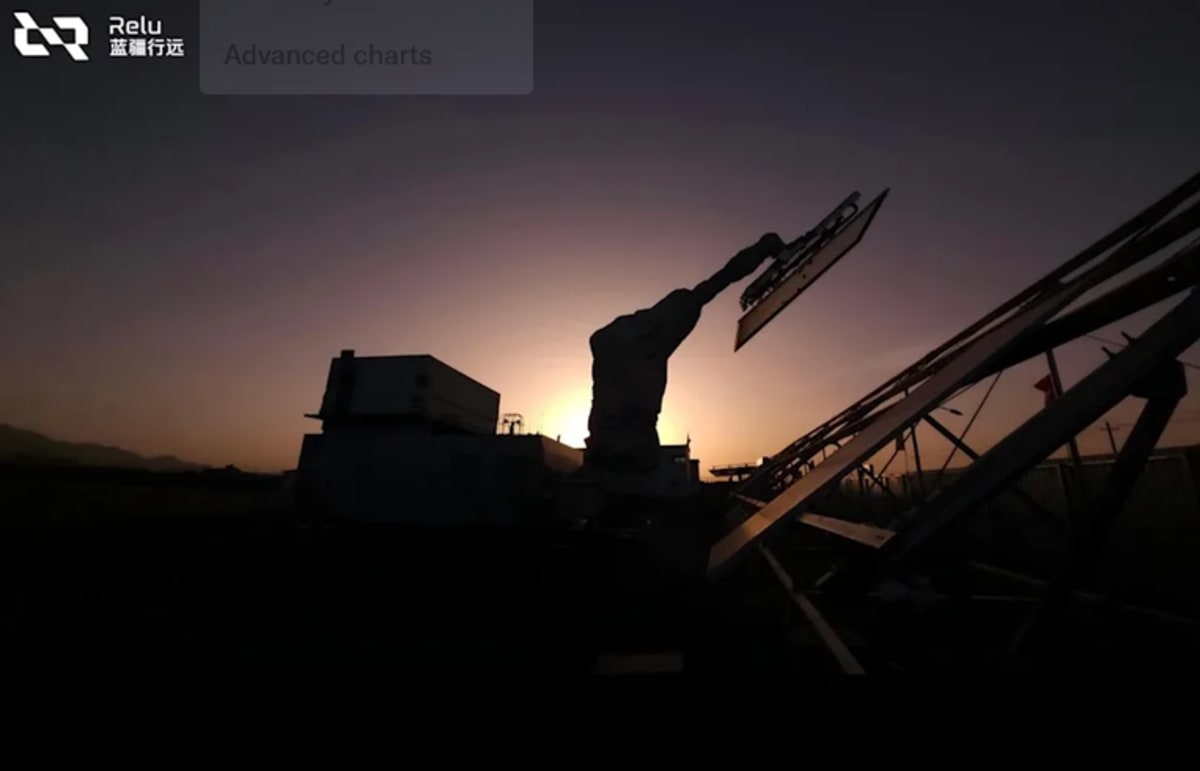
The robot's capabilities are impressive. Its robotic arm lifts panels weighing up to 110 pounds and installs them with accuracy within 5 millimeters. The machine climbs slopes up to 20 degrees and operates in temperatures ranging from negative 4 degrees to 140 degrees Fahrenheit.
What makes this robot special is its ability to see and think. Advanced 3D vision systems scan the environment to identify solar panels, mounting structures, and obstacles. Its AI brain then plans the best path forward and directs the robotic arm to pick up, transport, and install each panel precisely where it belongs.
The platform runs on a hybrid power system combining a diesel generator with a battery from CATL, one of the world's leading battery manufacturers. With a 200-liter fuel tank, it consumes just 20 liters per day during typical 10-hour shifts, allowing over a week of continuous operation between refills.
The robot has already proven itself in some of China's harshest regions. Field tests in Inner Mongolia and Xinjiang subjected the machine to sandstorms, temperature swings of over 100 degrees, and high-altitude conditions up to 16,400 feet above sea level.
Steel tracks measuring over 11 feet long let the Bison navigate sand, desert wasteland, hills, and gentle slopes. While its top speed of 2.5 miles per hour won't win any races, that's not the point. This robot is built for precision and endurance, not speed.
The Ripple Effect
Automating solar farm construction solves a critical challenge in the renewable energy transition. Remote desert locations offer ideal conditions for solar power but create harsh working environments for human crews. Extreme heat, sandstorms, and isolation make these projects difficult and expensive to staff.
Robots like the Bison Series can accelerate solar deployment in regions where clean energy is needed most. North Africa receives some of the world's most intense sunlight, making it perfect for solar generation. Machines that work around the clock in these conditions could dramatically speed up the shift away from fossil fuels.
The technology also makes solar projects more economically viable in challenging locations. Fewer workers needed on remote sites means lower costs, potentially making clean energy more competitive and accessible.
Algeria's robot-built solar farm represents a glimpse of how automation and AI could reshape renewable energy construction globally, turning Earth's harshest deserts into powerhouses of clean electricity.
More Images

Based on reporting by PV Magazine
This story was written by BrightWire based on verified news reports.
Spread the positivity!
Share this good news with someone who needs it

-1789091131617.jpg)