Solar Panels Hit 31% Efficiency Without Rare Materials
Scientists just created a super-efficient solar panel that ditches expensive rare metals for cheap, abundant tin. The breakthrough could make powerful solar energy affordable for everyone.
Solar power just got cheaper and better at the same time, thanks to a team that cracked one of the industry's biggest challenges.
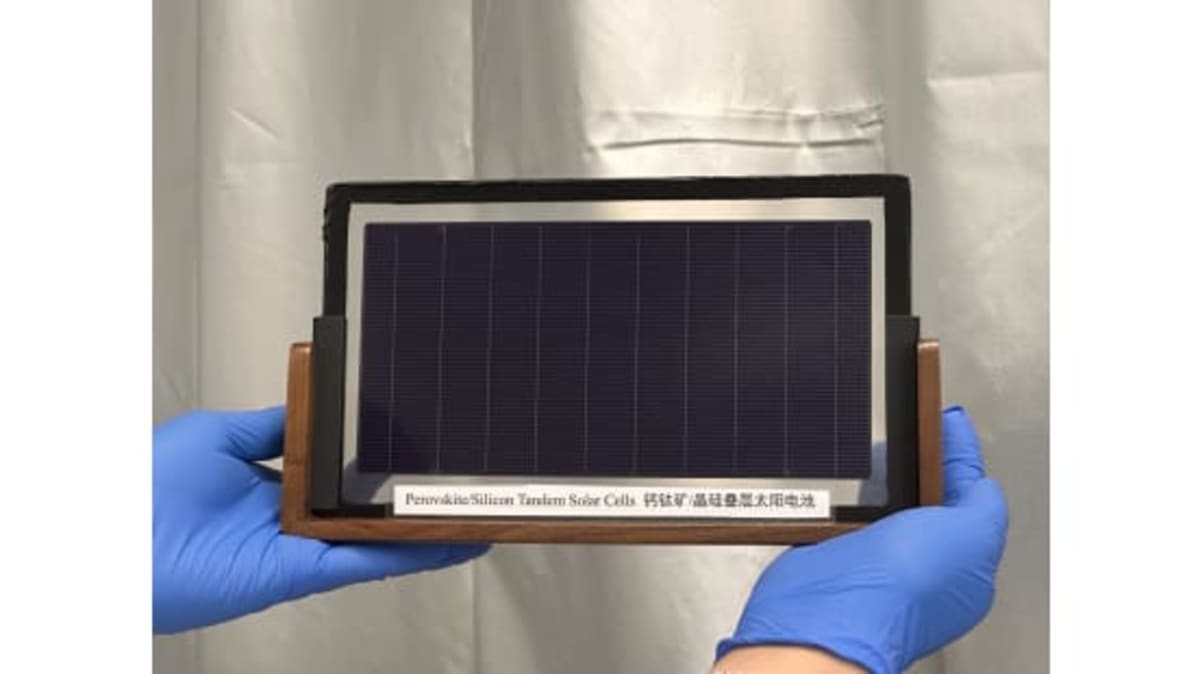
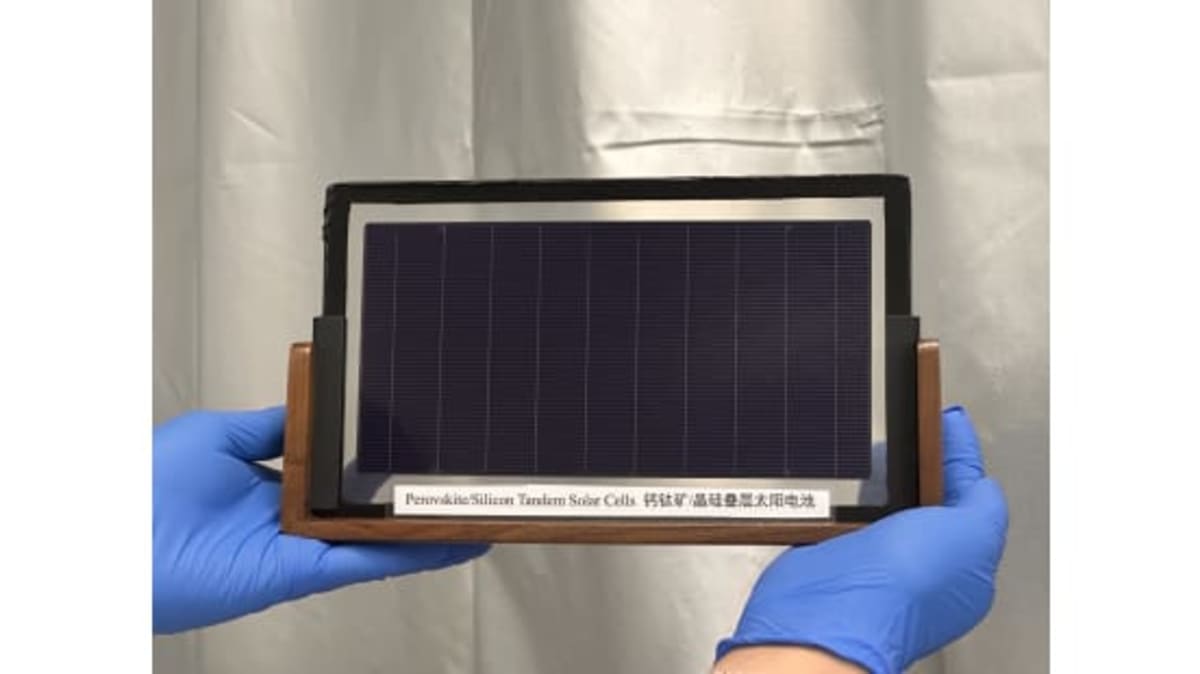
Researchers at Monash University in Australia and partners in China built a solar panel that converts 31% of sunlight into electricity without using indium, a rare metal that costs 100 times more than the tin they used instead. That efficiency number might sound technical, but it's a huge deal: most home solar panels today max out around 20%.
The secret lies in a new technique called reactive plasma deposition. Think of it as a gentler way to coat the solar cells with conductive materials. Traditional methods basically blast the delicate surfaces with high-energy particles, like sandblasting a painting. This new approach is more like airbrushing, creating smooth, even layers without damage.
Professor Yuan Cheng, who co-led the research, said the team first proved their method worked on a tiny one-square-centimeter cell that hit 33.6% efficiency. Then came the real test: scaling up to a mini-module about the size of a sheet of paper. It still achieved 31% efficiency, proving the technology works beyond the lab.
The tin oxide films did double duty in the design. They served as the recombination layer between two types of solar cells stacked together and as transparent electrodes that let light through while conducting electricity. The smooth surface also helped reduce energy losses and kept the materials stable over time.
The Ripple Effect
This isn't just about swapping one metal for another. Indium is genuinely scarce, and as solar power expands worldwide, relying on rare materials creates bottlenecks. Tin is abundant and cheap, costing about 1% as much as indium.
The panels proved tough in real-world conditions too. After sitting outside for more than three months and facing heat and humidity tests, they still retained 65% of their peak efficiency. That durability matters when solar panels need to last 25 years or more on rooftops and in solar farms.
Cheng emphasized this represents the first large-area, high-efficiency solar panel of its type, showing the path from laboratory curiosity to commercial product. The work, published in Science, demonstrates that next-generation solar technology can be both powerful and practical.
The collaboration brought together universities and industry partners, including Chint New Energy Technology Co., signaling that companies are ready to move this from research to production. With solar power needing to expand massively to meet climate goals, innovations that cut costs while boosting performance are exactly what the world needs.
This breakthrough opens the door to terawatt-scale solar deployment using materials we'll never run out of.
More Images

Based on reporting by PV Magazine
This story was written by BrightWire based on verified news reports.
Spread the positivity!
Share this good news with someone who needs it