Solar Cells Hit 31% Efficiency Without Rare Materials
Scientists just built the first commercial-size solar panel that delivers record efficiency without expensive rare metals, bringing cheaper clean energy closer to reality. The breakthrough replaces costly indium with abundant tin that costs just 1% as much.
Solar panels are about to get a lot cheaper and a lot more powerful, thanks to researchers who just cracked one of the industry's biggest challenges.
An international team led by scientists from Monash University has created the first high-performance solar cell that achieves 31% efficiency in a commercial size without using indium, a rare and expensive metal. To put that in perspective, most rooftop solar panels today convert around 20% of sunlight into electricity.
The breakthrough centers on replacing indium oxide with tin oxide, a material that costs just 1% as much but delivers the same performance. Dr. Yuan Cheng, who co-led the research at Monash University, says this represents a major leap toward making next-generation solar technology affordable for everyone.
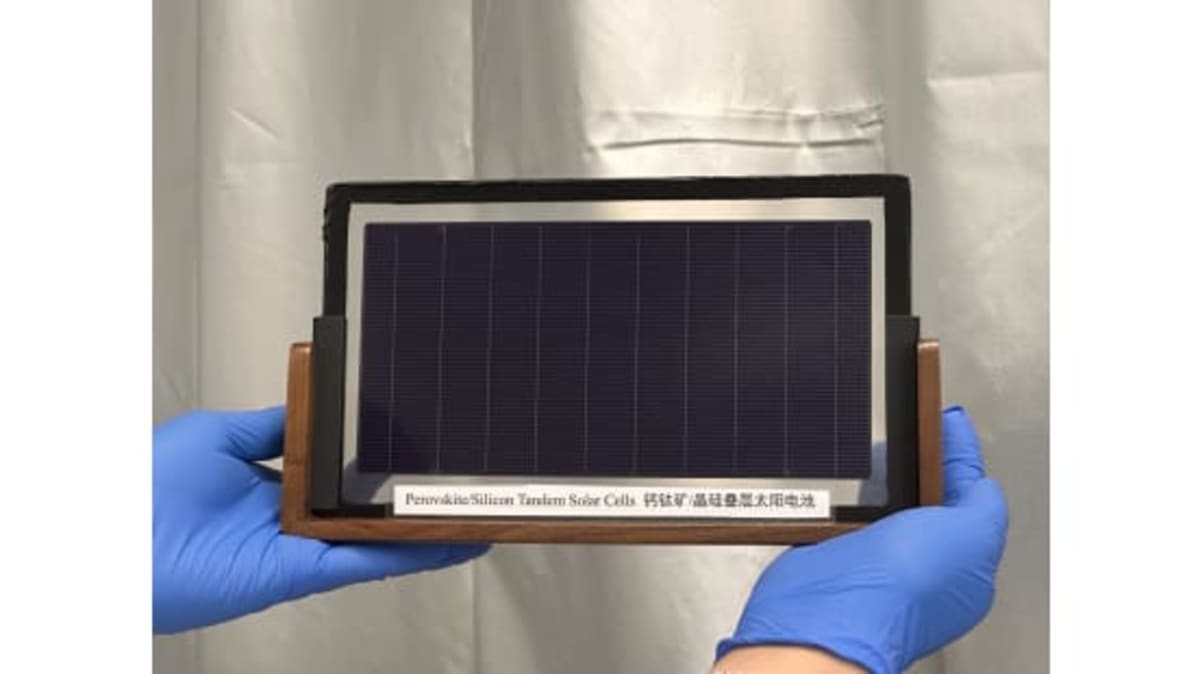
The team developed a special reactive plasma deposition process that lets tin oxide work just as well as indium in tandem solar cells. These advanced panels stack two light-absorbing layers to capture more of the sun's energy than traditional single-layer designs.
In lab tests on tiny cells, the technology reached a certified 33.6% efficiency. Then came the real test: scaling up to a mini-module measuring over 200 square centimeters while maintaining 31% efficiency. That size matters because it proves the technology can move from laboratory curiosity to factory production.
The durability tests delivered even more good news. The panels withstood intense heat, humidity, and more than three months outdoors while maintaining strong performance. That resilience suggests these panels could last decades in real-world conditions.
The Ripple Effect
This isn't just about making solar panels slightly better. The research, published in the journal Science, opens a pathway to what scientists call terawatt-scale deployment of ultra-efficient solar technology.
Using abundant tin instead of scarce indium means manufacturers could produce vastly more panels without running into supply constraints or price spikes. Countries trying to transition away from fossil fuels could deploy solar power faster and more affordably.
The collaborative effort brought together researchers from Monash University, Soochow University, Chint New Energy Technology, and multiple enterprises already working in the solar industry. That mix of academic research and commercial partners suggests this technology could move to production relatively quickly.
For homeowners and businesses, the promise is straightforward: solar panels that generate more electricity from the same rooftop space while costing less to manufacture. More power per panel means fewer panels needed to meet energy goals.
The sun delivers more energy to Earth in one hour than humanity uses in a year, and breakthroughs like this help us capture more of it.
Based on reporting by Google News - Australia Breakthrough
This story was written by BrightWire based on verified news reports.
Spread the positivity!
Share this good news with someone who needs it