Germany Opens First Islamic Theology Faculty in Europe
A German university just made history by launching Europe's first independent Islamic theology faculty at a public institution. The groundbreaking move will train thousands of teachers and scholars while promoting an open, enlightened understanding of Islam.
For the first time in European history, a public university now has its own full faculty dedicated to Islamic theology.
Germany's University of Münster officially elevated its Center for Islamic Theology to independent faculty status on July 1st, marking a watershed moment for Muslim education in the West. Scholar Mouhanad Khorchide, the faculty's founding dean, calls it "a unique chapter in history" after 15 years of building the program from the ground up.
The transformation is dramatic. What started in 2012 with just 15 students and three staff members now employs eight professors and more than 50 staff. Student enrollment is expected to surpass 500 in coming years, driven by surging demand for Islamic religious education teachers across Germany.
The timing couldn't be better. In North Rhine-Westphalia alone, schools need up to 3,000 qualified Islamic religious education teachers but currently have only 330. Graduates now have a clear career path in public education, youth services, hospital chaplaincy, and elder care.
The new faculty status gives Islamic Theology real academic power. It can now grant doctorates and advanced degrees independently, cultivate new generations of scholars, and secure research funding more easily. Until now, the center depended on other faculties for these critical functions.
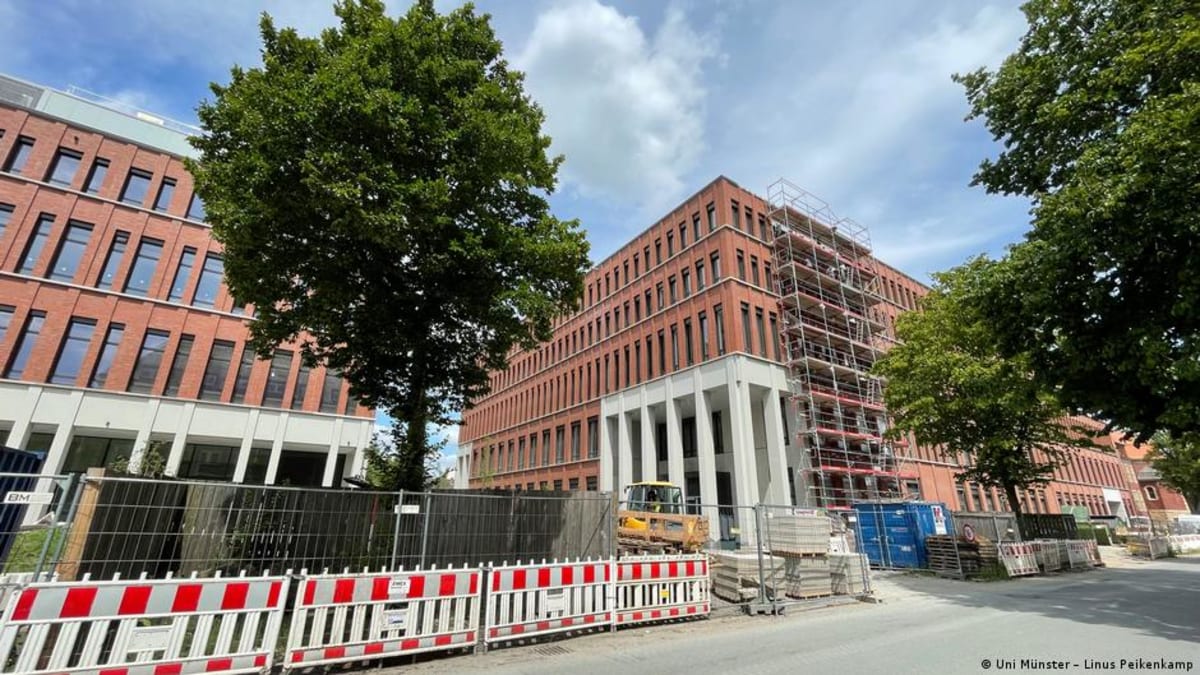
By 2027, the faculty will move into Münster's new "Campus of Religions," where it will share space with Catholic, Protestant, and Islamic theology departments under one roof. They'll even share a library and cafeteria, creating daily opportunities for interfaith dialogue.
The Ripple Effect
The impact is already reaching far beyond Germany's borders. Media outlets across Africa and Asia have covered the development, with particular interest from Indonesia, home to the world's largest Muslim population.
Khorchide believes Münster could help shape Islam's future development worldwide. The faculty's guiding principles explicitly promote an enlightened, contemporary reading of the Quran while rejecting extremism, antisemitism, and Islamism in all forms.
Starting in 2027, the faculty plans to launch a master's program in "Islam and Social Work" to meet growing demand for faith-informed social services. The curriculum emphasizes the compatibility of Islamic faith with democratic values and modern scholarship.
"People long for an open-minded Islam," Khorchide says, reflecting on the overwhelming international response.
The University of Münster's spokesperson Norbert Robers notes the symbolic power of bringing Christian and Islamic theology together in one shared space for the first time. It's a model that Europe, and perhaps the world, has been waiting for.
More Images

Based on reporting by DW News
This story was written by BrightWire based on verified news reports.
Spread the positivity!
Share this good news with someone who needs it