Germany's Floating Solar Plant Powers Hundreds on Just 5% Lake
A Bavarian gravel pit now generates clean energy for hundreds of homes using vertical solar panels that float on a lake and take up less than 5% of its surface. The innovative system cuts the site's grid power use by 60% without sacrificing precious land.
A turquoise lake in southern Germany just became a power plant, and it didn't cost a single square foot of farmland.
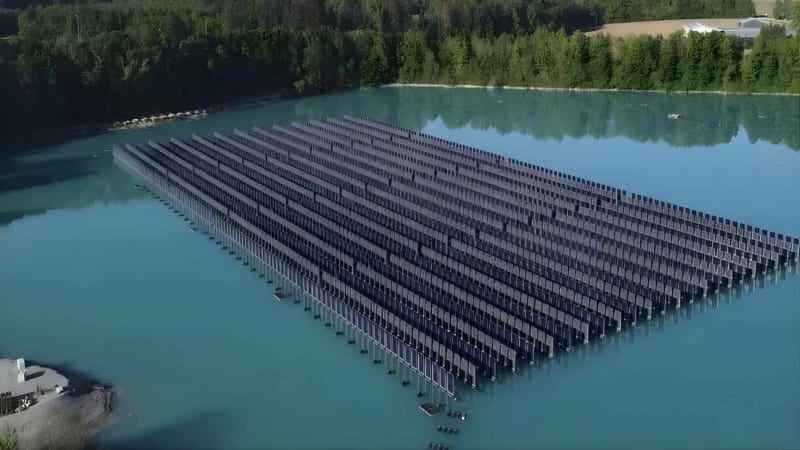
Engineers at the Jais gravel pit in Bavaria have installed 2,500 vertical solar panels that float on the water, creating what SINN Power calls the world's first vertical floating solar farm. The system generates 2 gigawatt hours of electricity each year, enough to power several hundred homes, while covering just 4.65% of the lake surface.
The design solves a problem that has frustrated renewable energy developers across Europe. Germany has strict environmental laws that limit floating solar systems to 15% of any artificial lake, yet the country's 6,000 artificial lakes remain almost entirely untapped. Only 21 megawatts of floating solar currently operate in Germany, despite an estimated potential of up to 2.5 gigawatts.
SINN Power's Skipp Float technology stands the panels upright in long east-west rows instead of laying them flat like traditional solar farms. Open water corridors about four meters wide separate each row, allowing sunlight and wind to reach the surface while giving the 1.87-megawatt system room to flex with waves and changing water levels.
For the gravel company, the floating panels are already delivering real savings. Crushers, conveyor belts, and pumps devour electricity during busy workdays, but the solar system has cut the site's power draw from the public grid by nearly 60%. A planned second phase will add another 1.7 megawatts and could push that number to 70%.
"It is a relatively simple solution that does not need additional land and fits our plant, which runs mainly during the sunny months from March to December," explained gravel pit manager Gottfried Jais. Producing power on site when machines are running shields the business from price swings and trims electric bills year after year.
The Ripple Effect
The vertical design matches energy production to when people actually need it. East-west panels generate more electricity in morning and late afternoon hours, covering the busy times when factories hum and families cook dinner or charge electric cars.
Early monitoring shows no decline in water quality beneath the panels. The shaded zones may even shelter fish and waterbirds that now rest on the floating structures. Scientists at the University of Exeter caution that long-term data on oxygen levels and aquatic species is still needed, making the Bavarian plant an important real-world test case.
Regional development agencies and Bavarian leaders see the project as a blueprint for other industrial lakes and reservoirs. Thousands of similar water bodies sit unused across Germany, and each one could generate clean power without displacing crops or forests.
For anyone who has driven past a quiet quarry pond, this floating solar farm raises an exciting possibility: our next renewable energy boom might be hiding in plain sight.
More Images


Based on reporting by Google News - Germany Innovation
This story was written by BrightWire based on verified news reports.
Spread the positivity!
Share this good news with someone who needs it