Germany's Robot Market to Grow from $1.4B to $20.8B by 2033
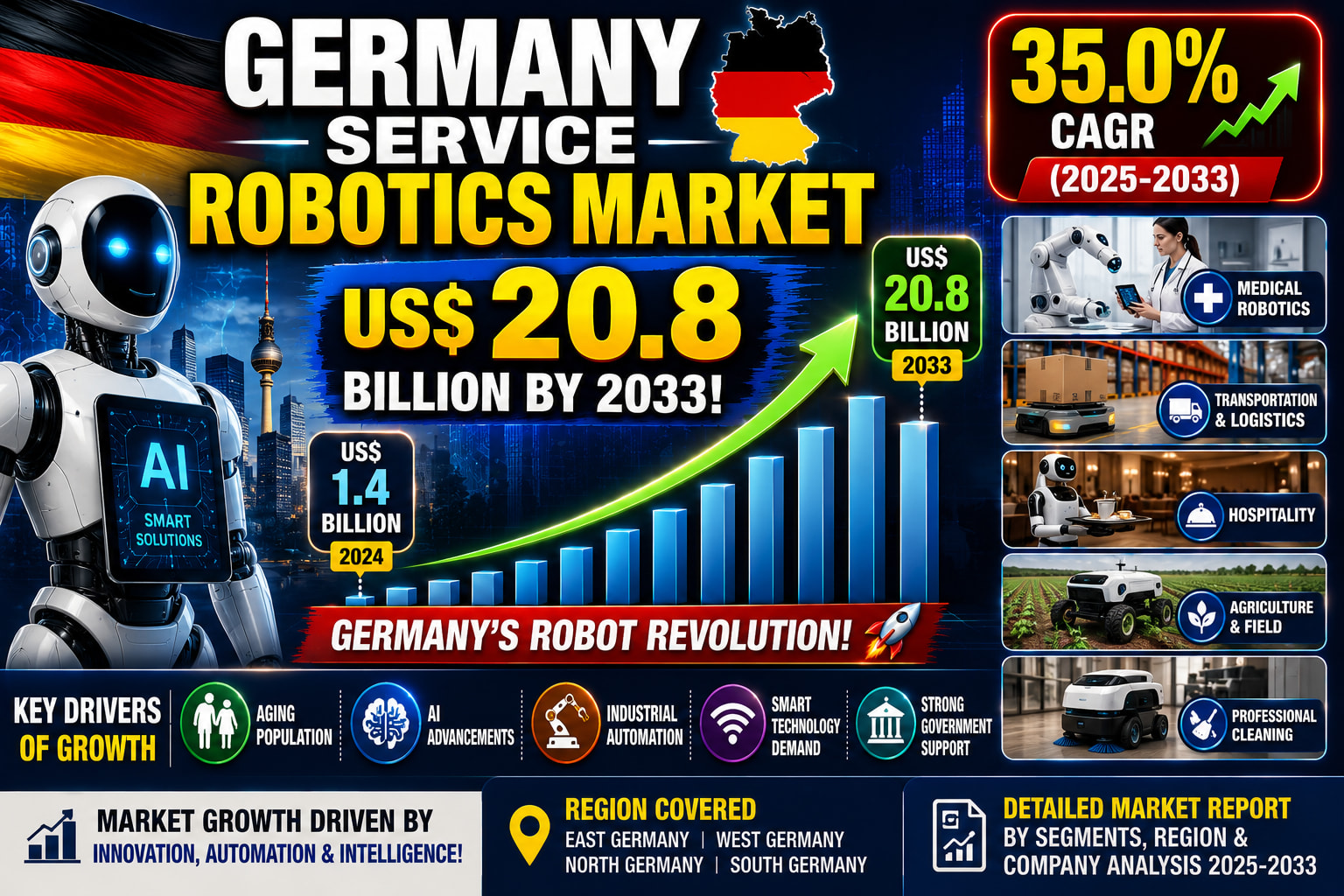
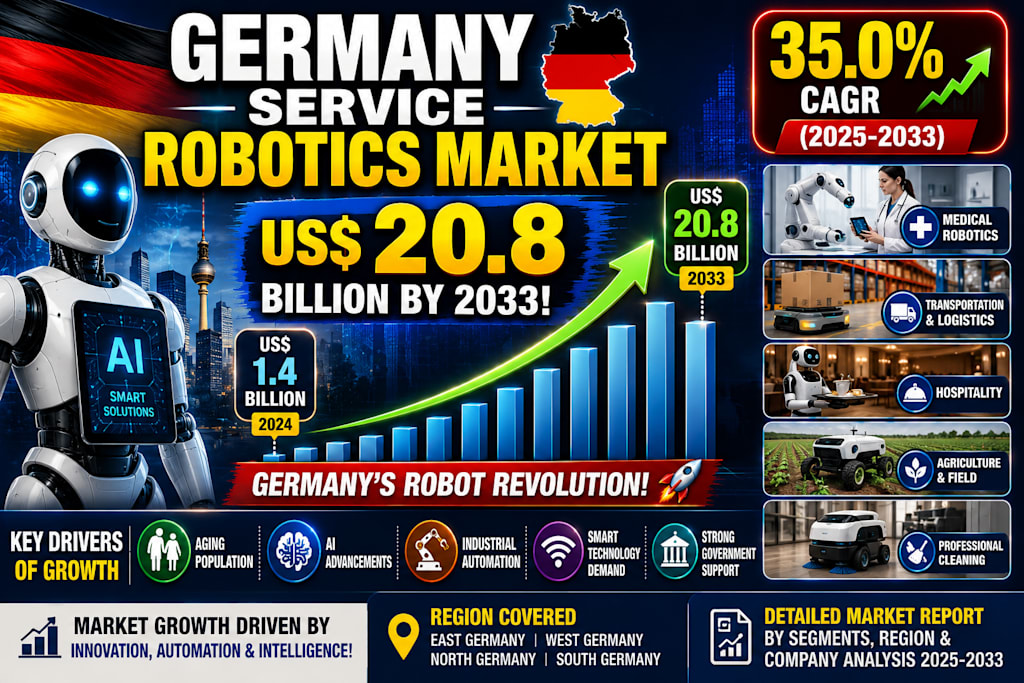
Germany's service robotics industry is exploding, projected to grow from $1.4 billion to $20.8 billion by 2033. Smart robots are stepping in to help an aging population while solving labor shortages across healthcare, homes, and businesses.
Germany is about to become Europe's robotics superpower, and the numbers tell an incredible story of progress.
The country's service robotics market is set to skyrocket from $1.4 billion this year to $20.8 billion by 2033, according to research firm Renub Research. That's a stunning 35% annual growth rate fueled by advances in artificial intelligence and an urgent need for smart solutions.
Unlike factory robots hidden behind safety barriers, these new service robots work directly alongside people in everyday life. They're helping elderly patients maintain independence at home, assisting surgeons in operating rooms, delivering packages, cleaning offices, and supporting caregivers facing impossible workloads.
Germany's aging population is driving much of this transformation. The country has one of Europe's oldest populations, creating massive pressure on healthcare systems already struggling with staff shortages.
Service robots offer a lifeline. They monitor patients, deliver medications, help with mobility, handle hospital logistics, and free up healthcare workers to focus on what humans do best: providing compassionate care.
What makes today's robots different is artificial intelligence. Modern service robots can learn, adapt, and make decisions in real time rather than simply following preprogrammed routines. They recognize faces, understand voice commands, navigate unfamiliar rooms, and improve their performance through experience.
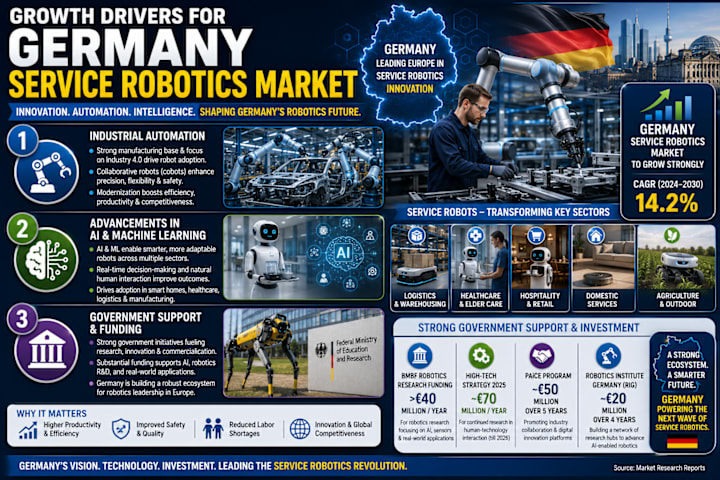
Germany's legendary engineering excellence is giving it a natural advantage in this race. The country combines world-class research institutions, advanced manufacturing capabilities, strong government support for innovation, and robust digital infrastructure.
The Ripple Effect
This robotics boom isn't just about technology. It's about preserving human dignity and expanding possibilities for millions of people.
Seniors who want to age in their own homes gain independence through robotic assistance. Overworked nurses get relief from exhausting tasks so they can spend more time with patients. Businesses facing labor shortages find solutions that keep services running smoothly.
The technology is also creating thousands of new jobs in robotics design, maintenance, programming, and support. As robots handle routine tasks, humans are freed to focus on creative problem-solving, innovation, and meaningful human connection.
Germany's success could inspire similar transformations across Europe and beyond, showing how intelligent automation can address demographic challenges while improving quality of life. When nations face aging populations and workforce shortages, robots aren't replacing humanity but rather helping humanity thrive.
The future Germany is building puts technology in service of people, not the other way around.
More Images


Based on reporting by Google News - Germany Innovation
This story was written by BrightWire based on verified news reports.
Spread the positivity!
Share this good news with someone who needs it