Ghana Church Leaders Call for Ethical AI Oversight
Catholic scholars in Ghana are championing ethical safeguards for artificial intelligence following Pope Leo XIV's groundbreaking encyclical on technology and human dignity. Their message: AI must serve humanity, not replace it.
Religious leaders and philosophers in Ghana are tackling one of our generation's biggest questions: how do we keep technology human?
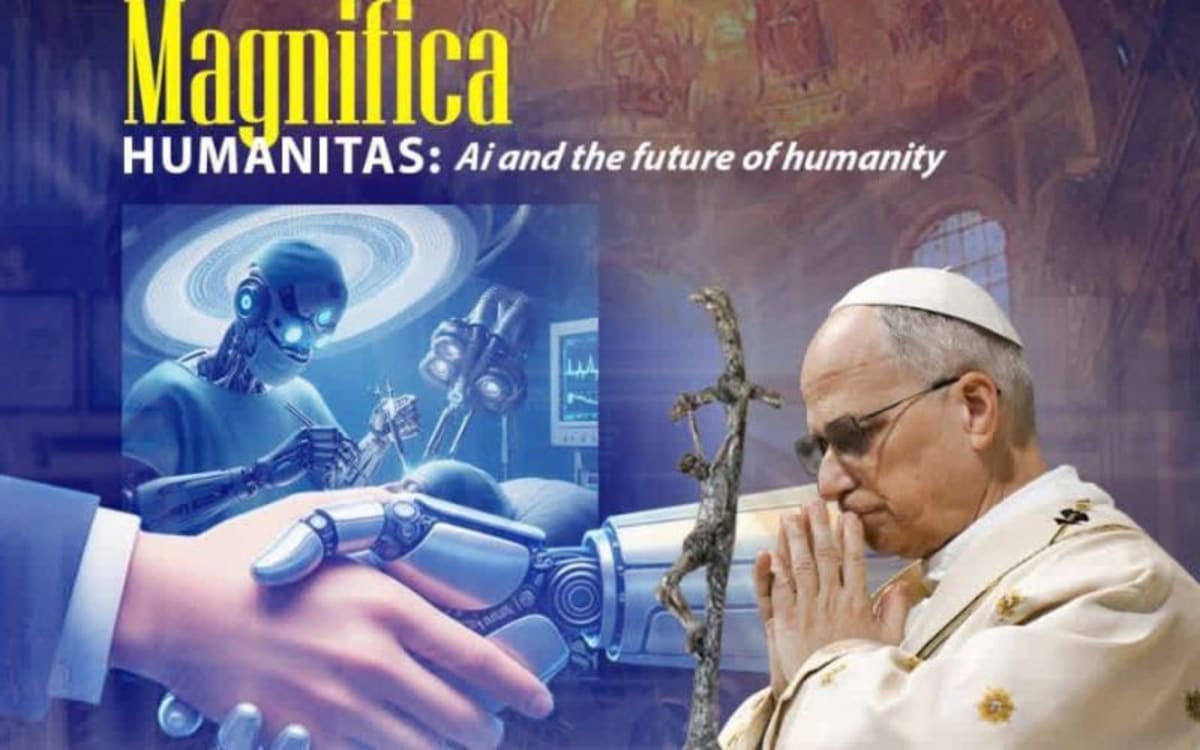
Following the release of Magnifica Humanitas, Pope Leo XIV's first major teaching document on AI and humanity, Catholic scholars gathered in Accra on May 27 to discuss what ethical artificial intelligence actually looks like. The livestreamed discussion brought together Father Emmanuel Salifu and philosopher Dr. Dodzi Koku Hattah to explore how rapidly advancing technology can protect rather than threaten human dignity.
Father Salifu used a powerful biblical contrast to frame the conversation. The Tower of Babel collapsed into chaos when humanity placed itself at the center, he explained, while Jerusalem's walls were successfully rebuilt under Nehemiah with God at the foundation. "Pope Leo XIV calls humanity to rebuild society with God at the center of all innovation and human invention," he said.
Dr. Hattah raised concerns that strike at the heart of global equity. AI doesn't emerge from a vacuum, he reminded the audience. When designers carry unconscious biases about race or harbor colonial mindsets, those prejudices get coded directly into the systems billions of people use. "If the values of those designing AI are anti-Black or colonial in orientation, then naturally the systems they build may reflect those same biases," he cautioned.
The philosopher warned against concentrating AI control in the hands of a few powerful corporations. He also introduced the concept of "soft genocide," describing how social media gradually erodes cultural identity and moral values when people imitate screens without critical thinking.
Both speakers agreed that authentic human qualities remain beyond machine capability. Dr. Hattah emphasized that human emotions are deeply complex and unpredictable, impossible to reduce to algorithms. Father Salifu added that AI should assist humanity, never replace the God-given qualities that make us uniquely human.
The discussion tackled a concern many people feel but struggle to name: the weakening of real relationships. "People are becoming more accustomed to online interactions than physical relationships with neighbors and family," Father Salifu observed. Society risks trading authentic human presence for machines, he warned.
Why This Inspires
This conversation represents something rare: faith leaders and thinkers engaging cutting-edge technology with both openness and wisdom. Rather than rejecting innovation or embracing it uncritically, these Ghanaian scholars are charting a middle path that celebrates human progress while protecting human dignity.
Their vision offers hope that technology can evolve with conscience at its core. Dr. Hattah captured it perfectly: "AI should assist humanity, not enslave it." With thoughtful voices like these shaping the conversation, we can build a future where innovation serves the common good and machines amplify rather than diminish what makes us human.
Ghana's religious leaders are proving that the most important tech conversations aren't happening only in Silicon Valley.
More Images


Based on reporting by Google News - Ghana Development
This story was written by BrightWire based on verified news reports.
Spread the positivity!
Share this good news with someone who needs it