Ghana Gets Faster Drug Testing With Tiny Chip Tech
A Ghanaian scientist at Imperial College London is using microchip technology smaller than your phone to speed up medicine development for diseases like malaria and diabetes. The breakthrough could cut years off traditional drug testing while reducing costs and animal testing.
Scientists in Ghana may soon test new medicines in days instead of years, thanks to technology small enough to fit in your palm.
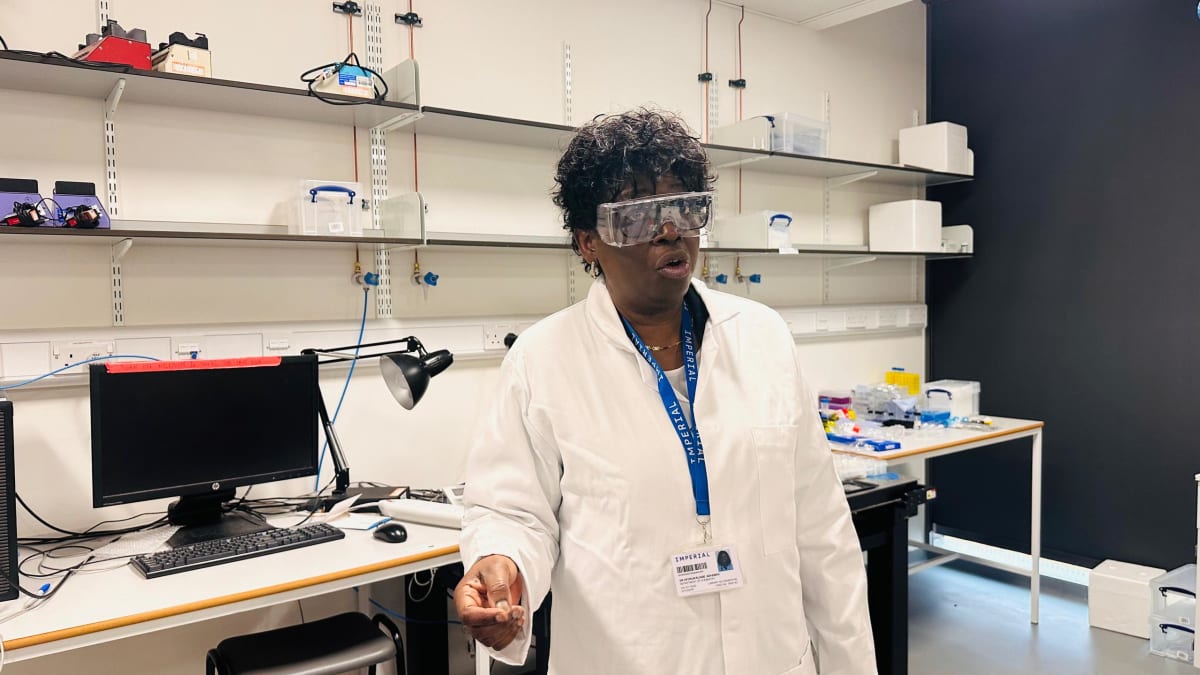
Dr. Ofosua Adi-Dako, a researcher at Imperial College London and the University of Ghana School of Pharmacy, is pioneering lab-on-a-chip systems that could transform how drugs are developed across Africa. The tiny devices use microscopic channels to simulate how medicines interact with human tissue, delivering results that once took months in just hours.
Traditional drug development moves slowly and expensively. Scientists conduct one experiment at a time, often spending entire nights monitoring results, then repeating tests to confirm findings before moving to animal trials and eventually human studies.
For countries like Ghana, where malaria, hypertension, diabetes and infectious diseases remain major health threats, these delays mean waiting longer for potentially life-saving treatments. The costs also put advanced pharmaceutical research out of reach for many African institutions.
Lab-on-a-chip technology changes that equation entirely. These miniaturized platforms contain intricate channels that handle fluid volumes measured in nanolitres, recreating how drugs pass through intestinal membranes and get absorbed into the bloodstream.
"What we are doing is creating systems that replicate what happens in the human body, allowing us to observe how drugs behave before they are tested in more advanced stages," Dr. Adi-Dako explained during a laboratory tour at Imperial College London.
The real power lies in parallel processing. While traditional labs run single experiments over extended periods, these chips can conduct dozens or even hundreds of tests simultaneously. Dr. Ignacio Gispert Contamina, who co-directs the Membrane Biophysics Group at Imperial College, confirmed the technology maintains high accuracy while dramatically accelerating research timelines.
The approach also uses far less expensive reagents and sample materials, making cutting-edge pharmaceutical research more affordable. Perhaps most importantly, it reduces reliance on animal testing by providing detailed biological data through technological simulation.
The Ripple Effect
Beyond Ghana, this technology could reshape drug development across the Global South. Countries facing similar disease burdens but lacking extensive research infrastructure could leapfrog traditional methods, accessing world-class pharmaceutical testing without building massive laboratory facilities.
The combination of AI-driven data analysis with microfluidic systems means researchers can spot promising drug candidates faster and eliminate ineffective ones earlier. That efficiency could accelerate treatment availability for diseases that disproportionately affect lower-income nations.
Dr. Adi-Dako's work represents a new generation of African scientists bringing advanced technology home. Her dual position bridging Imperial College and the University of Ghana creates knowledge transfer that benefits both institutions while building local capacity.
For patients waiting for better treatments, these tiny chips carry enormous hope.
Based on reporting by Google News - Ghana Development
This story was written by BrightWire based on verified news reports.
Spread the positivity!
Share this good news with someone who needs it