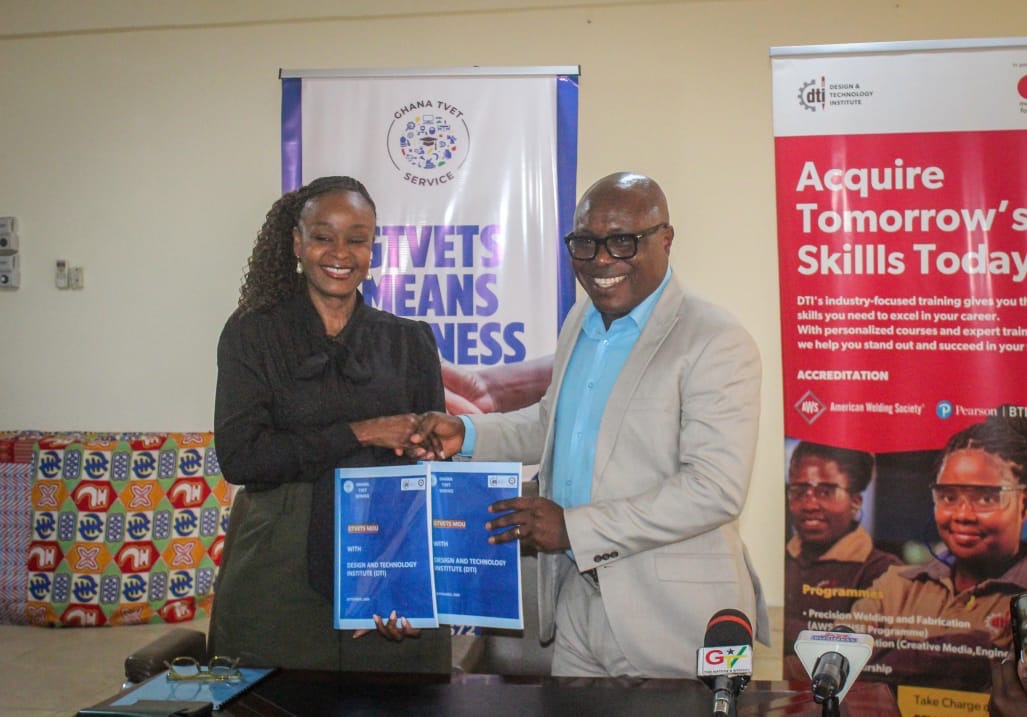
Ghana Partners to Close Skills Gap for 261 TVET Schools
Ghana's national vocational training service just partnered with a leading skills institute to transform how 261 schools prepare young people for real jobs. The collaboration tackles a critical problem: graduates waiting years for work because they lack practical skills employers actually need.
Thousands of Ghanaian graduates spend years searching for jobs not because they lack education, but because their training doesn't match what employers need. Now, a major partnership aims to change that reality for good.
The Ghana TVET Service and the Design & Technology Institute signed an agreement in September to overhaul how the country's 261 vocational schools prepare young people for work. The collaboration brings together government reach and industry expertise to close the gap between classroom learning and workplace demands.
Dr. Eric Kofi Adzroe, Director-General of Ghana TVET Service, put the challenge bluntly. "I have seen graduates four, five, six and even nine years after university struggling to find employment," he said, explaining that academic credentials alone no longer guarantee jobs.
The partnership focuses first on updating teachers themselves. As technology and industry practices evolve rapidly, instructors need ongoing training to pass relevant skills to students.
Ghana TVET Service oversees pre-tertiary vocational education nationwide under Act 1049. The organization now partners with DTI, which has already trained over 40,000 young people and master craftsmen since 2020, including 15,000 from the informal sector.
The Ripple Effect
This collaboration extends far beyond individual job placements. DTI's training meets international standards recognized in Houston, Hamburg, and Johannesburg, meaning graduates can compete globally.
The institute's Precision Quality programs combine technical skills with workplace values like accountability, safety consciousness, and teamwork. This year alone, 4,760 master craftsmen and small business owners graduated from programs in Accra, Kumasi, Takoradi, and Tamale.
Constance Swaniker, DTI's Founder and President, emphasized that challenges stem not from lack of trying but from systems stretched thin. "These are not failures of intention but realities of a system being asked to do more, move faster and serve more young people than ever before," she explained.
The partnership will strengthen workplace learning experiences, bring industry directly into training programs, and create clearer paths from education to employment. Digital transformation and better data tracking will help schools respond faster to labor market needs.
Dr. Adzroe noted that after visiting Germany, he observed how quality craftsmanship drives industrial success. He believes Ghana must adopt similar standards, emphasizing that "the only way we can transform this country is through TVET."
The collaboration also recognizes Africa's mobile workforce. As people move across borders seeking opportunities, they need skills recognized continent-wide, allowing them to "move with value" wherever they go.
For young Ghanaians entering a competitive job market, this partnership means training that opens doors instead of leaving them waiting years for their chance.
Based on reporting by Solutions Desk
Play Today’s BrightWire Positive Mini Crossword & Word Game
Keep your mind sharp with our free 5-minute uplifting daily crossword and positivity word puzzle.
Share This Good News Story
Send a dose of constructive journalism to someone who needs it today.
More Good News