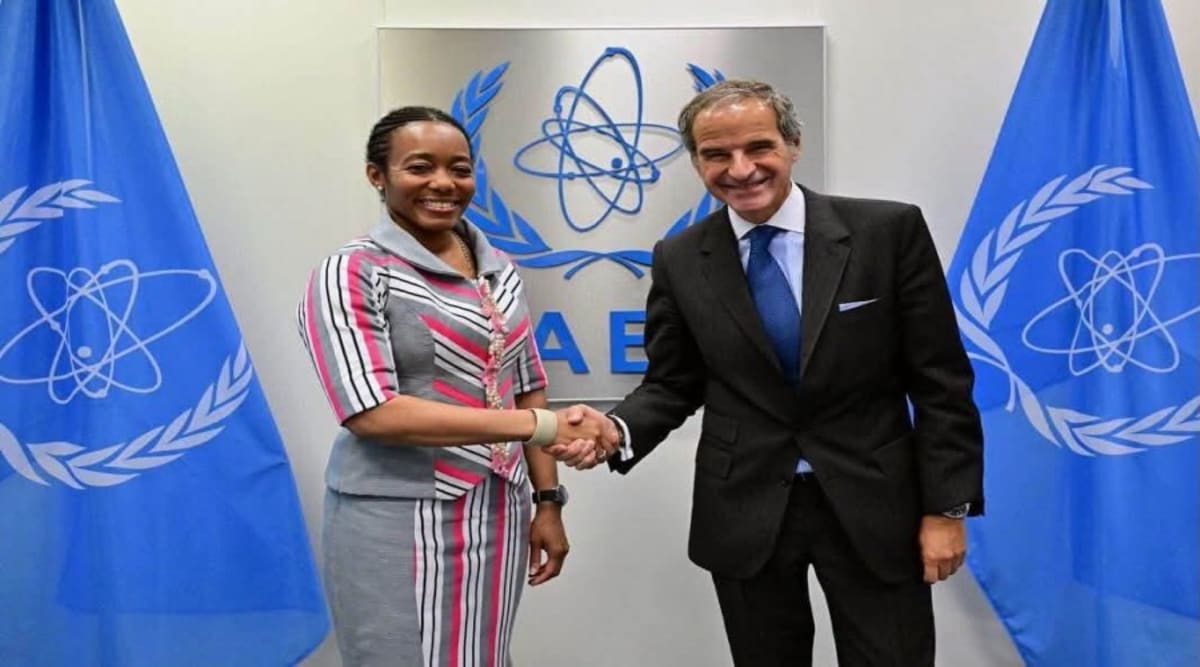
Ghana Partners with IAEA to Expand Nuclear Science
Ghana is deepening its partnership with the world's leading nuclear agency to bring cutting-edge science to healthcare, farming, and clean energy. The collaboration promises safer, smarter solutions for millions of Ghanaians.
Ghana is taking a major step forward in science and technology by strengthening its partnership with the International Atomic Energy Agency to harness nuclear innovation for everyday progress.
At the 70th IAEA General Conference in Vienna, Ghana's Minister for Environment, Science and Technology, Dr. Zanetor Agyeman-Rawlings, met with IAEA Director General Rafael Mariano Grossi to chart the country's nuclear development journey. The talks centered on how nuclear science can transform key sectors that touch millions of lives.
The partnership will focus on three critical areas: healthcare, agriculture, and energy. Nuclear technology offers powerful tools for diagnosing diseases, treating cancer, improving crop yields, and generating clean electricity. For a developing nation committed to sustainable growth, these applications could leapfrog traditional development challenges.
Safety remains the cornerstone of Ghana's nuclear programme. The discussions emphasized that every advance must prioritize security while delivering real benefits to communities. This careful approach shows how developing nations can embrace cutting-edge science responsibly.
Dr. Agyeman-Rawlings stressed her commitment to ensuring that scientific progress translates into tangible improvements for ordinary Ghanaians. It's not just about having the technology but making sure farmers, patients, and families actually feel the difference in their daily lives.
The IAEA brings decades of expertise helping countries safely adopt nuclear applications. Ghana joins more than 170 member states tapping into this knowledge network, learning from global best practices while adapting solutions to local needs.
The Ripple Effect
This partnership could transform multiple sectors simultaneously. Imagine farmers using nuclear techniques to develop drought-resistant crops that feed more families. Picture rural clinics equipped with nuclear medicine capabilities that catch diseases earlier and save more lives. Consider cleaner energy options that power economic growth without adding to climate change.
The collaboration also positions Ghana as a leader in West Africa's science and technology landscape. As the country builds capacity in nuclear applications, it can share lessons and expertise with neighboring nations facing similar development challenges.
International cooperation like this proves that complex technologies don't have to remain locked in wealthy nations. When countries work together through trusted organizations like the IAEA, innovation becomes accessible to everyone who commits to using it safely and responsibly.
Ghana's nuclear journey shows how strategic partnerships can unlock solutions that seemed out of reach just years ago.
Based on reporting by Google News - Ghana Development
This story was written by BrightWire based on verified news reports.
Spread the positivity!
Share this good news with someone who needs it