Ghana Plants 3.2M Mangroves, Creates Hundreds of Jobs
Ghana's massive coastal restoration project has planted over 3.2 million mangrove trees while creating hundreds of jobs, many for women. The collaboration between Ghana's government and restoration partners shows how fighting climate change can strengthen communities and economies at the same time.
In Ghana's Volta Region, 3.2 million mangrove seedlings are already taking root along degraded coastlines, and the people planting them are earning steady paychecks while rebuilding their ecosystems.
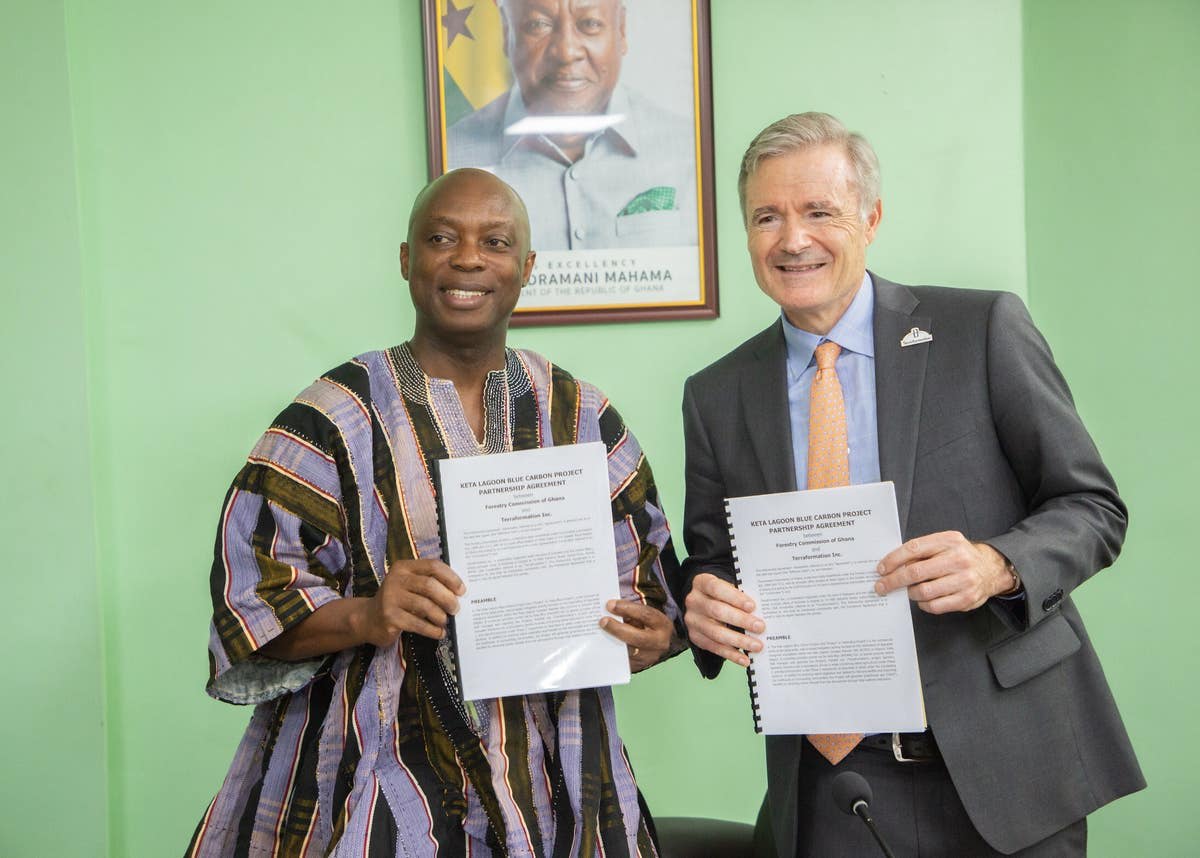
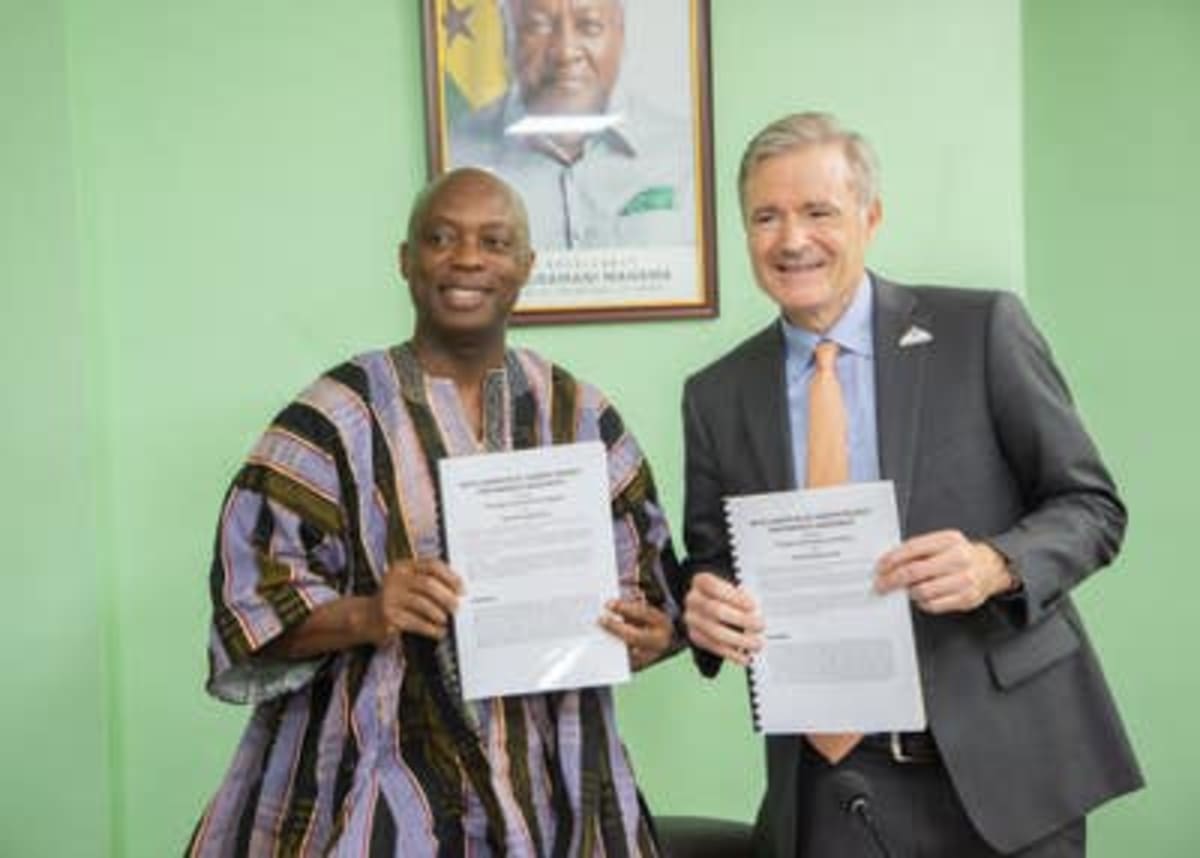
The Ghana Forestry Commission and reforestation company Terraformation just strengthened their partnership to expand what's become one of the world's largest mangrove restoration projects. The Keta Lagoon initiative has already created hundreds of full and part-time jobs since large-scale planting began in 2024, with women holding a significant portion of those positions.
The project aims to restore 6,000 hectares of coastal wetlands by planting 12 million native mangrove trees total. That's not just about carbon capture, though the trees will remove an estimated 2.3 million tons of CO₂ over 40 years.
For coastal communities, the real wins are happening now. Restored mangroves protect against flooding and erosion while helping fish populations recover, directly supporting the livelihoods of families who depend on fishing and coastal resources.
Local partners Regenerative Development of Anlo Wetlands and Agrointroductions Ghana are leading implementation on the ground, working directly with community members. A second phase launching later this year will create even more employment opportunities as restoration expands.
"Ghana is demonstrating how climate action can go hand in hand with economic growth," said Jad Daley, President of Terraformation. The project includes funding for small-scale aquaculture and beekeeping, plus a dedicated trust fund that reinvests carbon revenues back into community development.
Dr. Hugh C.A. Brown, Chief Executive of the Ghana Forestry Commission, emphasized the dual focus: "Ghana pursues collaborations that contribute not only to ecological restoration in our country but do so in tandem with the economic and social needs of our people."
The Ripple Effect
This approach is becoming a template for climate projects across Ghana and beyond. By centering local leadership and immediate economic benefits alongside environmental goals, the Keta Lagoon project proves restoration doesn't require choosing between people and planet.
Government officials, scientists, and community partners gathered in Accra this week to explore expanding the model to additional sites across Ghana, bringing more jobs and restored ecosystems to communities that need both.
Nature is healing along Ghana's coast, and so are the economic prospects of the people doing the healing work.
More Images
Based on reporting by Google News - Reforestation
This story was written by BrightWire based on verified news reports.
Spread the positivity!
Share this good news with someone who needs it