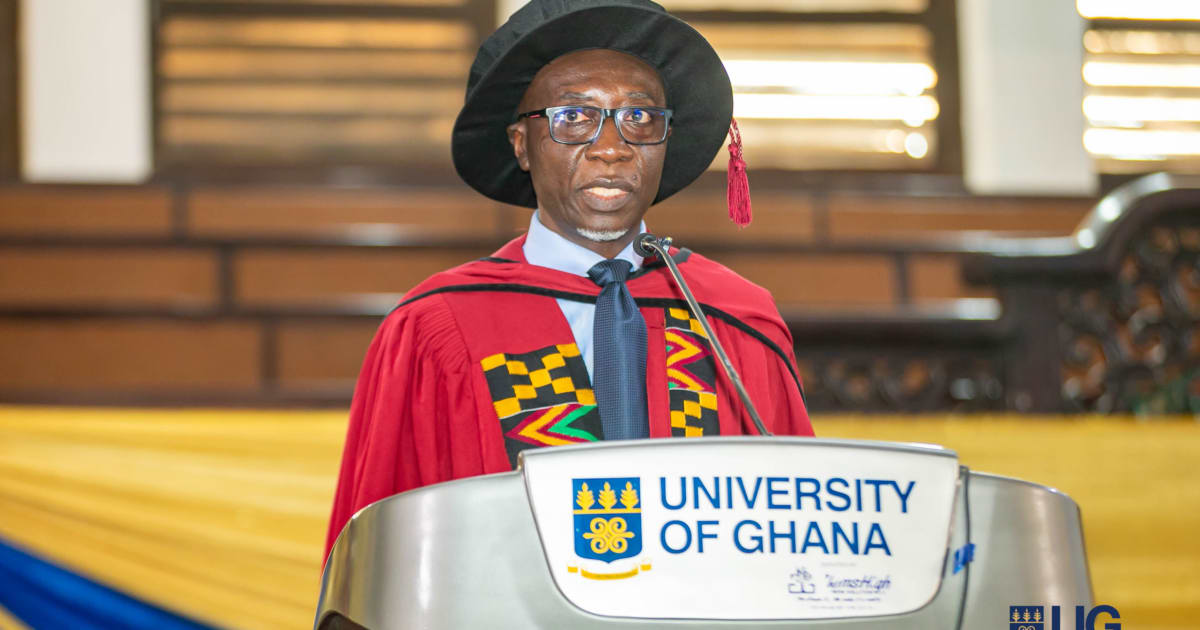
Ghana Professor Links Student Freedom to Africa's Democracy
A University of Ghana law professor argues that giving students real power in academic decisions could strengthen democracy across Africa. His lecture challenges universities to treat students as partners, not just passive learners. #
What if the key to Africa's democratic future lies in how universities treat their students today?
Professor Kwadwo Appiagyei-Atua delivered a groundbreaking lecture at the University of Ghana, arguing that student academic freedom is essential for building stronger democracies across the continent. The international law and human rights expert presented his ideas as the final inaugural lecture of the 2025/2026 academic year.
His central message challenges how universities currently operate. Prof Appiagyei-Atua argues that while everyone worries about governments threatening academic freedom, universities themselves often silence student voices through rigid hierarchies and outdated power structures.
Students occupy the bottom of the academic ladder despite being primary stakeholders in their education. They have limited say in governance, teaching methods, and decisions that directly affect their lives on campus.
The professor drew on the 1990 Dar es Salaam Declaration to outline what students should rightfully have: freedom to choose their studies, freedom to disagree, participation in academic programs, and real involvement in university governance. These aren't privileges but rights that come with being members of academic communities.
He also tackled a sensitive issue: political party involvement in student leadership. When partisan politics dominates campus elections, it can weaken independent student activism and create distrust in student representation.
The Ripple Effect
Prof Appiagyei-Atua's vision extends far beyond campus boundaries. He believes universities serve as democracy training grounds where students learn habits of participation, representation, and accountability that they carry into society after graduation.
His proposed solution involves collaborative governance where states, universities, faculty, students, and civil society share authority horizontally. This model emphasizes mutual accountability and recognizes that each group plays distinct but interconnected roles.
He called for democratizing classrooms themselves, moving away from treating students as passive recipients of knowledge. Instead, he advocates for dialogue, critical thinking, and co-creating knowledge between students and professors.
Vice-Chancellor Prof Nana Aba Appiah Amfo praised the lecture as thought-provoking and acknowledged the real challenges surrounding academic freedom and student participation. She emphasized creating environments where all university community members can contribute meaningfully.
The lecture concluded with Prof Appiagyei-Atua receiving recognition from the School of Law, various university departments, and his family for his scholarly contributions to international law and human rights.
His message offers hope that strengthening student voices today could build more vibrant democracies tomorrow.
#
Based on reporting by Myjoyonline Ghana
This story was written by BrightWire based on verified news reports.
Spread the positivity!
Share this good news with someone who needs it


