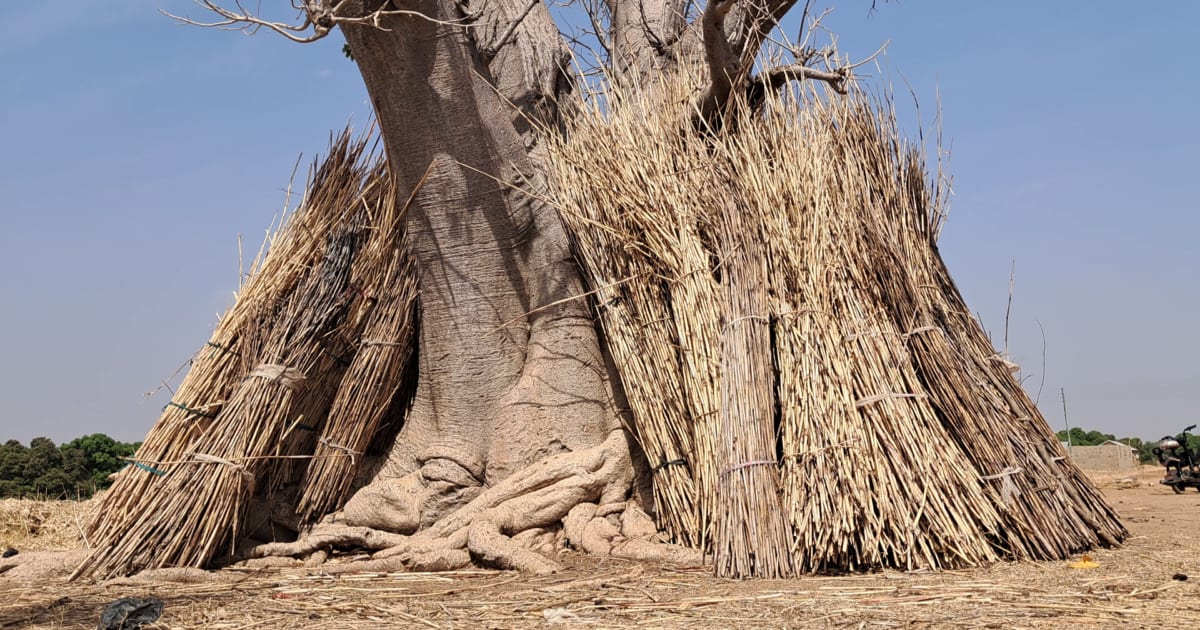
Ghana Village Cooks With Farm Waste, Saves Forests
In Zuuku, Ghana, women are cooking with dried crop stalks instead of firewood, protecting nearby forests while creating a small income. This generations-old practice is now being recognized as an unexpected climate solution.
After harvest season in Zuuku, near Bawku in Ghana's Upper East Region, women gather maize and millet stalks from the fields and transform them into cooking fuel. What their grandparents did out of necessity is now helping protect forests and reduce carbon emissions.
Ayishetu Ayaanab, 66, has cooked with crop stalks her entire life. "We have used these stalks since the time of our parents," she said. "This energy is cheaper than firewood, and firewood is destroying our forests."
The practice works because charcoal is hard to find in Zuuku, and firewood has become increasingly scarce. Crop residues cost nothing to collect and grow naturally alongside food crops, making them available after every harvest.
Some women even sell surplus stalks for extra income. With just 10 cedis (less than $1), Ayaanab can buy soap or help feed her family.
Dr. Alexander Nti Kani, an environmental expert with the Centre for Climate Change and Food Security, confirms the climate benefits. "When crop residues are reused for cooking, there is less need to cut trees," he explained. "That helps protect forests and reduce carbon emissions."
The stalks also prevent another problem. When crop waste is burned openly in fields, it releases harmful gases and damages soil health. Farmer Amadi Abugre, in his 70s, sees double benefits. "Using the stalks for cooking keeps the land healthy and helps us in the home," he said.
Researchers across Ghana are paying attention. A Ghana-Germany study in Sunyani found that large quantities of unused biomass could power entire communities. Professor Nana Sarfo Agyemang Derkyi leads the Level Up Waste-to-Energy Project and sees bigger possibilities. "If serious action is taken, some areas could be powered with waste within a month," he said.
The practice isn't perfect. Like other solid fuels, burning stalks produces smoke that can affect health. But residents cook in open compounds where smoke disperses more easily than in enclosed kitchens, and they say properly dried stalks burn cleaner than damp firewood.
The Ripple Effect
What started as a practical solution in one village could help address a continent-wide challenge. About one billion people in sub-Saharan Africa still lack access to clean cooking solutions, according to the International Energy Agency.
Zuuku's approach offers a middle ground. The stalks don't require cutting down trees like charcoal production does, and they use material that would otherwise be wasted or burned in open fields.
With improved stoves and better ventilation, the health risks could decrease even further. Agricultural specialists note that some crop residues should stay on fields as mulch to protect soil, but households can safely use material that would otherwise go to waste.
From protecting forests to creating income to keeping soil healthy, this simple practice is proving that traditional knowledge and climate action can work together beautifully.
Based on reporting by Myjoyonline Ghana
This story was written by BrightWire based on verified news reports.
Spread the positivity!
Share this good news with someone who needs it