Giant Deep-Sea Crustaceans Survive Years Without Food
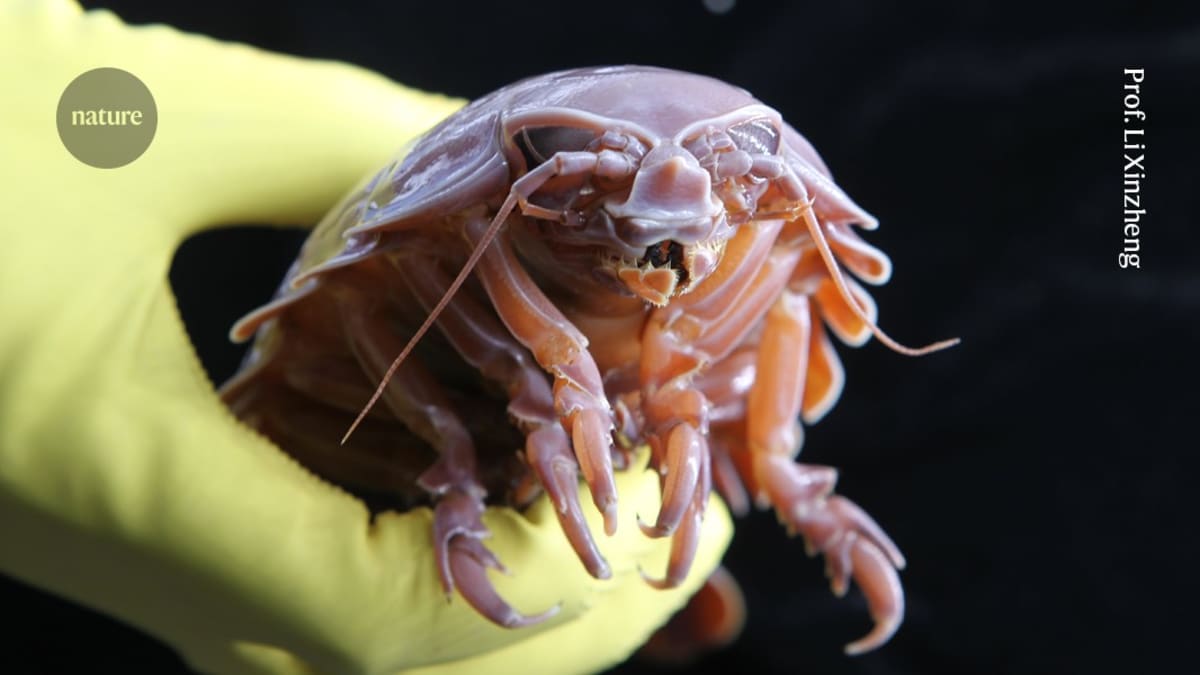
Scientists discovered that supergiant isopods, deep-sea creatures the size of house cats, borrowed a bacterial gene that lets them survive for years without eating. This rare example of gene transfer between such different organisms reveals nature's remarkable survival strategies.
Imagine not eating for years and thriving anyway. That's the reality for supergiant isopods, deep-sea crustaceans that have unlocked one of nature's most impressive survival tricks.
These remarkable creatures can grow up to 50 centimeters long, roughly the size of a small house cat. Living in the darkest depths of the ocean where food is scarce, they needed an extraordinary solution to survive.
Scientists just discovered their secret: a metabolism gene borrowed from bacteria. This finding, published in the journal Cell, reveals a stunning example of horizontal gene transfer, where organisms acquire genetic material from completely unrelated species.
The gene helps these giant isopods regulate their metabolism so efficiently that they can go years between meals. When food finally appears in the deep sea, they're ready to feast, but when it doesn't, their borrowed bacterial machinery keeps them alive through extended fasts.
This type of gene transfer is common among bacteria but extremely rare between bacteria and complex animals. Finding it in a creature as advanced as a crustacean opens new questions about how life adapts to extreme environments.
The discovery came from researcher J. Yuan and team, who studied how these animals survive in one of Earth's harshest habitats. The deep sea receives almost no sunlight and limited nutrients, making every adaptation a matter of life or death.
Why This Inspires
This finding shows that nature is far more creative than we imagined. When faced with seemingly impossible challenges, life finds ways to collaborate across evolutionary boundaries.
The supergiant isopod's borrowed gene proves that survival sometimes requires adopting solutions from unexpected places. It's a reminder that innovation often comes from looking beyond our usual resources.
Understanding how these creatures thrive in extreme conditions could inspire new approaches to human challenges, from medical treatments to space exploration. Nature has been solving problems for billions of years, and we're still learning from its wisdom.
The deep sea keeps revealing that life is more resilient and inventive than we ever thought possible.
More Images




Based on reporting by Nature News
This story was written by BrightWire based on verified news reports.
Spread the positivity!
Share this good news with someone who needs it