Giant Tortoises Return to Galápagos After 180 Years
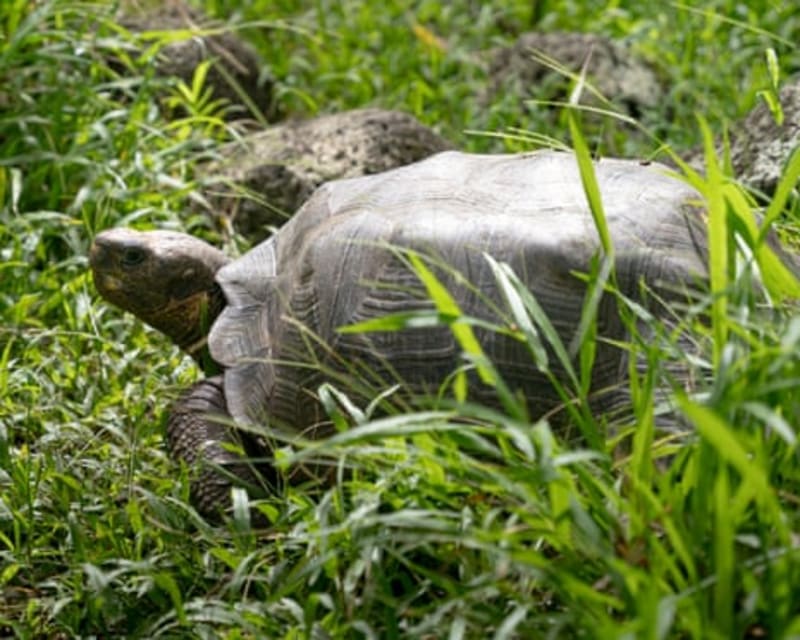
The Floreana giant tortoise is walking its ancestral island again after whalers drove the species to extinction in the 1840s. Scientists brought back 158 juveniles through an innovative "back breeding" program using descendants discovered on a distant volcano.
For the first time in more than 180 years, giant tortoises are plodding across Floreana Island in the Galápagos, bringing hope to one of the world's most ambitious ecosystem restoration projects.
The Floreana giant tortoise vanished in the 1840s when whalers removed thousands from the volcanic island to serve as living food stores during long ocean voyages. By the time Charles Darwin visited in 1835, the subspecies was already on the brink of collapse.
But this story didn't end in extinction. In 2008, scientists discovered a relic population on Wolf Volcano, 60 miles away on Isabela Island, that carried Floreana genes in their DNA.
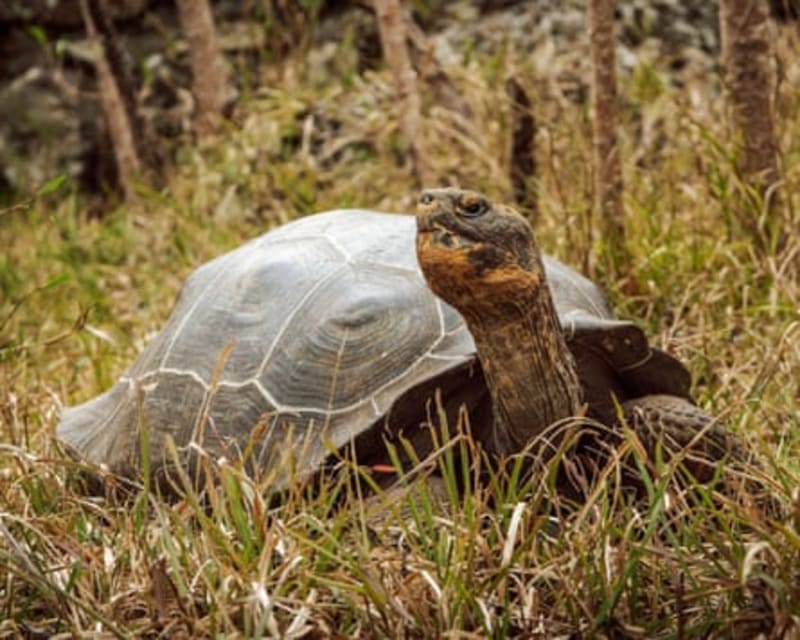
Some of these tortoises had the distinctive saddleback shell shape unique to Floreana tortoises, likely descendants of animals whalers had transported between islands or tossed overboard to lighten their ships. Conservation teams saw an opportunity.
In 2017, researchers selected 23 hybrid tortoises most genetically similar to the original Floreana subspecies and began a "back breeding" program. By 2025, more than 600 hatchlings had been born, with several hundred growing large enough to return home.
The 158 juveniles now exploring Floreana represent the first wave of a multi-generational restoration effort. Males can grow nearly five feet long and live well over 100 years, giving these youngsters plenty of time to reshape their island.
Their return was only possible after a massive invasive species removal program launched in 2023 eliminated most of the rats and feral cats that had devastated native wildlife for nearly two centuries. The results have already exceeded expectations.
The Ripple Effect
Giant tortoises aren't just charming icons. They're ecosystem engineers whose grazing maintains open habitats and promotes native plant growth.
As they roam, they distribute seeds across the landscape, creating conditions that benefit reptiles, invertebrates, and birds. Their movements shape vegetation patterns and create microhabitats like shallow wallows that other species depend on.
The island's 160 residents have noticed dramatic changes since rats were removed. Farmers report much-improved harvests, while ground finches, native geckos, lizards, and snails are rebounding in numbers not seen in generations.
The Galápagos rail, a bird not recorded since Darwin's first visit, has even been rediscovered on Floreana. Scientists now plan to reintroduce the Floreana mockingbird, racer snake, vegetarian finch, and little vermilion flycatcher.
Verónica Mora, a community representative, captured the local perspective perfectly: "This moment marks an important step toward a future where conservation and community wellbeing go hand in hand, because our livelihoods, from tourism to agriculture and fishing, depend on the health of this island."
These young tortoises carry more than just genes on their backs—they carry the future of an entire ecosystem coming back to life.
More Images


Based on reporting by Guardian Environment
This story was written by BrightWire based on verified news reports.
Spread the positivity!
Share this good news with someone who needs it