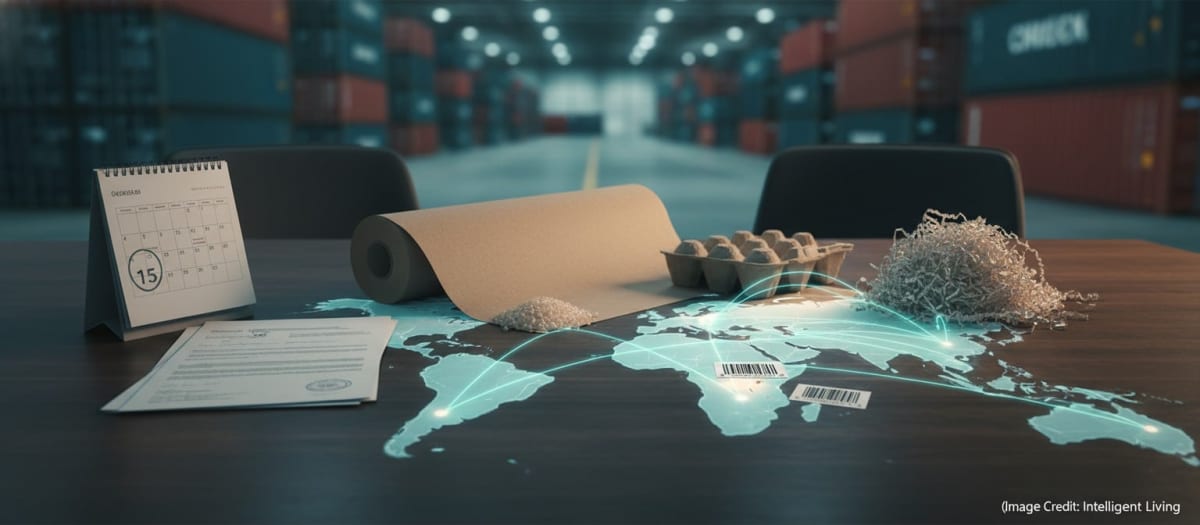
Global Supply Chains Cut Plastic 16% as New Laws Take Effect
Major companies slashed single-use plastic packaging by 16.4% in 2024 as new regulations turn sustainable packaging from a nice-to-have into a must-have. Laws taking effect in 2026 across the EU, UK, Canada, and California are making plastic reduction a competitive advantage rather than just a cost.
Companies around the world just proved that cutting plastic isn't just possible—it's already happening at scale.
Global supply chains reduced single-use plastic delivery packaging by 16.4% in 2024, driven by upcoming regulations that transform packaging from a simple shipping decision into a compliance requirement. The shift marks a turning point where preventing plastic waste upstream finally beats trying to clean it up downstream.
The European Union's Packaging and Packaging Waste Regulation takes full effect on August 12, 2026, creating legally binding requirements for every business shipping products in Europe. The stakes are real: packaging represents 40% of all plastic used in the EU, generating 186.5 kilograms of waste per person each year.
The UK is using price signals to accelerate change. Starting April 1, 2026, packaging that doesn't meet recycled content thresholds will cost companies £228.82 per ton in taxes. That's a real line item in procurement budgets, not a theoretical environmental cost.
Canada's federal single-use plastic rules are already active, and California's Senate Bill 54 is pulling suppliers toward common standards through sheer market size. When you combine these jurisdictions, companies face a choice: redesign once for everyone or manage dozens of different packaging systems.
The Ripple Effect
The regulations are driving three practical strategies that work. Companies are eliminating unnecessary plastic components like decorative overwrap and non-functional inserts. They're substituting plastic with materials like recycled paper, molded fiber, and certified compostable alternatives that match performance standards. And they're designing reusable packaging systems where containers become circulating assets rather than single-use waste.
Hotels have quietly removed miniature plastic toiletries. Grocery checkouts offer fewer disposable bags. Refill stations are becoming standard infrastructure rather than experimental pilot programs. These operational shifts happened before enforcement deadlines, proving that businesses can adapt when market signals align.
The changes extend beyond packaging materials to supply chain resilience. Feedstock constraints are already affecting polymer production as liquefied petroleum gas and naphtha supplies tighten, according to the International Energy Agency. Companies that locked in alternative materials early are avoiding price spikes and delivery delays that still plague plastic-dependent competitors.
Procurement teams now treat packaging as a bill-of-materials challenge with measurable financial risk. Every plastic component carries potential tax liability, compliance costs, and supply chain vulnerability. The businesses winning in 2026 aren't the ones making the loudest sustainability promises—they're the ones with audited compliance frameworks and verified reduction data.
The global treaty on plastic pollution remains unfinished at the United Nations, but national and regional governments aren't waiting. They've created a patchwork of enforceable rules that collectively cover enough of the global economy to drive industry-wide transformation.
Cutting plastic from global supply chains is no longer a future goal—it's this year's competitive requirement, and the early movers are already 16% ahead.
Based on reporting by Google News - Plastic Reduction
This story was written by BrightWire based on verified news reports.
Spread the positivity!
Share this good news with someone who needs it