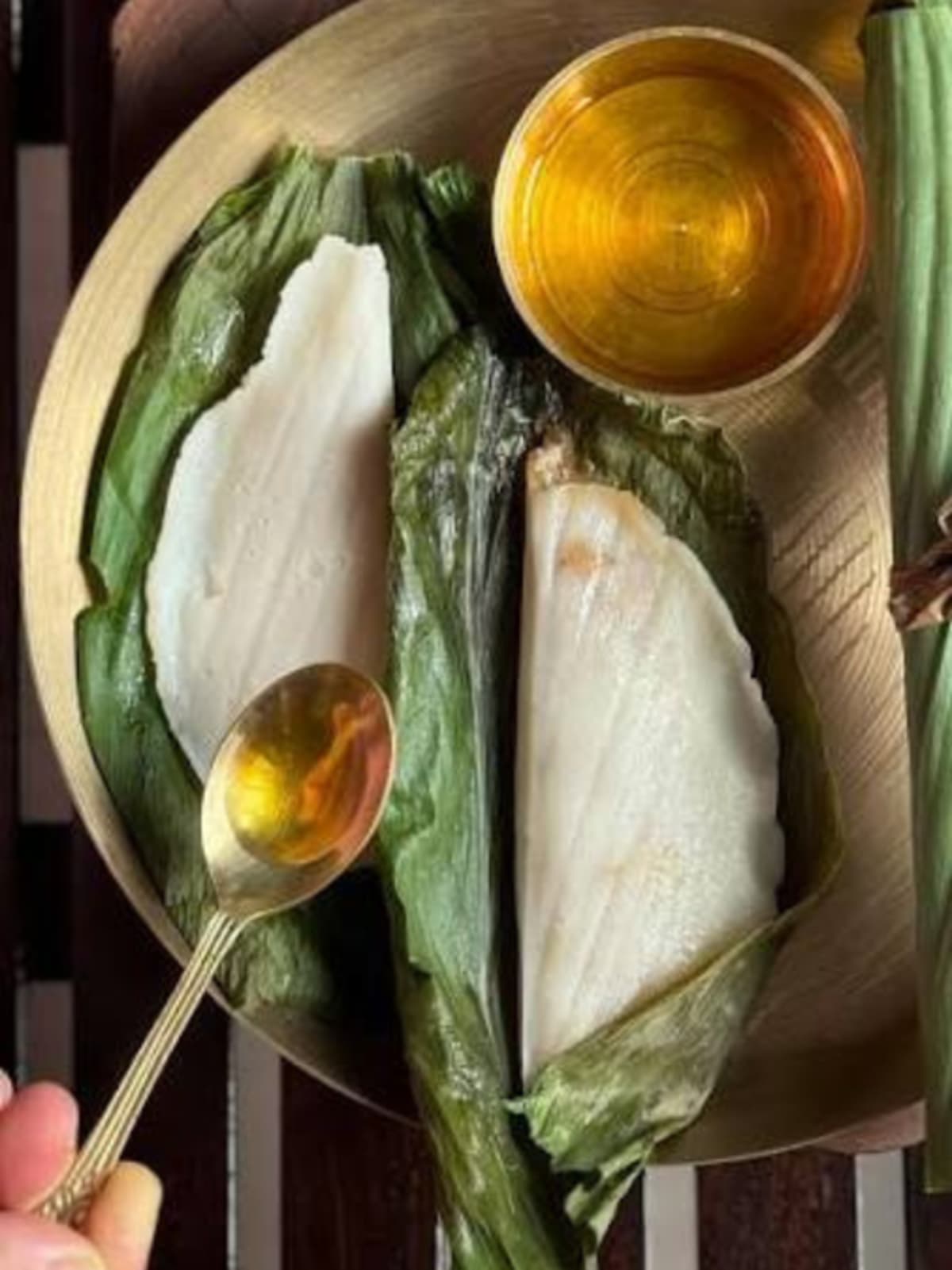
Goa's Monsoon-Only Sweet Wrapped in Turmeric Leaves
Every monsoon, wild turmeric leaves sprout across Goa for just a few weeks, giving families their only chance to make patoleo, a steamed rice sweet that vanishes when the rains stop. The leaf flavors everything but is never eaten.
When June rains drench Goa's coast, something magical happens that kitchens wait all year for. Wild turmeric leaves push through the soil for just a few precious weeks, and families rush to make patoleo, a sweet that exists nowhere else and at no other time.
The tradition works on nature's strict timeline. These turmeric plants hide underground as roots for most of the year, only responding to monsoon showers with fresh green leaves. Once the rains end, the leaves disappear, and patoleo season closes until next June.
Making patoleo starts with soaking rice overnight and grinding it into a smooth paste. Cooks spread this paste thin across each washed turmeric leaf, then spoon in a filling of coconut and jaggery that's been cooked until sticky. The leaf gets folded shut, sealing the sweetness inside like a gift.
Stacked parcels go into steamers for fifteen to twenty minutes. As steam rises through the layers, the turmeric leaf releases its oils into the rice, creating an earthy fragrance that announces patoleo is ready. The scent alone brings back childhood memories for many Goans.
Here's the twist: despite doing all the flavoring work, the turmeric leaf never gets eaten. Its raw taste is too bitter, so cooks peel it away after steaming, revealing soft rice coating around a warm coconut center. Most families eat it fresh with a spoonful of ghee, exactly as their mothers and grandmothers did.
The Ripple Effect
Patoleo bridges Goa's religious communities in the sweetest way possible. Hindu families prepare it for Nag Panchami and Ganesh Chaturthi, while Christian households make batches for the Feast of São João and the Assumption. In some Hindu homes, a salt-free version using wheat or varai flour becomes an offering to goddess Parvati.
The tradition has jumped beyond home kitchens into Goan cafes and markets, keeping the recipe alive even as younger generations move away. When turmeric leaves run scarce, resourceful cooks turn to banana leaves as substitutes, adapting rather than abandoning the tradition entirely.
Today, patoleo represents something bigger than a monsoon treat. It shows how food can unite different faiths around shared joy, and how communities preserve traditions that depend on nature's brief and perfect timing.
Based on reporting by The Better India
This story was written by BrightWire based on verified news reports.
Spread the positivity!
Share this good news with someone who needs it