Goats and Cattle Fight Wildfires Across Western U.S.
Livestock are becoming unlikely wildfire prevention heroes across the American West, munching through flammable vegetation that would otherwise fuel catastrophic fires. Federal agencies are now expanding this natural solution as wildfire seasons grow more severe.
Across grasslands in the American West, thousands of goats, sheep, and cattle are quietly preventing the next wildfire disaster simply by eating their lunch.
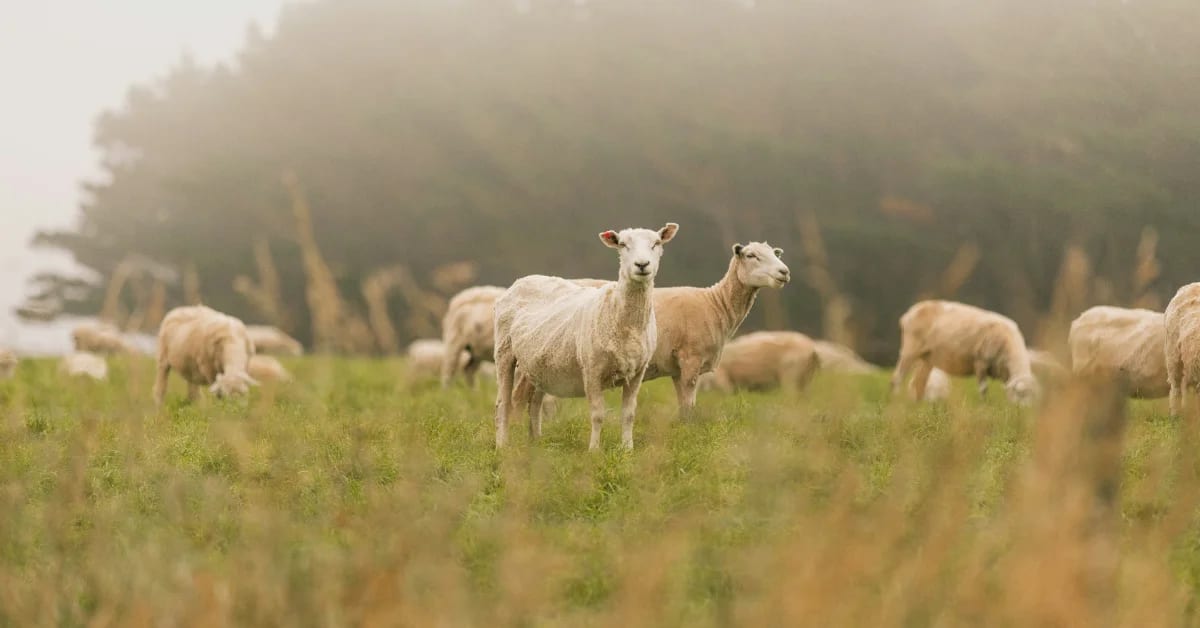
These four-legged firefighters are part of a growing strategy called targeted grazing, where livestock munch through tall grasses and shrubs that would otherwise fuel catastrophic wildfires. As they eat, they also trample down vegetation, creating natural firebreaks that can slow or stop flames from spreading into communities.
The numbers are impressive. In California alone, beef cattle consumed around 600 pounds of vegetation per acre across nearly 34 million acres in 2017. Santa Clara County now includes grazing as a formal part of its wildfire management plans.
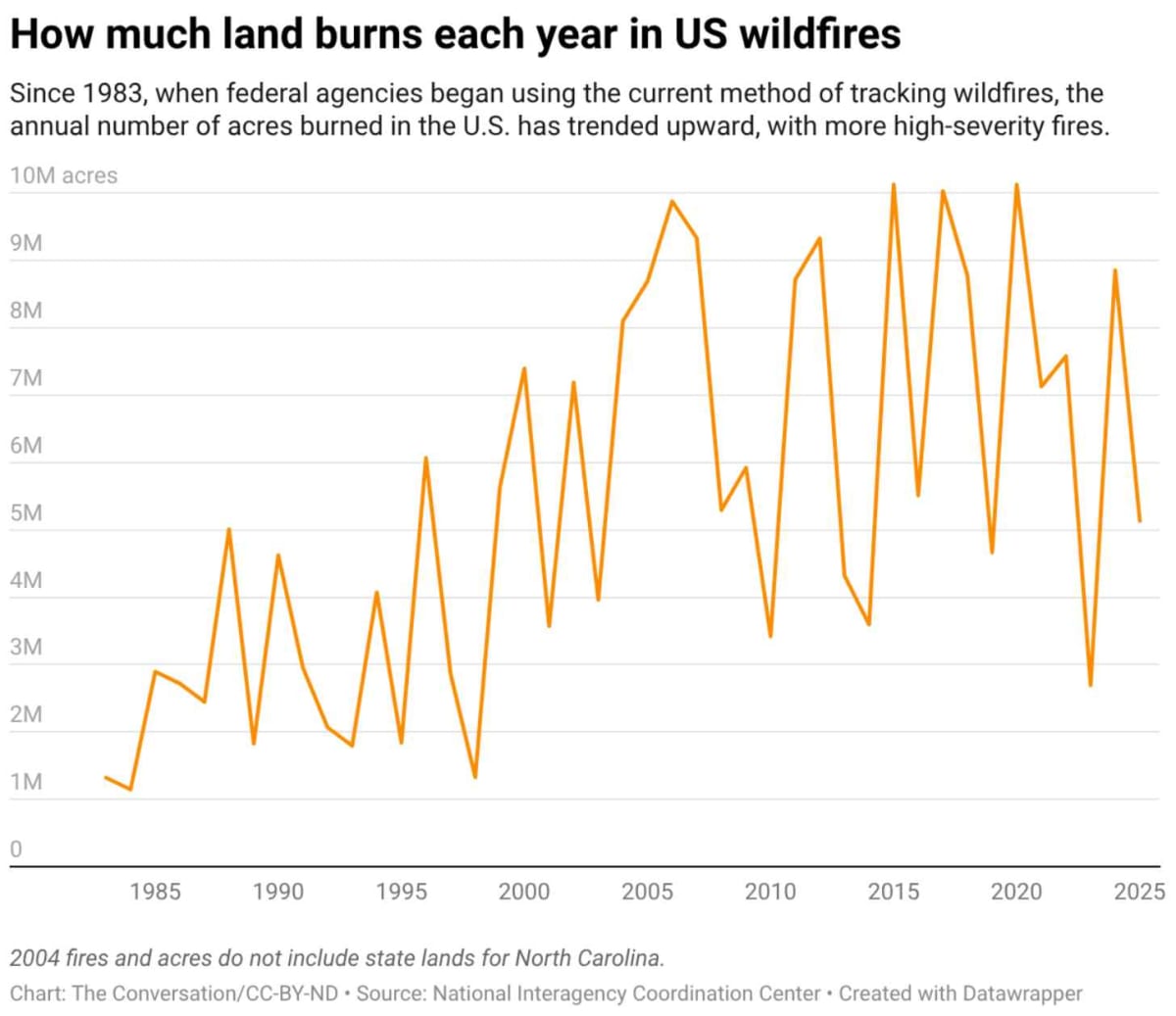
Federal leaders are taking notice. The U.S. Forest Service and Bureau of Land Management are pushing to expand targeted grazing across National Forests and public lands through their 2025 Grazing Action Plan. The timing couldn't be better as severe wildfire seasons push firefighting budgets and crews to their limits.
The strategy works especially well in places where traditional fire prevention methods fall short. Intentional burning can be too dangerous in areas with dense vegetation, and heavy machinery can't reach remote or steep terrain. But goats, sheep, and cattle navigate these challenging landscapes with ease.
Land managers are getting creative with the approach. Some use grazing to clear vegetation before controlled burns, making those fires safer and easier to manage. Others graze areas first, then apply herbicides to treat invasive grasses more effectively.
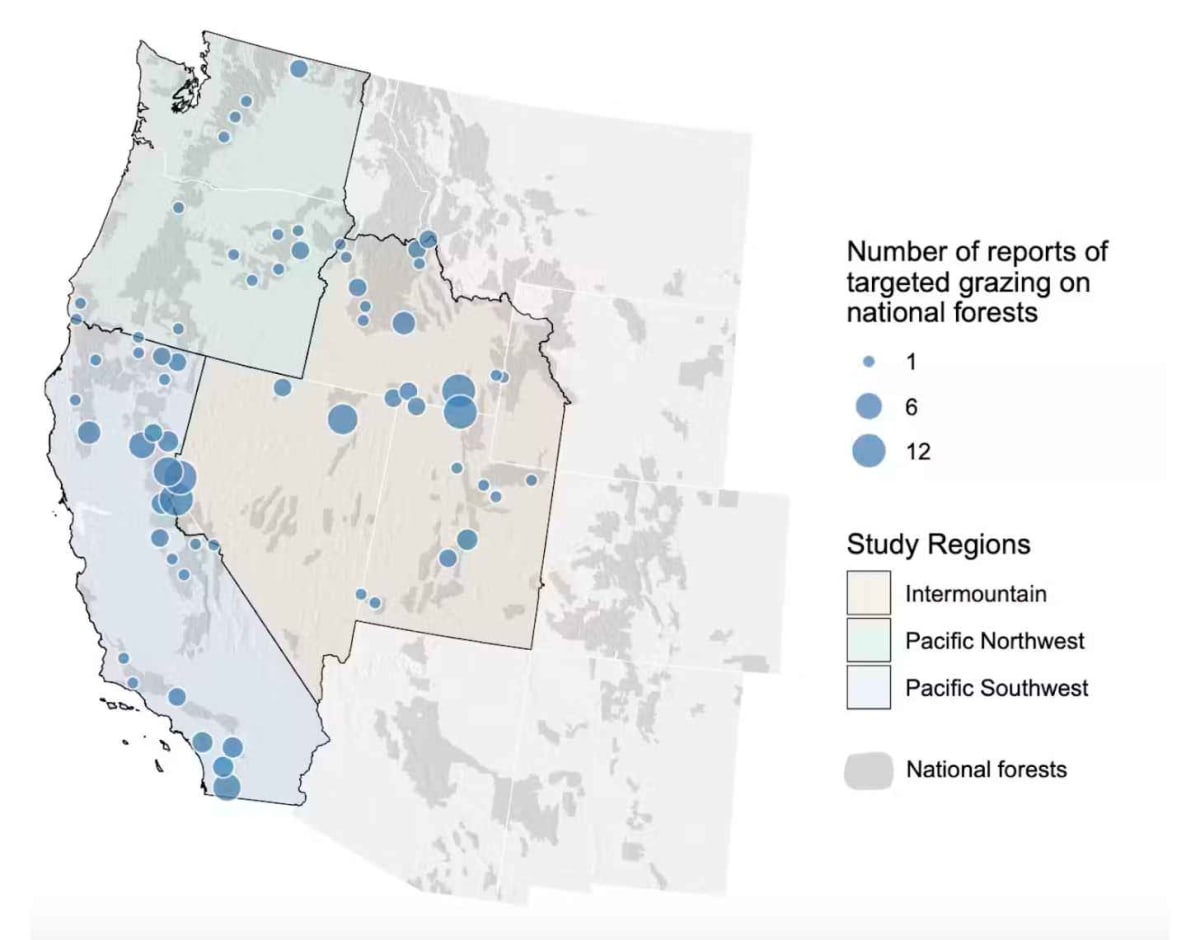
When researchers surveyed over 1,000 Forest Service staff, a majority rated targeted grazing as moderately to extremely effective for wildfire risk management. A quarter of ranger districts in the Pacific Northwest, Intermountain, and Pacific Southwest regions have already used some form of targeted grazing.
The goal isn't to prevent every wildfire but to reduce vegetation enough to avoid catastrophic burns. When fires do start, grazed areas help slow the spread, giving firefighters time to protect communities and allowing ecosystems to recover afterward.
The Ripple Effect
This natural approach solves multiple problems at once. Ranchers maintain their herds while helping communities stay safe. Public lands get managed without expensive machinery or chemicals. Wildlife habitats remain intact while still reducing fire risk.
The practice works best in grasslands and shrublands where livestock naturally thrive. Rangeland scientists note that while cattle can't eat large woody trees, most wildfires actually burn through grass and shrublands where these animals excel.
Challenges remain. Ranchers sometimes need to move livestock at unusual times or haul water to areas without natural sources, which costs money and requires operational changes. Federal agencies are still working out details like fair payment for ranchers who conduct targeted grazing.
Despite these hurdles, the momentum is building as communities across the West search for sustainable wildfire solutions that work with nature instead of against it.
More Images
.jpg)

Based on reporting by Good Good Good
This story was written by BrightWire based on verified news reports.
Spread the positivity!
Share this good news with someone who needs it