Google DeepMind Recruits Students for AI Cancer Research
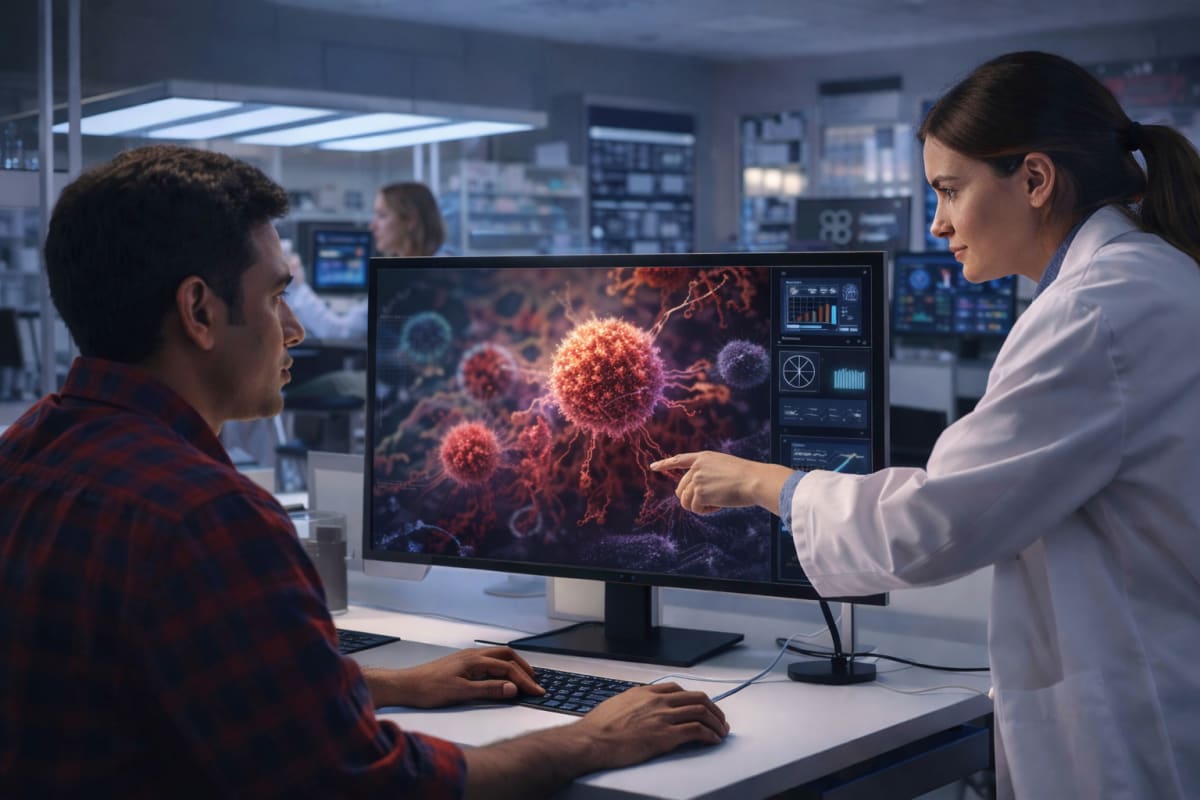
Google DeepMind is hiring PhD students to help build AI systems that could accelerate cancer discovery. The six to nine month positions signal growing collaboration between academic research and real-world medical breakthroughs.
Students pursuing PhDs in computer science and related fields now have a chance to help build artificial intelligence that could speed up cancer research.
Google DeepMind announced new student researcher positions focused on developing AI systems for cancer discovery. The roles, running six to nine months starting in May or June 2026, will be based primarily in Mountain View, California and other North American locations.
Shekoofeh Azizi, a staff research scientist at Google DeepMind, shared the opportunity on LinkedIn. "We're building AI systems that accelerate scientific discovery in cancer," she wrote. "If that excites you, this might be your opportunity."
The positions support ongoing work applying large language models to biomedical challenges, including therapeutics and single-cell biology. Azizi's team has contributed to several of Google's medical AI initiatives, including Med-PaLM, Med-Gemini, and TxGemma, all designed for healthcare and life science applications.
Candidates need to be enrolled in PhD programs in fields like computer science, statistics, or applied mathematics. Experience in machine learning, natural language processing, or data science is expected, along with prior research activity such as published papers or lab work.
The program gives students hands-on experience deploying AI systems at scale while contributing directly to frontier medical research. While the positions don't automatically convert to full-time jobs, they offer valuable exposure to how AI development intersects with real-world healthcare challenges.
The Ripple Effect
This recruitment reflects a broader shift in how academic research and industry innovation work together, particularly in healthcare AI. Students gain access to data, infrastructure, and real-world applications that most university labs can't provide on their own.
For cancer research specifically, AI systems capable of processing vast amounts of biological data could help identify patterns and potential treatments faster than traditional methods. By bringing fresh academic perspectives into active industry projects, Google DeepMind is betting that this collaboration speeds progress on both sides.
The initiative also creates a pipeline where the next generation of researchers learns to build AI tools with immediate practical applications, not just theoretical possibilities.
A new generation of scientists is getting the chance to work on AI that could genuinely change how we fight cancer.
More Images


Based on reporting by Google: scientific discovery
This story was written by BrightWire based on verified news reports.
Spread the positivity!
Share this good news with someone who needs it