
Google's AI Tool ERA Predicts Disease Outbreaks, Maps CO2
Google's new AI assistant for scientists, published in Nature, writes expert-level code that's already forecasting flu outbreaks and tracking carbon emissions with groundbreaking accuracy. The tool that helped build it is now available to researchers worldwide.
Scientists just got a powerful new teammate that could speed up discoveries from climate change to disease prevention.
Google Research unveiled Empirical Research Assistance (ERA), an AI tool published today in Nature that writes and optimizes scientific code at expert level. The system tackles one of research's biggest time drains: testing and refining computational experiments over and over until they work.
ERA works like having a tireless coding partner who never gets frustrated. Given a scientific problem and a goal, it searches research papers, writes code, explores thousands of possible solutions, and evaluates results using advanced tree search methods. Then it picks the best approach.
The results speak for themselves. ERA achieved expert-level performance across benchmarks in genomics, public health, satellite imagery, neuroscience, and mathematics. Google is now making the technology available through a new program called Computational Discovery in Gemini for Science.
But ERA isn't just passing tests. It's already solving real-world problems that affect millions of people.
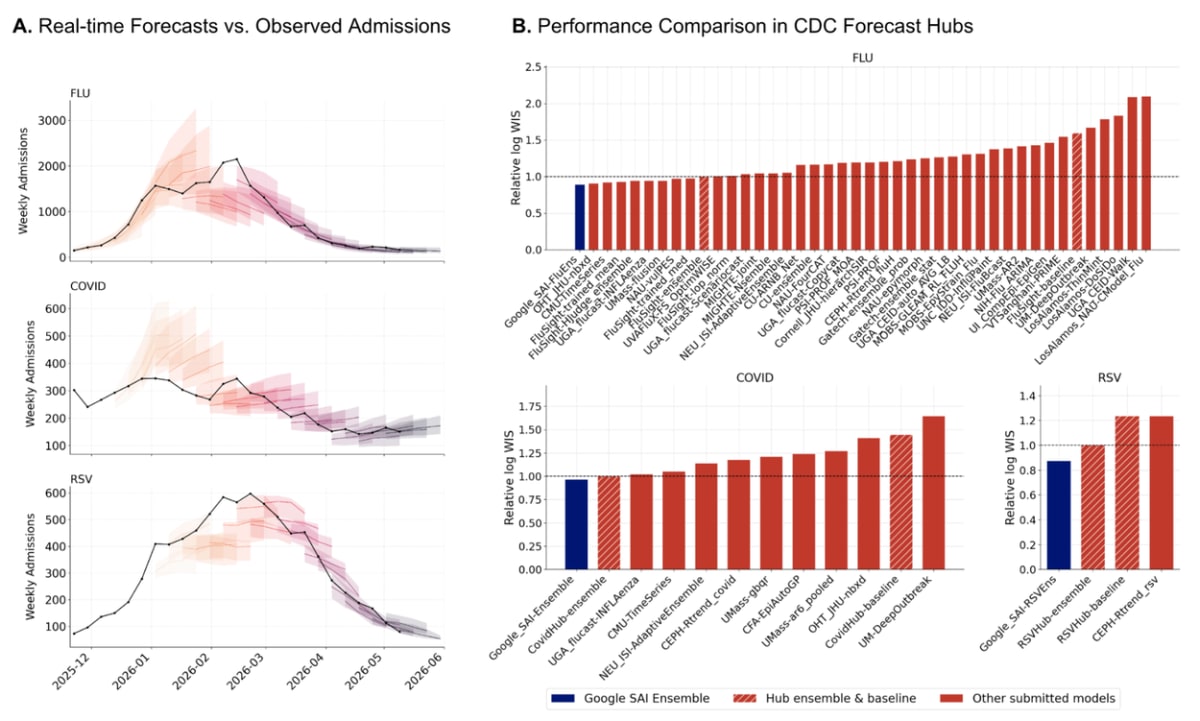
Google scientists used ERA to build disease forecasting models that predict U.S. hospital admissions up to four weeks ahead for flu, COVID-19, and RSV. These forecasts consistently rank at or near the top of CDC leaderboards for all three respiratory viruses. Health officials can now plan better for surges before hospitals get overwhelmed.
In California, ERA created a water forecasting model that predicts spring runoff from snowmelt more accurately than the state's official outlook. That matters enormously for a state managing chronic water scarcity for 39 million people and vast agricultural operations.
Why This Inspires
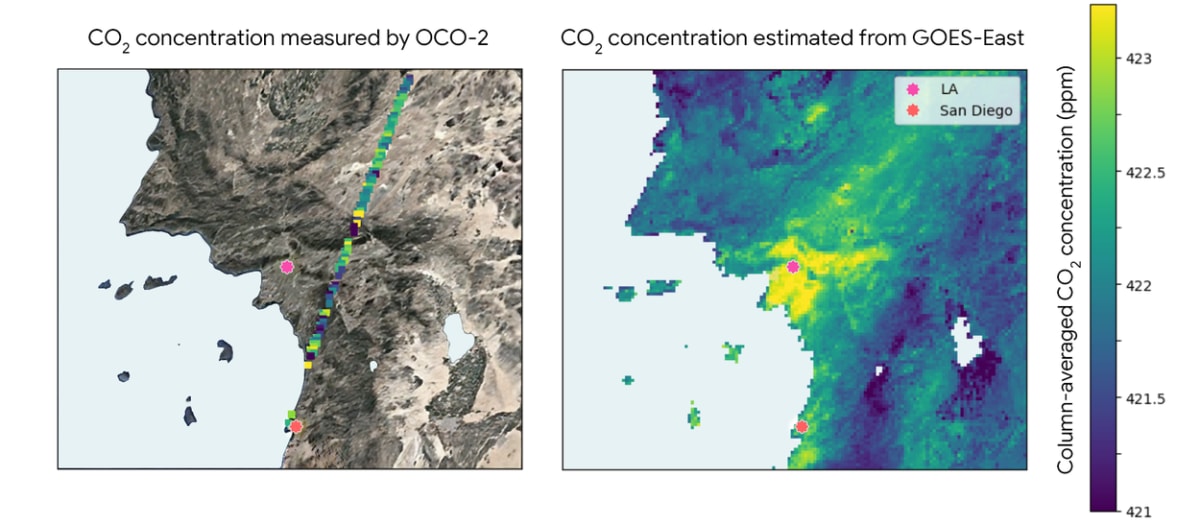
Perhaps most exciting for climate action, ERA developed a way to map atmospheric carbon dioxide with unprecedented detail using weather satellite data. The system captures CO2 changes from human activity every 10 minutes across entire regions. Scientists can now see urban emissions, watch crops absorb CO2 as they grow during daylight, and track how this critical greenhouse gas moves through our atmosphere in near real-time.
Traditional satellites measuring CO2 return to the same location only every 16 days. ERA's approach fills in the gaps, creating a nearly continuous picture that could transform how we monitor and respond to emissions.
Eight scientific papers have already emerged from research teams using ERA, spanning epidemiology, climate science, solar energy optimization, and more. The tool doesn't replace human scientists. It amplifies what they can accomplish by handling the tedious coding work that previously consumed weeks or months.
Google Research scientist Michael Brenner says the goal is democratizing access to expert-level computational modeling. A researcher with a solid idea but limited coding experience can now compete with labs that have dedicated programming teams.
The technology arrives as scientific challenges from pandemics to climate change demand faster solutions than traditional research timelines allow.
More Images
Based on reporting by Google: scientific discovery
This story was written by BrightWire based on verified news reports.
Spread the positivity!
Share this good news with someone who needs it