Google's Chief Scientist: AI Is Idea Incubator, Not Replacement
Jeff Dean told 800+ University of Washington computer science graduates that AI should amplify human judgment, not replace it. The Google chief scientist urged the class to build safeguards ensuring technology serves everyone, not just a select few.
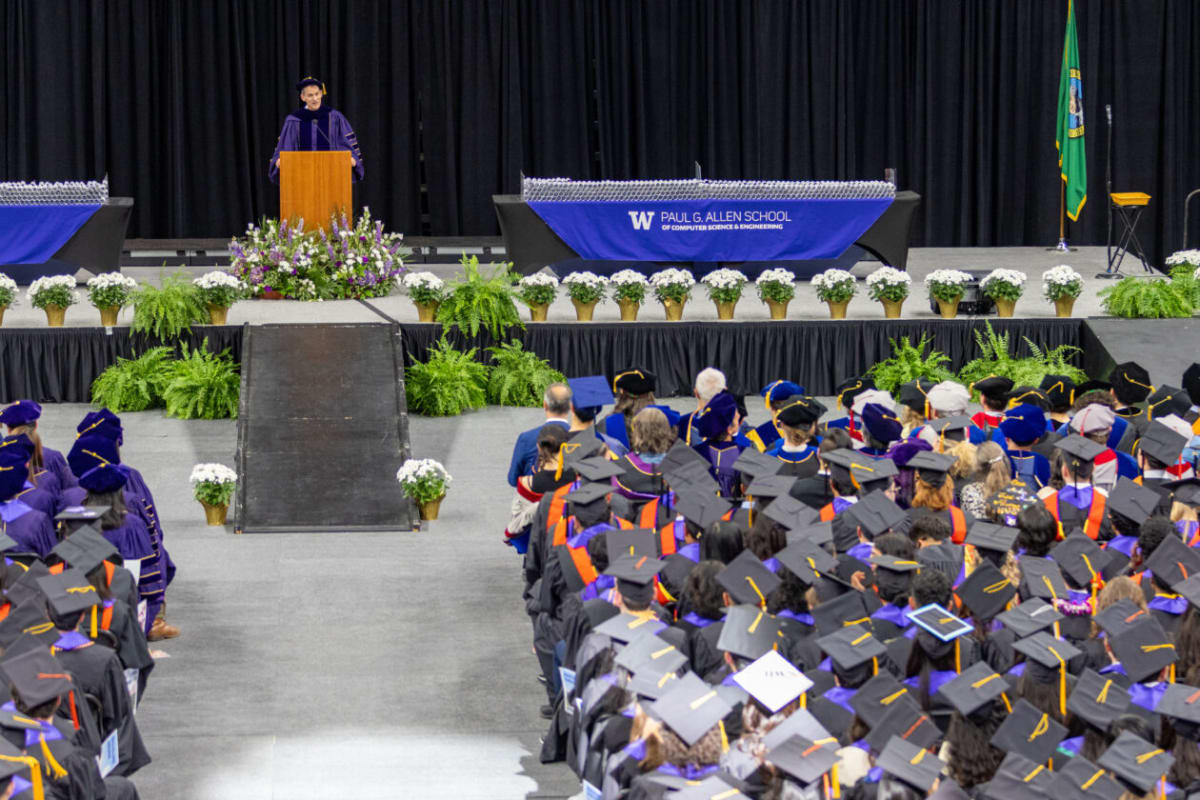
When Jeff Dean stepped up to address University of Washington's computer science graduates on June 12, 2026, he brought a message the tech industry urgently needs to hear: artificial intelligence is a tool for human creativity, not a substitute for it.
Dean, Google's chief scientist and co-leader of its Gemini AI models, returned to his alma mater to speak before 7,500 people packed into Alaska Airlines Arena. The Allen School of Computer Science & Engineering awarded more than 800 degrees that evening, sending graduates into a workforce transformed by the very technology Dean helped build.
His central message cut through the AI hype with clarity. "AI is an incubator for ideas, not a substitute for human ingenuity," Dean told the graduates. He reminded them that while AI can draft code and crunch data, it cannot replicate their lived experiences, ethical reasoning, or judgment about what's worth creating in the first place.
Dean didn't just celebrate AI's potential. He challenged the graduating class to build responsibly. "We must intentionally design safeguards and ethical boundaries, so technology serves the broader public good, not a select few," he said.
He pointed to concrete examples where AI already makes a real difference. Machine learning now helps predict flooding in Somalia, where Dean lived as a child while his parents worked in global health. AI assists in forecasting natural disasters and accelerating scientific breakthroughs that could save lives.
Dean referenced research he co-authored identifying 18 areas where AI could create meaningful impact. The possibilities range from improving healthcare access worldwide and providing personalized tutoring to every student, to detecting misinformation and speeding up scientific discovery.
The Ripple Effect
Dean's journey offers hope to graduates facing an uncertain job market. He arrived at UW in 1991, earned his PhD in 1996 studying compilers, and joined Google in 1999 when the company had just 20 employees. Back then, he recognized that neural networks needed roughly a million times more computing power than 1990s hardware could provide. That threshold wasn't crossed until around 2012.
His advice? "Be patient and persistent." The technologies that seem impossible today might define careers tomorrow.
Dean closed with wisdom that transcends any single technology breakthrough. He urged graduates to spend their careers on work that truly matters and to "always treat people with respect and kindness, and have fun in what you do."
Eight hundred new computer scientists walked out of that arena equipped not just with technical skills, but with a framework for building technology that serves humanity rather than replacing it.
More Images

Based on reporting by Google: scientific discovery
This story was written by BrightWire based on verified news reports.
Spread the positivity!
Share this good news with someone who needs it