Greece Opens 130 MW Solar Farm Program for Farmers
Greece just launched a groundbreaking program that lets farmers across the country install solar panels above their crops, turning every farm into a dual-purpose powerhouse. The initiative reserves 130 megawatts of solar capacity exclusively for farmers, helping them earn steady income while growing food.
Greek farmers are about to get a game-changing opportunity to fight rising costs while feeding their communities.
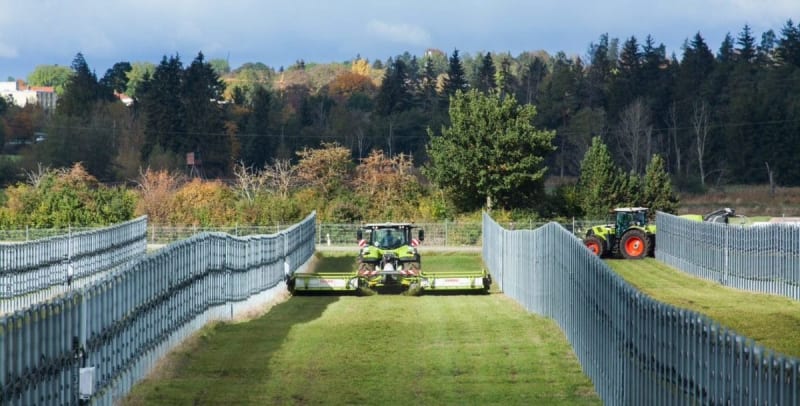
The country just opened applications for a nationwide agrivoltaics program that reserves 130 megawatts of solar capacity exclusively for farmers. Agrivoltaics lets farmers install solar panels high above their fields, generating clean electricity while crops grow underneath in the shade.
The program spreads opportunity across all 13 of Greece's regional prefectures, with each region getting up to 10 megawatts of capacity. Individual farmers can own up to two systems, each capped at 200 kilowatts, ensuring small and mid-size operations can participate.
The Greek government designed the policy specifically to support farmers, who are the only people eligible to own these new solar plants. Applications open during the first 10 days of each month and will be approved first-come, first-served until each region hits its limit.
The solar panels must sit at least 2.1 meters above the ground, high enough that tractors can pass underneath and crops can thrive below. Farmers can also install panels on greenhouse rooftops, turning existing structures into energy producers.
Approved projects will sign contracts guaranteeing a fixed price for the electricity they generate. The exact rate hasn't been announced yet, but the Ministry of Environment and Energy promises details within weeks.
Farmers can even add battery storage to their systems, storing solar power for at least one hour to use when the sun goes down. The batteries can't draw power from the main grid, keeping the focus on locally generated clean energy.
The program includes remote island communities not connected to the mainland power grid, ensuring farmers everywhere can participate. These island farmers will contract directly with their local distribution operator instead of the national renewable energy agency.
The Ripple Effect
This policy does more than help individual farmers pay their bills. It protects farmland from being converted entirely to solar fields, preserving Greece's agricultural heritage while expanding renewable energy.
The dual-use approach means Greece can meet its clean energy goals without sacrificing food production. Farmers get stable income from electricity sales while continuing to grow the crops their communities need.
The model could inspire similar programs across Europe, where farmers face increasing pressure from rising energy costs and climate change. Greece is showing that supporting farmers and fighting climate change don't have to be separate goals.
Greek farmers are expected to move quickly to claim their spots in the program, eager to secure both their financial futures and their land's productivity.
More Images


Based on reporting by PV Magazine
This story was written by BrightWire based on verified news reports.
Spread the positivity!
Share this good news with someone who needs it