Guatemala Women Lead Community Fight Against Plastic Waste
In the mountain villages of Guatemala, women are taking charge of a plastic pollution crisis by organizing community cleanups and learning healthier alternatives to burning waste. Their grassroots approach is creating lasting change in communities overwhelmed by plastic imports.
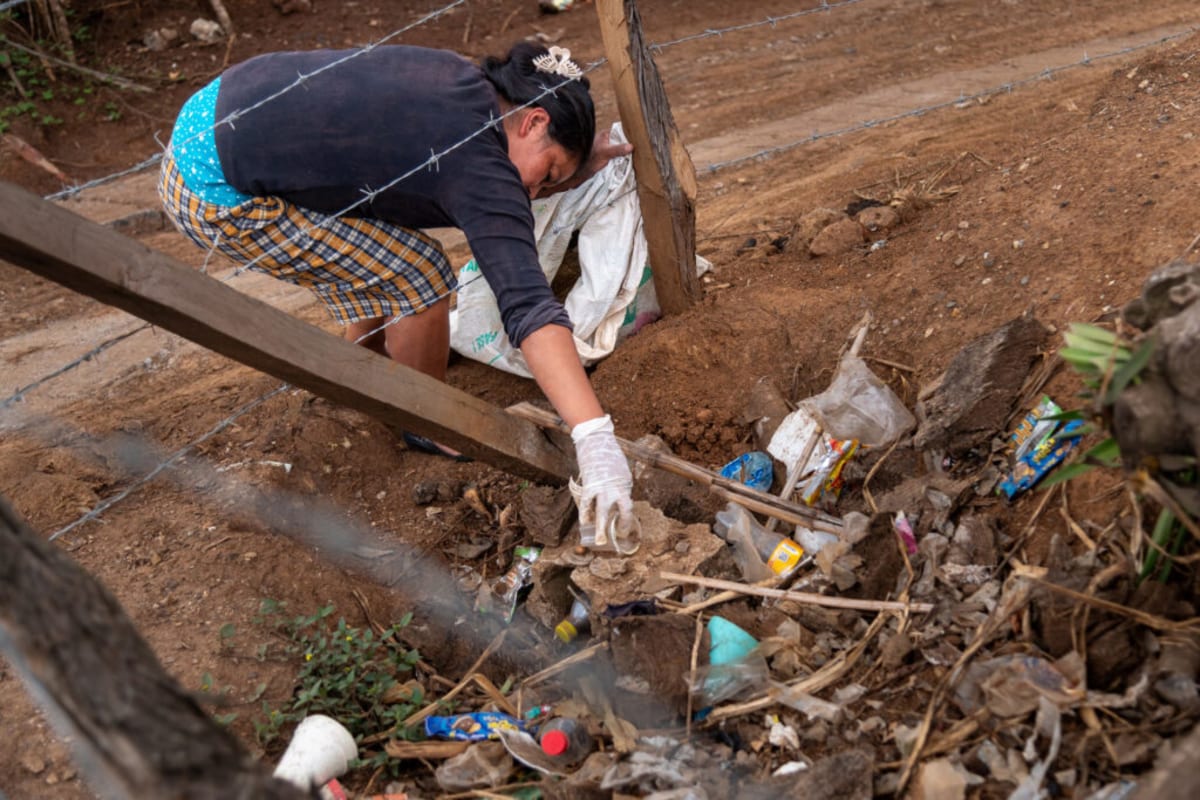
Soila Elizabeth Cruz pulls plastic bottles and wrappers from beneath a barbed wire fence in her Guatemalan mountain village, leading a community effort that's transforming how her neighbors think about plastic waste.
Cruz and her neighbors in El Duraznal gather every few months to clear the plastic that litters their small town near Jalapa. But the cleanups are just one part of a bigger transformation happening in these rural communities.
The Ecolectivos project brought researchers from UC San Francisco and Emory University to work alongside Guatemalan scientists, teaching villagers about the health dangers of burning plastic. Through months of workshops, women in these indigenous Xinca communities developed their own solutions to reduce plastic waste.
Cruz, a mother of three known as Betty, emerged as the community's environmental health leader. Her black braided hair flows from a fuchsia baseball cap dotted with white polka dots as she organizes neighbors for cleanups and encourages alternatives to burning trash.
"The workshops motivated us to unite as a community," Cruz said. "Now we motivate each other to stop burning plastic and reduce how much we use."
The challenge these communities face is enormous. Guatemala imported over 1.2 million tons of plastic household items in the past decade, with imports from China nearly tripling since 2016. The capital of Jalapa now hosts stores dedicated entirely to selling Chinese plastic goods.
Yet Guatemala has limited capacity to manage this waste. Only 9 percent of plastic worldwide gets recycled, leaving communities like El Duraznal to cope with mountains of trash that many residents previously burned, releasing toxic chemicals into the air their children breathe.
The Ripple Effect
What started as health research has sparked community ownership of the plastic problem. Women who attended workshops didn't just learn about dangers. They designed practical solutions that fit their daily lives and chose their own leaders to keep the momentum going.
Other villages are watching. As Cruz and her neighbors prove that organized community action can clear plastic and change habits, they're creating a model that could spread across Guatemala's rural mountains.
Cruz remains determined to free her village from plastic's grip, one community cleanup at a time.
Based on reporting by Inside Climate News
This story was written by BrightWire based on verified news reports.
Spread the positivity!
Share this good news with someone who needs it