Harvard AI Makes Stem Cell Therapy More Reliable
Scientists at Harvard Medical School built an AI system that could finally make lab-grown cell therapies predictable enough for widespread use. The breakthrough tackles the biggest obstacle keeping regenerative medicine from reaching patients who need it.
Growing new cells to replace damaged ones sounds simple, but getting those cells to behave the same way twice has stumped scientists for decades.
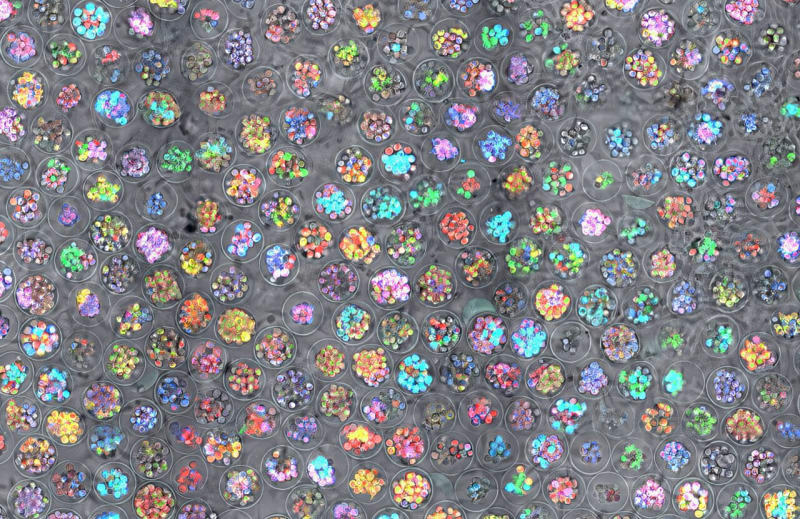
Researchers at Harvard Medical School just launched a company called Cellular Intelligence to solve that problem. They're building an AI foundation model trained on massive datasets from developmental biology to predict exactly how stem cells will develop under different conditions.
The stakes are enormous. Scientists already know how to guide stem cells to become muscle, nerve, and other specialized cell types in the lab. Those cells could repair injured tissues or slow disease progression. But most of these advances never leave the research lab because the process is too unpredictable.
"For many cell therapies, the biology works but not robustly enough," said Allon Klein, professor of systems biology at Harvard Medical School and scientific co-founder of the company. "You can get the right cells once, but reproducing that result reliably and at scale is a very different problem."
As stem cells mature, they respond to a precise sequence of chemical signals that determine what they become. Those signals must arrive at exactly the right moment in exactly the right amount. Small missteps cause cells to stray from their intended path, leaving them immature, inconsistent, or unsuitable for therapy.
The challenge gets worse when researchers try to scale up. Protocols that work perfectly in one lab often fail when others try to reproduce them.
Klein teamed up with colleagues Olivier Pourquié and Clifford Tabin, whose decades of basic research on how embryonic tissues form provided the foundation for this work. Pourquié's lab spent years studying somites, the repeating structures that become skeletal muscle, vertebrae, and connective tissue during development.
The team started at the Blavatnik Harvard Life Lab Longwood, an incubator that gives Harvard-connected startups lab space while keeping them close to ongoing research. That proximity allowed the scientific founders and the growing team to test ideas quickly and refine their approach.
The Ripple Effect
Once trained and validated, the AI tool could reveal the underlying rules that guide cell development. Researchers could use those rules to predict how cells will behave under new conditions, making the entire process more controllable.
The implications reach far beyond any single disease. Reliable, scalable cell therapies could transform treatment for conditions from spinal cord injuries to heart disease to degenerative disorders. Patients who currently have few options could gain access to treatments that repair damage at the cellular level.
"Developmental biology already has an internal logic," Klein said. "What we're trying to do is understand that logic well enough to guide it."
The company represents a bridge between decades of curiosity-driven research and real-world medical applications. Questions about reproducibility and scale were difficult to address in academic labs alone, but the combination of basic science insights and machine learning tools makes new answers possible.
Thousands of patients are waiting for cell therapies that work consistently enough to leave the lab and enter the clinic.
More Images
Based on reporting by Phys.org
This story was written by BrightWire based on verified news reports.
Spread the positivity!
Share this good news with someone who needs it