Harvard Discovers Hidden Protein System in Human Body
Scientists at Harvard Medical School have uncovered thousands of previously unknown proteins that could revolutionize how we understand disease and develop new treatments. This discovery reveals that human cells can combine instructions from different genes to create entirely new, functional proteins.
For the first time, scientists have discovered that the human body produces thousands of proteins that medicine never knew existed.
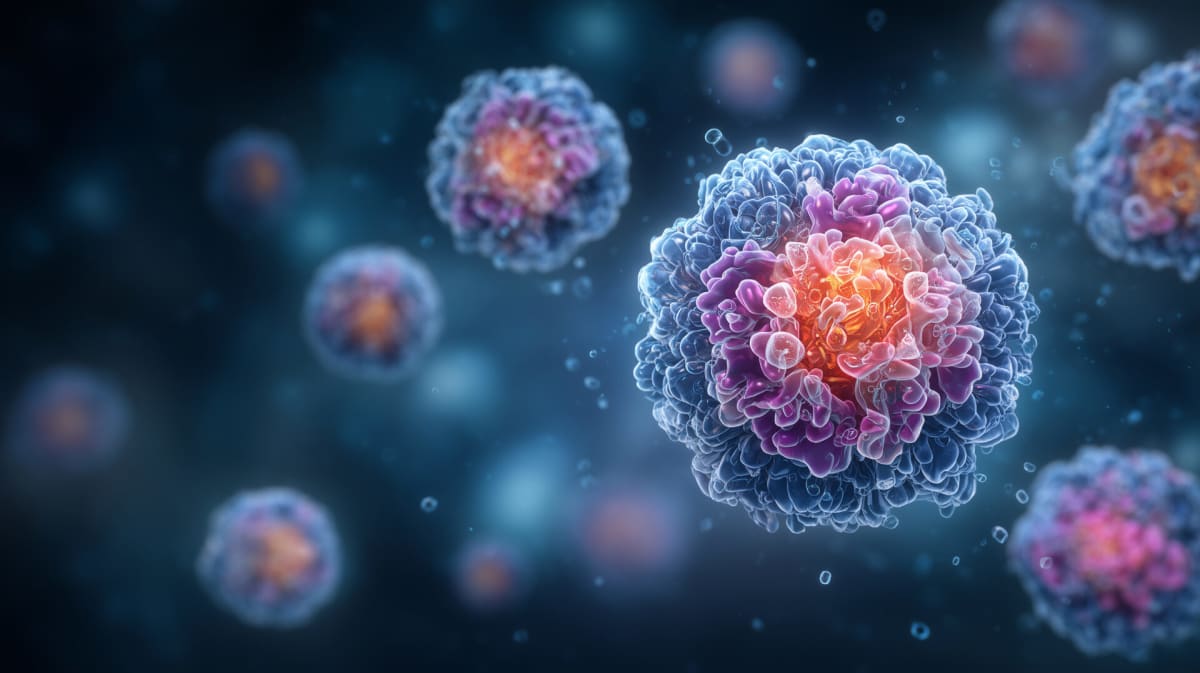
Researchers at Harvard Medical School found that cells can combine genetic instructions from different genes, even those on separate chromosomes, to create brand new "chimeric" proteins. Until now, scientists believed each of our roughly 20,000 genes produced just one type of protein.
"Nobody knows these exist," said Dr. Ruaidhrí Jackson, senior author of the study published in Nature. "Medicine doesn't know they exist, the pharmaceutical industry doesn't know they exist."
The team used cutting edge sequencing technology to compile a library of over 30,000 of these chimeric proteins in mammalian cells. They've already profiled nearly 400 that play roles in our immune response, with patterns conserved in both humans and mice.
The discovery happened because chromosomes can actually loop together during immune responses, bringing normally distant genes close enough to work together. When this happens, they create hybrid proteins with completely new functions.
To test whether these proteins actually do anything important, the researchers focused on one chimeric protein involved in fighting infections. They found it speeds up a crucial immune process called pyroptosis, where cells burst open to trigger inflammation and fight bacteria.
Mice without this chimeric protein struggled to fight off Salmonella infections. Their immune response was nearly 50 percent weaker, even though all their normal proteins were still working fine.
The research team even partnered with Moderna to create an engineered version that could boost production of the chimeric protein. This confirmed the protein's vital role in regulating immune responses.
The Ripple Effect
This discovery could transform how we approach diseases that medical science doesn't fully understand yet. These overlooked proteins might explain mysterious disease processes and offer entirely new targets for drug development.
The implications extend far beyond just understanding what's already in our bodies. Scientists now realize cells can create combinations of molecules they never imagined possible.
"We thought we had a blueprint of every protein made in the body," Jackson explained. "Now we're saying that was just page one."
The breakthrough opens exciting possibilities for treating conditions where the immune system plays a role, from infections to autoimmune diseases to sepsis. In their experiments, mice lacking the chimeric protein had a 70 percent survival rate from normally lethal sepsis, because their immune response stayed milder.
While researchers don't yet know how widespread these chimeric proteins are throughout the body, the potential for medical breakthroughs is enormous. Each newly discovered protein represents a possible key to understanding diseases that have puzzled doctors for generations.
The human body, it turns out, has been keeping secrets even from our most advanced science, and we're just beginning to read the full instruction manual.
More Images




Based on reporting by Google News - Scientists Discover
This story was written by BrightWire based on verified news reports.
Spread the positivity!
Share this good news with someone who needs it