Hawaii Opens First Cancer Trial Center, Patients Stay Home
Cancer patients in Hawaii can now access cutting-edge clinical trials without leaving their families behind. The Hoʻōla Early Phase Clinical Research Center just opened its doors, making history for island residents who previously had to fly thousands of miles for experimental treatments.
For decades, Hawaii cancer patients faced an impossible choice: travel to the mainland for promising treatments or stay home with loved ones and skip the trial.
That heartbreaking decision ends today. The University of Hawaii Cancer Center just opened the Hoʻōla Early Phase Clinical Research Center, the first facility in the state offering experimental cancer trials close to home.
Susan Hirano knew this choice too well. When doctors offered her a clinical trial for metastatic breast cancer, she said no. The trial was on the mainland, and she couldn't bear leaving her family in Honolulu, even if it meant seeing her son graduate high school.
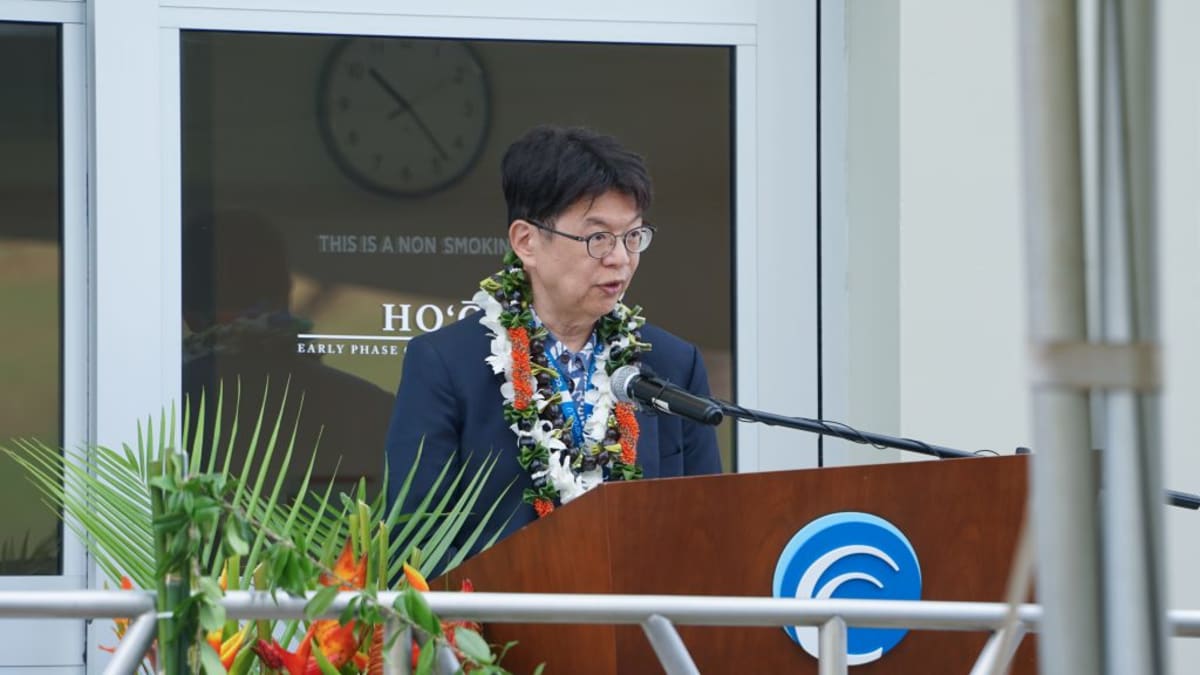
Her husband Peter shared her story at Monday's grand opening ceremony, attended by over 200 community members, researchers, and government leaders. Susan, who passed away in April 2025, had dreamed of this moment.
"She was convinced that the opening of Hoʻōla would give cancer patients hope," Peter said. "It would allow them to do what she couldn't: participate in a clinical trial while staying home with 'ohana."
The center's name means "to give life" or "to heal" in Hawaiian. Dr. Naoto T. Ueno, the Cancer Center's director and a two-time cancer survivor himself, leads the facility as medical director.
Early phase clinical trials test new cancer therapies for safety and effectiveness under strict protocols. These Phase 1 and 2 studies become tomorrow's standard treatments, giving patients both hope and a chance to advance medical science.
The numbers show why this matters. Nearly 76,000 Hawaii residents live with cancer, and about 2,519 die from it each year. A recent study found Hawaii families spent at least $230 million traveling out of state for cancer care between 2021 and 2023.
The Ripple Effect
One patient is already enrolled in the center's pilot trial, proving the facility can safely deliver complex treatments. By 2031, researchers aim to run 30 active early phase clinical trials simultaneously.
U.S. Senator Mazie Hirono, who attended the celebration, knows the power of cancer research firsthand. "If it were not for this kind of research that we support and the kind of clinics that we are opening, then a number of us wouldn't be here right now," she said.
The center includes dedicated treatment areas, specialized research space, a certified pharmacy, and highly trained staff ready to work with investigators and referring physicians. Cancer survivors performed hula at the opening ceremony, a powerful symbol of healing and community.
Qualifying patients can now access promising investigational therapies without booking a flight, and families can stay together through the hardest journey of their lives.
Based on reporting by Google News - Cancer Survivor
This story was written by BrightWire based on verified news reports.
Spread the positivity!
Share this good news with someone who needs it