Hip Exoskeleton Cuts Walking Energy 18% for Stroke Patients
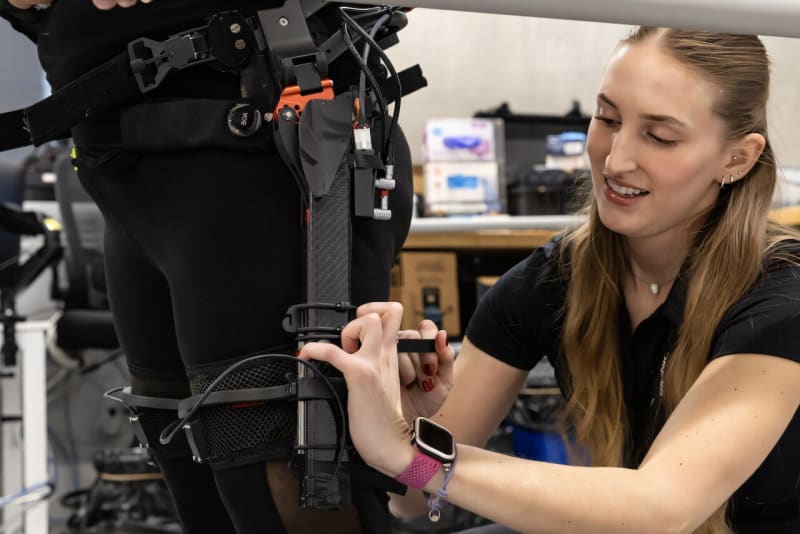
University of Utah engineers created a 5.5-pound hip exoskeleton that reduces the energy stroke survivors need to walk by nearly 20%. The device is the first to successfully help people with hemiparesis, a condition affecting 80% of stroke survivors.
📺 Watch the full story above
Walking takes 60% more energy for stroke survivors with hemiparesis, but a breakthrough device is changing that equation.
Engineers at the University of Utah developed a lightweight hip exoskeleton that cuts the energy required to walk by 18% for people living with stroke-related paralysis. The 5.5-pound device wraps around the hips and uses battery-powered motors to assist each step, custom-tuned for every user's specific needs.
Hemiparesis affects 80% of stroke survivors, causing weakness and impaired movement on one side of the body. When one side weakens, the other side works overtime to compensate, creating a vicious cycle of exhaustion, slower speeds, more pain, and higher fall risk.
Previous exoskeletons focused on ankle support and failed to reduce walking energy. Lead researcher Kai Pruyn and his team took a different approach by targeting the hips, where patients naturally compensate for ankle weakness.
Seven people with hemiparesis tested the device on an instrumented treadmill while researchers measured their movement and caloric burn. The exoskeleton offloaded nearly 30% of the work from hip joints, delivering that 18% drop in overall walking energy.
"For a person with a healthy gait, this would be like taking off a 30-pound backpack," said co-author Bo Foreman, a professor of Physical Therapy. "For someone with hemiparesis, that's a life-changing difference."
Study participant Lidia, a stroke survivor, saw immediate results. "In the beginning, I couldn't move my leg," she said. "But with the device, it's much better now." Her husband Marcellus noticed something even more remarkable: the benefits continued even when she wasn't wearing it.
Why This Inspires
This research tackles one of healthcare's biggest challenges with elegant engineering. Rather than accepting reduced mobility as inevitable after stroke, the Utah team proved that thoughtful technology can restore independence.
The same lab previously created the Utah Bionic Leg, named among Time magazine's top inventions in 2023. Now they're partnering with prosthetics and orthotics leaders to make the hip exoskeleton available to anyone who needs it.
The team is working to ensure the device functions safely in daily life beyond treadmill walking. They're refining the mechanics and controls to support stairs, uneven terrain, and the unpredictable movements of real-world living.
"Our goal is to ensure that a stroke doesn't define the limits of where a person can go or how they can live," said senior author Tommaso Lenzi. The research appears in Nature Communications, bringing hope to millions living with hemiparesis.
More Images


Based on reporting by Phys.org - Technology
This story was written by BrightWire based on verified news reports.
Spread the positivity!
Share this good news with someone who needs it