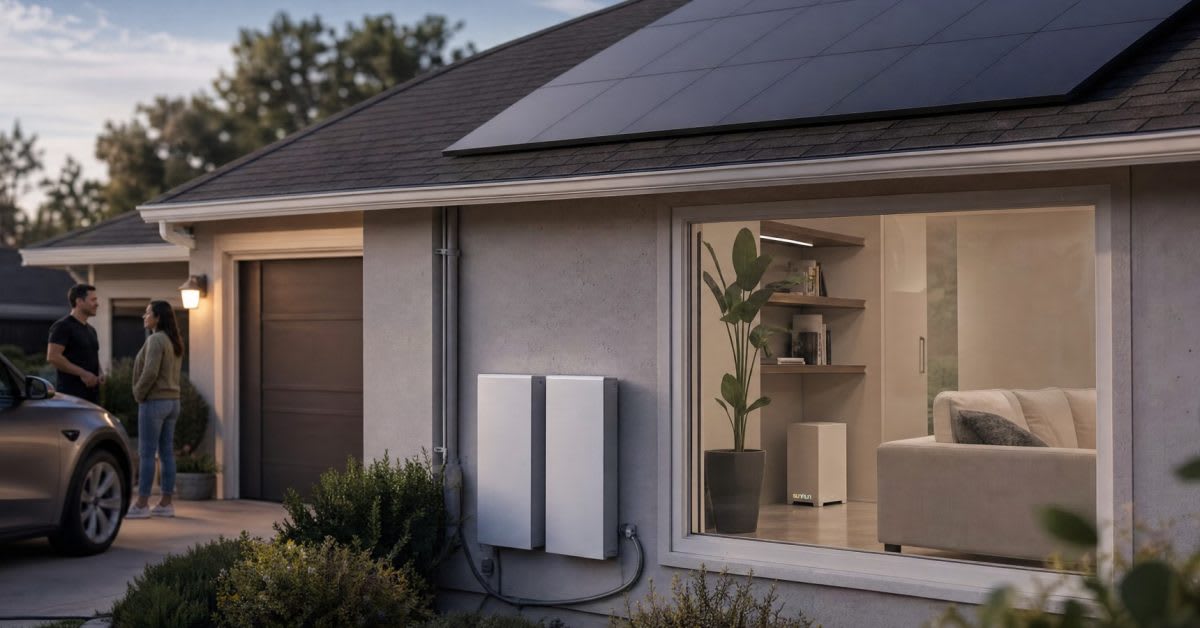
Home Batteries Set Record Powering 580 MW to California Grid
More than 140,000 home batteries across California just delivered a record 580 megawatts of power during a September heat wave, proving residential storage can now compete with traditional power plants. The three-hour evening dispatch, led by Sunrun and Tesla, powered the equivalent of every household in Sacramento County during peak demand.
On September 9, when California's grid was buckling under air conditioning load during a brutal heat wave, help came from an unexpected source: people's garages.
More than 140,000 home batteries across the state fed a record 580 megawatts of electricity back to the grid for three hours that evening. It's the largest residential power plant event ever recorded, and it happened without a single smokestack or acre of land.
About 110,000 of those batteries were Tesla Powerwalls, which delivered 517 MW. Another 30,000 batteries from other manufacturers added 63 MW. Sunrun, the nation's largest residential solar installer, owns or operates 55% of the Tesla units and coordinated the entire dispatch.
The power flowed through two California programs designed to pull from home batteries when the grid is stressed. One program triggered automatically when wholesale electricity prices hit $200 per megawatt hour. The other kicked in when utilities called for emergency backup during the heat wave's peak.
The next evening, Sunrun dispatched another 140 MW at Southern California Edison's request. The back-to-back events proved the model works when it matters most.
The Ripple Effect
This changes how we think about power plants. A typical natural gas peaker plant, the kind utilities fire up only during demand spikes, generates between 50 and 250 megawatts. The residential battery fleet just beat several of them combined, using hardware that homeowners already owned for backup power.
The economics work for everyone. Homeowners get paid for the electricity they send back during peak hours, which helps their batteries pay for themselves. Utilities avoid building expensive plants that sit idle most of the year. A Brattle Group analysis projects California ratepayers will save up to $206 million by 2028 from these dispatches.
Peak demand only lasts a few hours daily for a handful of days each year. Traditional power plants must be built and maintained year-round to cover those brief windows. A distributed network of home batteries covers the same peaks with infrastructure that's already installed and serving double duty.
The concept isn't new, but the scale is. Tesla and Sunrun began building toward this in 2020, turning individual Powerwalls into shared grid assets. This June, the companies announced plans for a 16.8 gigawatt virtual power plant aimed at feeding AI data centers. The September dispatch proved the residential version works just as well.
California has the batteries, the grid programs, and the price incentives aligned. Most states don't yet, but 580 megawatts is hard to ignore. Every grid operator who watched summer heat waves strain their systems just saw what a few hundred thousand home batteries can do.
The virtual power plant just became very real.
More Images



Based on reporting by Electrek
This story was written by BrightWire based on verified news reports.
Spread the positivity!
Share this good news with someone who needs it