Home Robots Learn Laundry and Cooking in Months, Not Years
A roboticist created an "Olympic Games" for home robots, expecting them to take years to master everyday tasks like folding clothes and cooking eggs. They crushed it in three months instead.
Benjie Holson thought helpful home robots were still 15 years away when he posted his challenge last September. He was off by about 14 years and nine months.
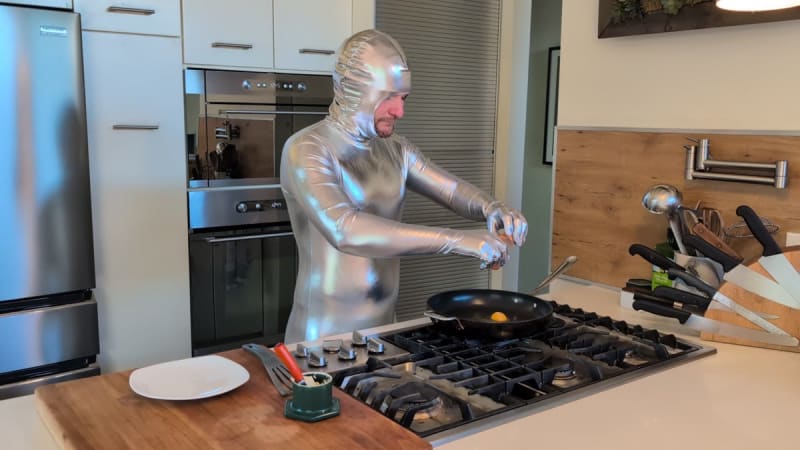
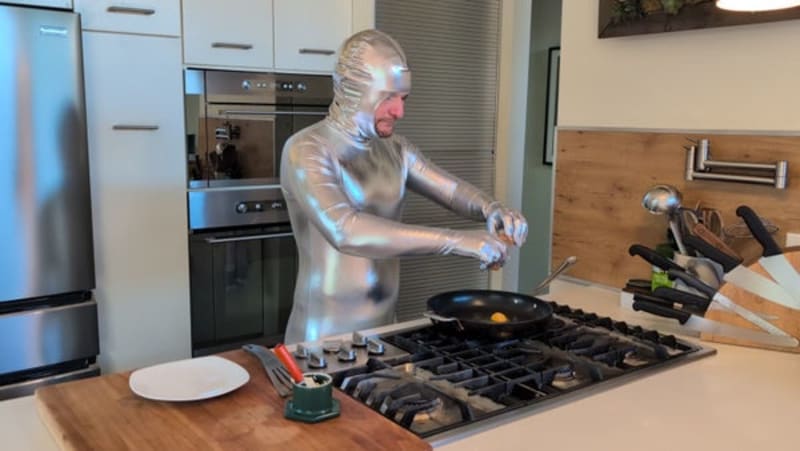
The roboticist created the "Humanoid Olympic Games" as a reality check for the industry. While other competitions showcased robots doing backflips and dancing, Holson focused on unglamorous tasks we actually need: opening round doorknobs, spreading peanut butter, folding laundry, and cooking a sunny-side-up egg.
He designed the challenges to be brutally hard, expecting bronze-level tasks might get solved in a month or two, with the toughest gold-medal challenges taking up to 18 months. Instead, robotics company Physical Intelligence knocked out 11 of 15 challenges in just three months.
The secret? Cameras turned out to be enough.
Holson had assumed robots would need sophisticated touch sensors to master delicate tasks like spreading peanut butter or inserting keys into locks. But Physical Intelligence's robot uses only cameras, including one mounted near its fingers that watches how objects squish and bend.
When the robot spreads peanut butter, it sees the knife deflect and the bread compress, then calculates the force needed. No touch sensors required, just hundreds of video demonstrations fed into AI models that already understand what teapots and water are before learning specific tasks.
The Ripple Effect
This breakthrough means affordable home robots could arrive much sooner than expected. Touch sensors are expensive, delicate, and years behind camera technology. Vision-only systems cost less and break less often.
The speed of progress shocked even optimistic observers. Training methods that seemed theoretical a few years ago now produce robots that can wash windows, use dog poop bags, and button dress shirts with camera vision alone.
Holson has already released harder challenges because the first set fell too quickly. But the message is clear: the helper robots we've imagined for decades might start folding our laundry within years, not generations.
The future of housework just got a whole lot brighter.
More Images


Based on reporting by Scientific American
This story was written by BrightWire based on verified news reports.
Spread the positivity!
Share this good news with someone who needs it