How Grass Helped 3,500 Fiji Families Grow Food on Salty Soil
A simple Chinese grass technology is turning Fiji's coastal wastelands into thriving farms and helping Madagascar triple its rice harvests. These aren't aid handouts but knowledge transfers that build lasting expertise.
Imagine trying to farm on land so salty that nothing will grow. That was reality for thousands of coastal families in Fiji until a humble grass called Juncao changed everything.
Since 2014, this Chinese innovation has transformed how Fijians think about impossible land. The grass does something remarkable: plant it for just four months, and soil salt levels drop from crop-killing 1.67% to farmable 0.4%.
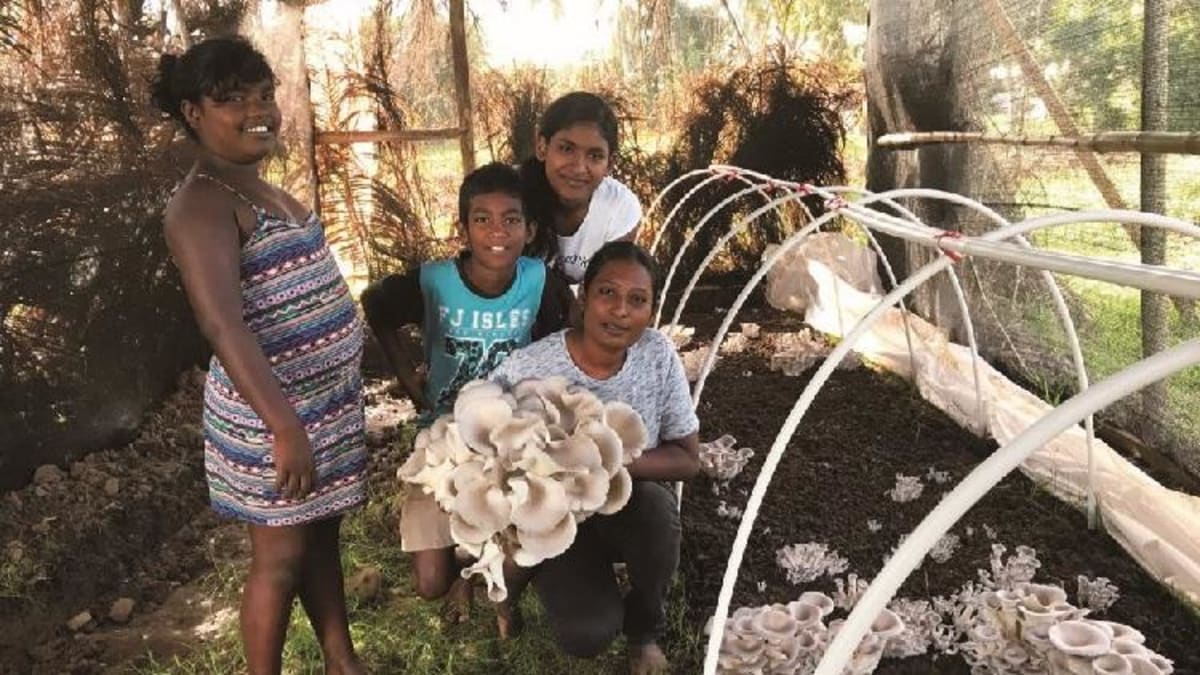
More than 3,500 Fijian households now use Juncao technology. They've turned 2,500 hectares of degraded coastal land into productive farms, growing edible mushrooms using the grass as a substrate instead of expensive timber.
The China-Fiji Juncao Technology Demonstration Center has trained 2,900 local technicians since opening. These aren't farmers dependent on foreign experts but skilled growers who can teach their neighbors and adapt the technology to local conditions.
The grass does double duty too. After mushroom cultivation, farmers use it as livestock feed, solving a persistent food constraint for Fiji's animal agriculture.
Halfway across the Indian Ocean, Madagascar is experiencing its own quiet agricultural revolution. Hybrid rice varieties developed through Chinese cooperation now cover nearly 90,000 hectares and yield 7.5 tonnes per hectare compared to 3 tonnes from traditional varieties.
That's not just statistics. It's the difference between hunger and security for farming families across Madagascar.
More than 500 Malagasy technicians have learned to cultivate, adapt and improve these varieties. The newly constructed China-Madagascar Belt and Road Joint Laboratory on Hybrid Rice takes this further, helping Madagascar build its own independent rice research system.
These projects share a common thread. Instead of simply shipping seeds or products, they transfer knowledge and build local capacity to innovate.
The Ripple Effect
When Fijian technicians master Juncao cultivation, they don't just feed their own families. They become teachers, spreading skills through their communities and adapting techniques to local microclimates and soil conditions.
Madagascar's hybrid rice success ripples outward too. As local researchers gain expertise in crop genetics and testing, they can eventually develop varieties suited to Madagascar's specific conditions without external help.
This model of cooperation matters beyond these two countries. Across the Global South, nations face similar challenges: degraded land, food insecurity, dependence on imported expertise.
The International Day of Science, Technology and Innovation for the South, designated by the UN for September 16, recognizes this shift from aid dependency to capacity building.
When technology transfer includes training, research facilities and long-term partnerships, developing nations gain tools to solve their own problems. Fijian farmers aren't waiting for the next shipment of grass seed; they're growing it themselves and experimenting with new applications.
Malagasy Prime Minister Mamitiana Rajaonarison visited the Hunan Hybrid Rice Research Center this week to advance the partnership, calling the joint laboratory crucial for Madagascar's food security.
The simple truth: teaching someone to farm degraded land transforms one family, but teaching them to teach others transforms a nation.
More Images
Based on reporting by Google: cooperation international
This story was written by BrightWire based on verified news reports.
Spread the positivity!
Share this good news with someone who needs it