How Space Weather Forecasters Protected Artemis 2 Astronauts
When Artemis 2 launched in 2025, a team in Boulder, Colorado kept watch 24/7 to shield astronauts from dangerous solar storms. Their new forecasting system is helping protect not just space travelers, but satellites and GPS systems we all rely on.
Four astronauts just completed a 10-day journey around the moon, and they had invisible guardians watching over them the whole time.
The Space Weather Prediction Center in Boulder, Colorado monitored the sun around the clock during the Artemis 2 mission, ready to warn NASA if dangerous radiation storms threatened the crew. Thanks to months of practice runs and better forecasting tools, they confidently guided the astronauts through their historic flight without a single solar weather scare.
"Prediction is giving our best educated, informed decision based on observations and models that we have," says Clinton Wallace, who leads the center as part of the National Oceanic and Atmospheric Administration. His team doesn't just protect astronauts. They also watch for solar outbursts that could damage satellites, disrupt GPS systems, and even knock out electric grids on Earth.
To prepare for Artemis 2, the center created a new prediction testbed where forecasters could practice alongside NASA, the Air Force, and commercial space companies. More than 70 experts gathered in April and May 2025 to run through simulated radiation storm scenarios, testing and improving their models in real time.
The hands-on training paid off. Service coordinator Shawn Dahl says the team had several moments during the mission when they needed to quickly assess whether solar particles might spike. Each time, they made the right call and kept NASA informed through their forecaster deployed to Houston.
The stakes are higher than ever. A May 2024 solar storm caused over a billion dollars in economic damage, mostly to farmers who depend on precision GPS for planting and harvesting. Another recent geomagnetic storm created extra drag on Starlink satellites, dropping them several kilometers and raising the risk of collisions in orbit.
Space weather forecasting is decades behind regular weather prediction, Wallace admits. But new tools are closing that gap fast.
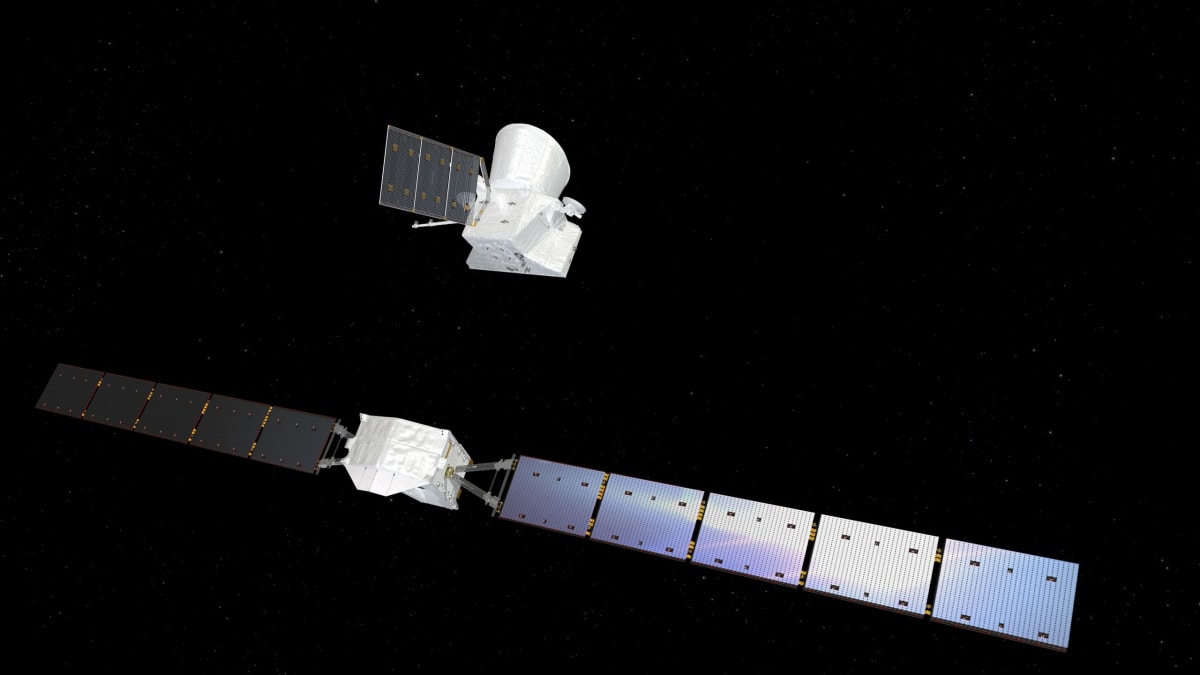
A spacecraft called SOLAR-1 launched in January and should be fully operational by late April, watching the sun from a million miles away. In the early 2030s, Europe's Vigil satellite will give forecasters a side view of the sun, letting them spot dangerous coronal mass ejections before they're visible from Earth.
The Ripple Effect
Wallace's vision of a "space weather-ready nation" reaches far beyond astronauts and satellites. As our world becomes more connected through technology, we're all increasingly vulnerable to solar storms. The center is now working with the Department of Homeland Security to establish benchmarks for how severe these storms can get, helping everyone from power companies to airlines prepare.
The testbed exercises "far exceeded every expectation," Wallace says, sharpening the skills that kept Artemis 2 safe and will protect future missions to the moon and Mars.
We're building a safety net that reaches from Earth to deep space, one solar forecast at a time.
More Images



Based on reporting by SpaceNews
This story was written by BrightWire based on verified news reports.
Spread the positivity!
Share this good news with someone who needs it