Hubble Captures Galaxy Frozen Between Two Cosmic Lives
NASA's Hubble Space Telescope has photographed a rare "transitional" galaxy that exists between two different cosmic forms, giving scientists a window into how galaxies transform over billions of years. The discovery helps us understand the incredible evolution happening across our universe.
Scientists have caught a galaxy in the middle of an incredible transformation, and the photos are stunning.
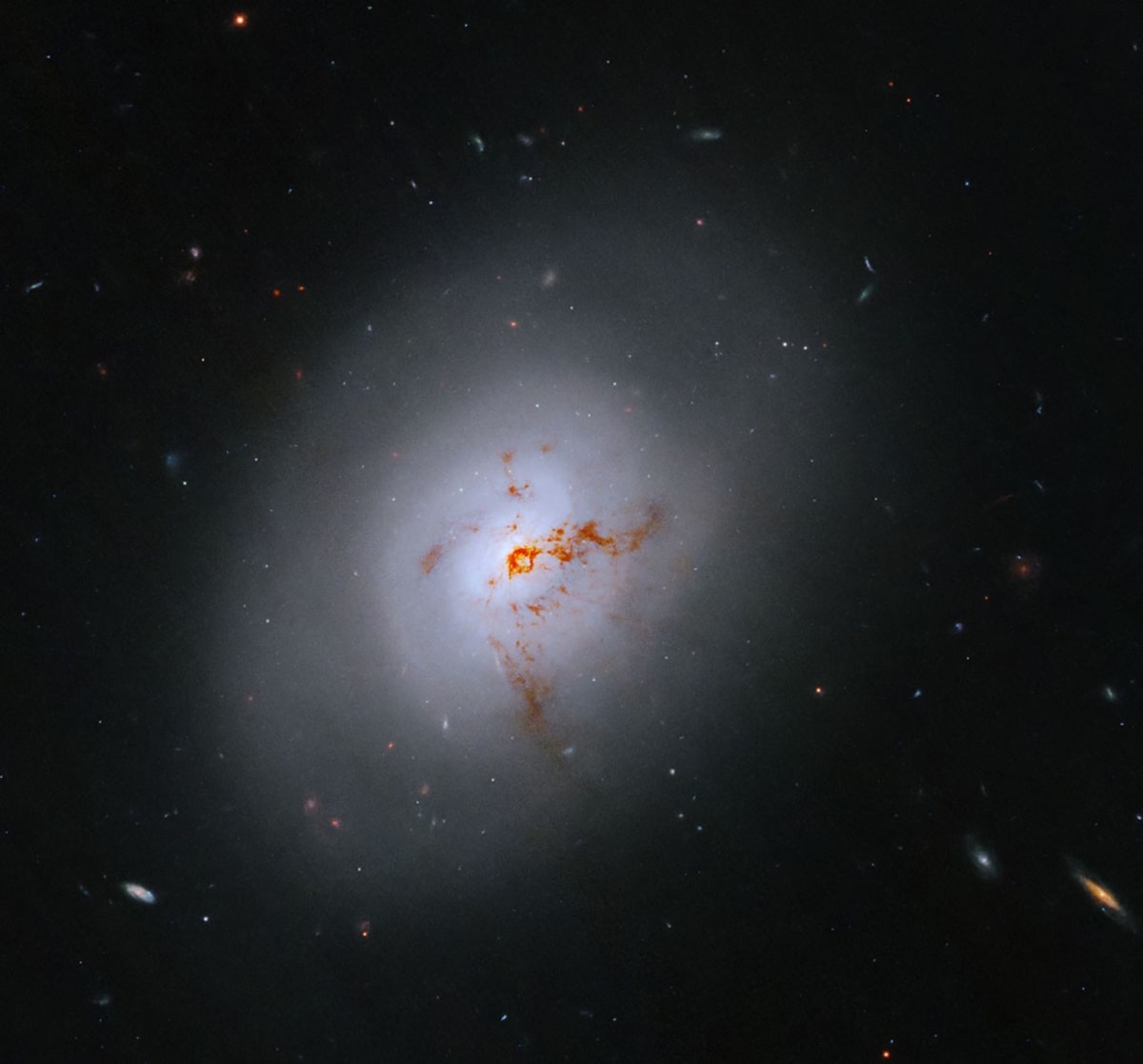
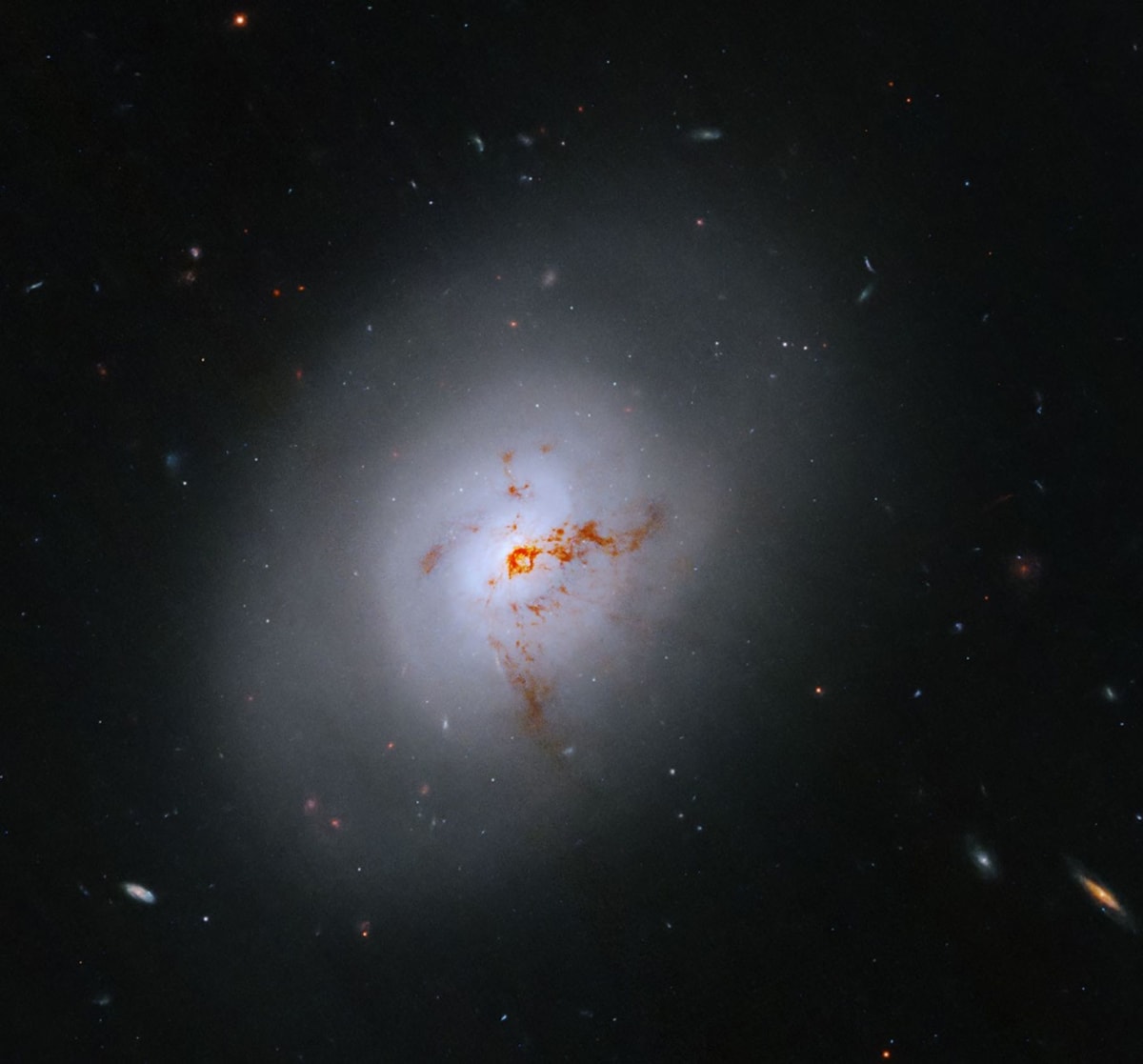
NASA's Hubble Space Telescope captured images of NGC 1266, a lenticular galaxy located 100 million light-years away in the constellation Eridanus. What makes this galaxy special is that it represents a cosmic bridge between two different types of galaxies.
Think of NGC 1266 as a butterfly caught between caterpillar and full wings. It has the bright center and flat disk shape of a spiral galaxy, but no spiral arms and almost no new stars forming like an elliptical galaxy.
The image shows a glowing center surrounded by reddish-brown dust clouds, with colorful light from even more distant galaxies shining through its outer edges. Against the black backdrop of space, it looks like a cosmic work of art frozen in time.
Astronomers call these rare galaxies "lenticulars" because of their lens-like shape. They're evolutionary stepping stones that show us how spiral galaxies eventually become elliptical ones over billions of years.
Why This Inspires
This discovery reminds us that even galaxies are constantly growing and changing. Nothing in the universe stays the same forever, and transformation is written into the fabric of existence itself.
By studying galaxies like NGC 1266, scientists can piece together the life story of galaxies across cosmic time. Each observation helps us understand not just where these massive collections of stars are going, but where our own Milky Way came from and where it might be headed.
The fact that Hubble can capture such detailed images from 100 million light-years away shows how far human curiosity and ingenuity can reach. We're witnessing cosmic evolution in action, seeing the universe reshape itself on timescales we can barely imagine.
Every galaxy has its own journey, just like every person. NGC 1266 happens to be in the middle of its transformation, and we're lucky enough to have a front-row seat to watch it happen.
More Images
Based on reporting by NASA
This story was written by BrightWire based on verified news reports.
Spread the positivity!
Share this good news with someone who needs it