Hubble Catches Comet Breaking Apart in Real Time
In a cosmic stroke of luck, NASA's Hubble Space Telescope accidentally captured a comet splitting into pieces as it happened, something scientists have tried and failed to observe for years. The team was studying a completely different comet when they stumbled upon this once-in-a-lifetime view.
Scientists at NASA just witnessed something they've been chasing for decades, and it happened completely by accident.
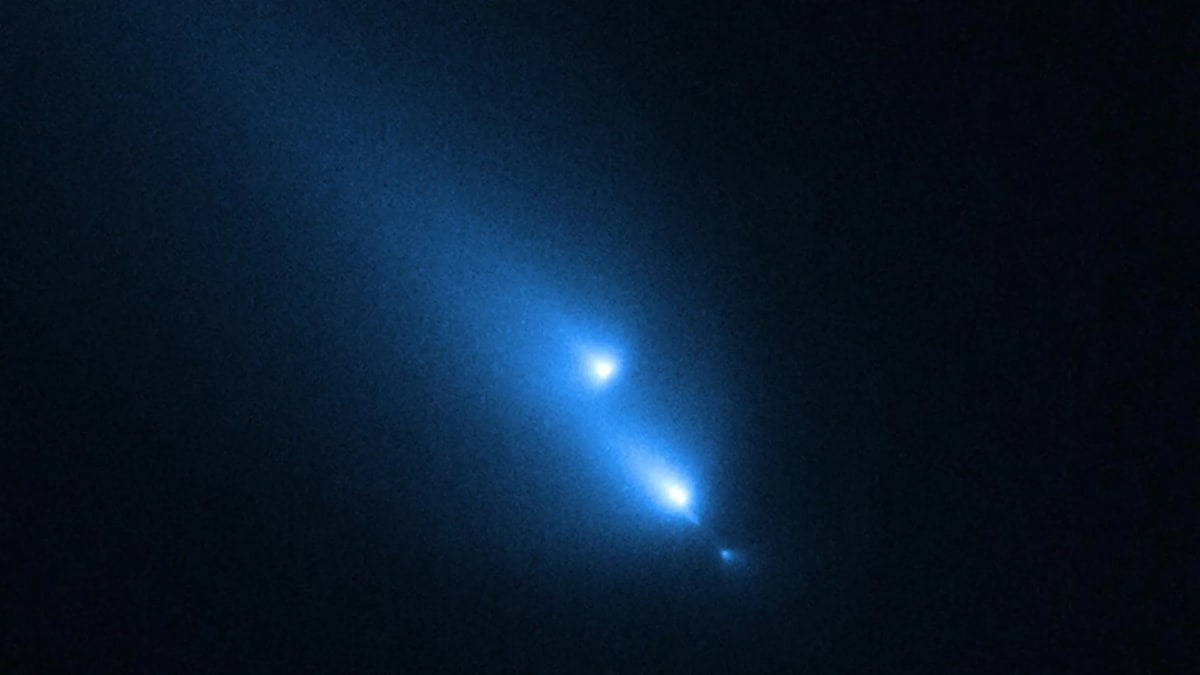
The Hubble Space Telescope caught comet C/2025 K1 breaking apart in real time, capturing the rare moment when the icy space rock fractured into at least four separate pieces. Each fragment developed its own glowing cloud of gas and dust, creating a cosmic fireworks display millions of miles away.
"Sometimes the best science happens by accident," said co-investigator John Noonan from Auburn University. The team had actually planned to study a different comet entirely, but technical constraints forced them to switch targets at the last minute.
When Noonan reviewed the images the next day, he couldn't believe what he saw. "There were four comets in those images when we only proposed to look at one," he said. The timing was perfect, catching the breakup just eight days after it began.
The comet had recently made its closest approach to the Sun, swooping inside Mercury's orbit where temperatures and stress reach extreme levels. This intense heat causes many comets to crack open, exposing ancient material from when our solar system first formed over 4.5 billion years ago.
Hubble's sharp vision revealed details that ground-based telescopes could only see as faint blobs. Over three days in November 2025, the telescope tracked the fragments as one piece split even further, allowing scientists to rewind the breakup and understand exactly how it unfolded.
Why This Inspires
This lucky discovery opens a window into the primordial past. Comets are cosmic time capsules, carrying material from the birth of our solar system. When they crack open, scientists can peek inside at substances that haven't seen sunlight in billions of years.
The team had submitted multiple proposals to catch a comet fragmenting, but the timing had always been wrong. After years of failed attempts, the universe delivered exactly what they needed when they weren't even looking for it.
The fragments also revealed an unexpected puzzle. The comet didn't brighten immediately after breaking apart, challenging assumptions about how these events unfold. Scientists think heat may need time to build up beneath the surface before ejecting a shell of dust into space.
This accidental discovery proves that sometimes preparation meets opportunity in the most unexpected ways, advancing our understanding of the ancient building blocks that formed planets, moons, and ultimately, us.
Based on reporting by Google: NASA discovery
This story was written by BrightWire based on verified news reports.
Spread the positivity!
Share this good news with someone who needs it