NASA Finds 27 New Planet Candidates Orbiting Twin Stars
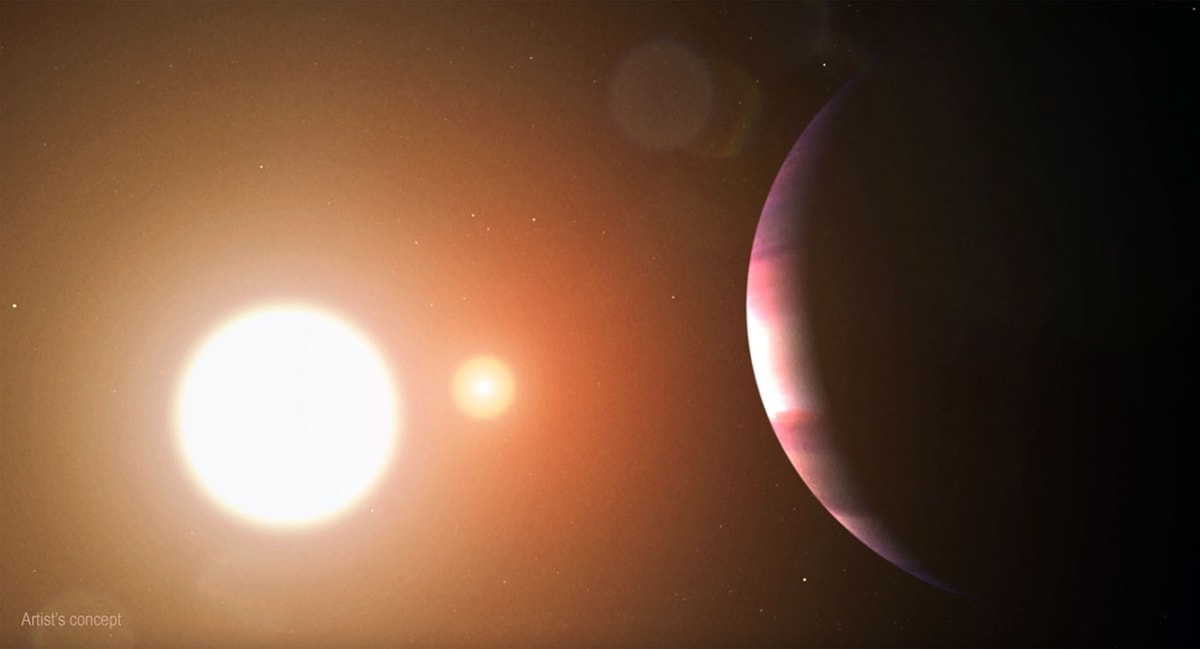
Scientists just discovered two dozen possible new worlds circling binary star systems using a clever new detection method. The find opens up a whole new way to spot planets that NASA's TESS satellite couldn't detect before.
NASA scientists just found 27 possible new planets orbiting around pairs of stars, and the discovery could change how we hunt for worlds beyond our solar system.
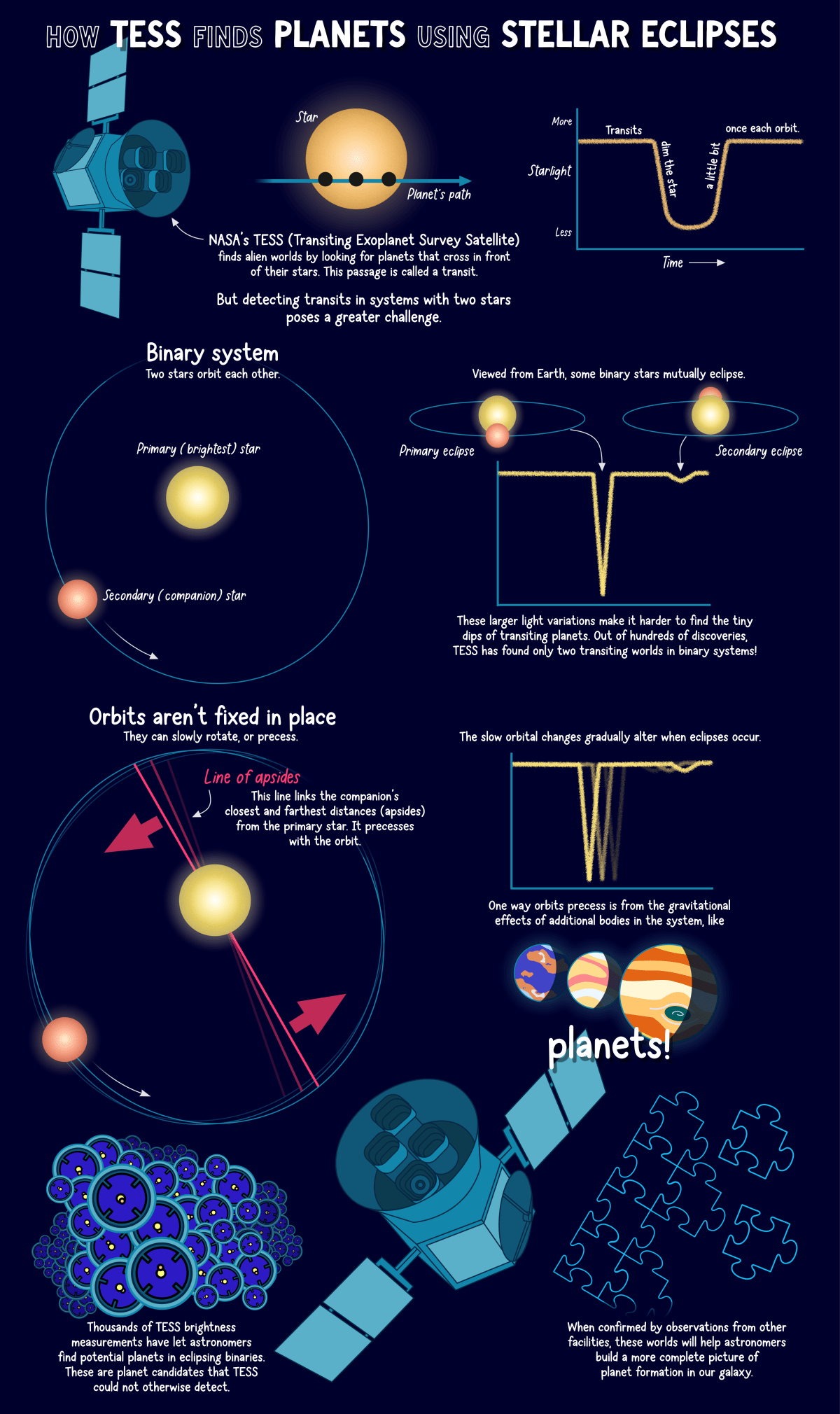
Researchers at the University of New South Wales developed a clever workaround for NASA's TESS satellite. Instead of only looking for planets that pass directly in front of their stars, they tracked tiny changes in the timing of when binary stars eclipse each other.
When a planet orbits two stars, its gravity tugs on them slightly, changing when the stars block each other from our view. By measuring these timing shifts across two years of data from 1,590 binary star systems, the team spotted 27 new candidate planets that TESS would have missed with its usual method.
This matters because it reveals something important about how planets form. Scientists have debated whether planets around binary stars mostly orbit in neat, flat paths or get stirred into tilted, chaotic orbits during formation. Finding planets that don't cross in front of their stars suggests the messy formation theory might be right.
The newly discovered worlds range wildly in size. The smallest might weigh just 12 times Earth's mass, while the largest could be 10 times heavier than Jupiter. Ground-based telescopes will need to confirm these planets by measuring how their gravity tugs on their host stars.
The Ripple Effect
TESS launched in 2018 to find planets that transit, or cross, in front of their stars. But the mission keeps proving it can do so much more. The same data astronomers use to spot planets also helps them study asteroids in our solar system and even distant galaxies powered by black holes.
Allison Youngblood, TESS project scientist at NASA's Goddard Space Flight Center, calls the mission's ongoing data collection "a treasure trove" for discoveries far beyond its original purpose. Before this study, scientists had only confirmed 18 planets around binary stars using the transit method.
You can join the search too through the Planet Hunters TESS project, where citizen scientists learn to read light data and spot signals from distant worlds.
Every new discovery method means more chances to answer humanity's oldest question: what other worlds are out there?
More Images

Based on reporting by NASA
This story was written by BrightWire based on verified news reports.
Spread the positivity!
Share this good news with someone who needs it