Hubble Finds First Black Hole in Omega Centauri Cluster
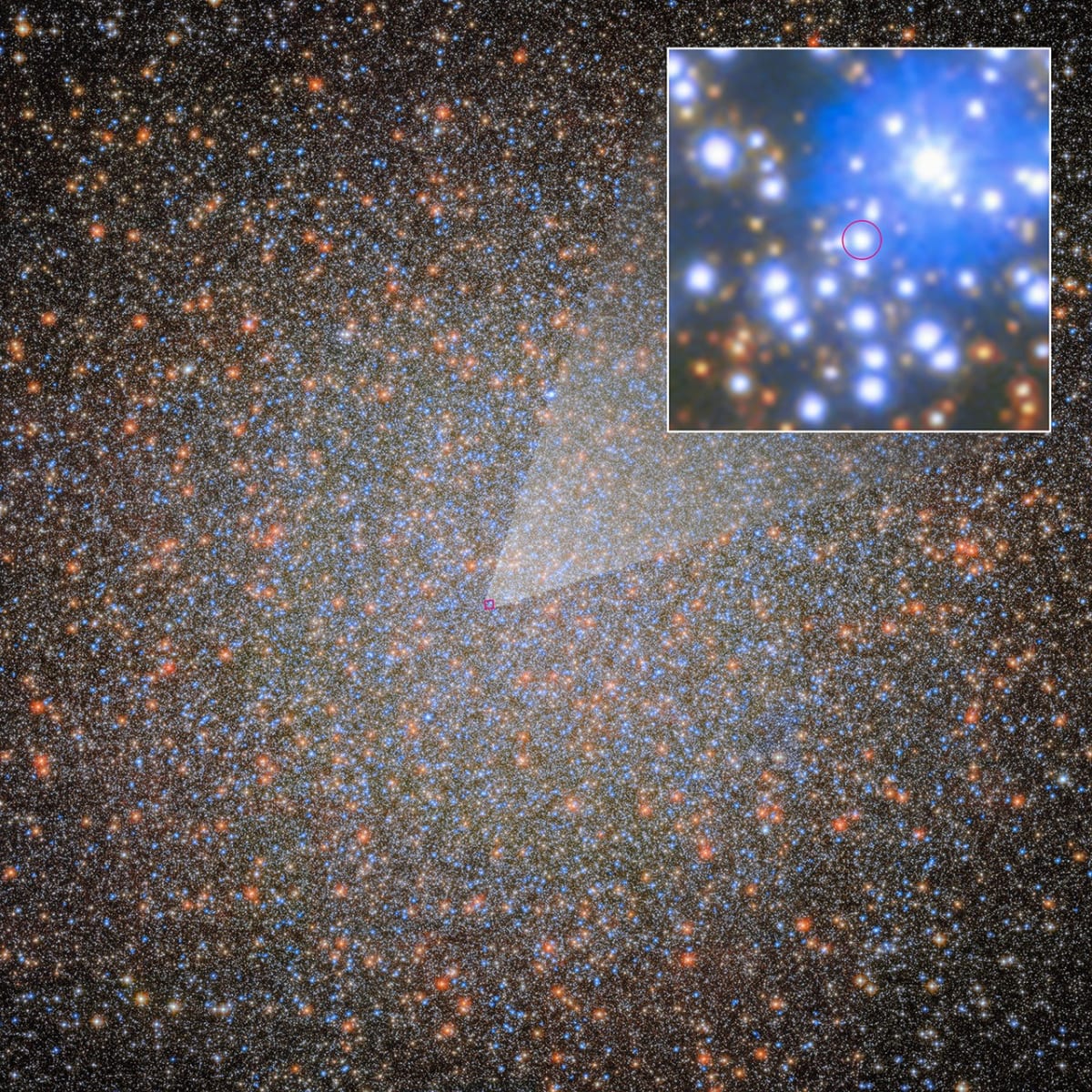
After decades of searching, astronomers finally discovered the first stellar-mass black hole in Omega Centauri, a massive star cluster that should contain thousands of them. Using 20 years of data from Hubble and Webb telescopes, scientists spotted a star orbiting an invisible object 4.46 times the mass of our sun.
Scientists just cracked a cosmic mystery that's puzzled astronomers for decades, and it could change how we understand black holes across the universe.
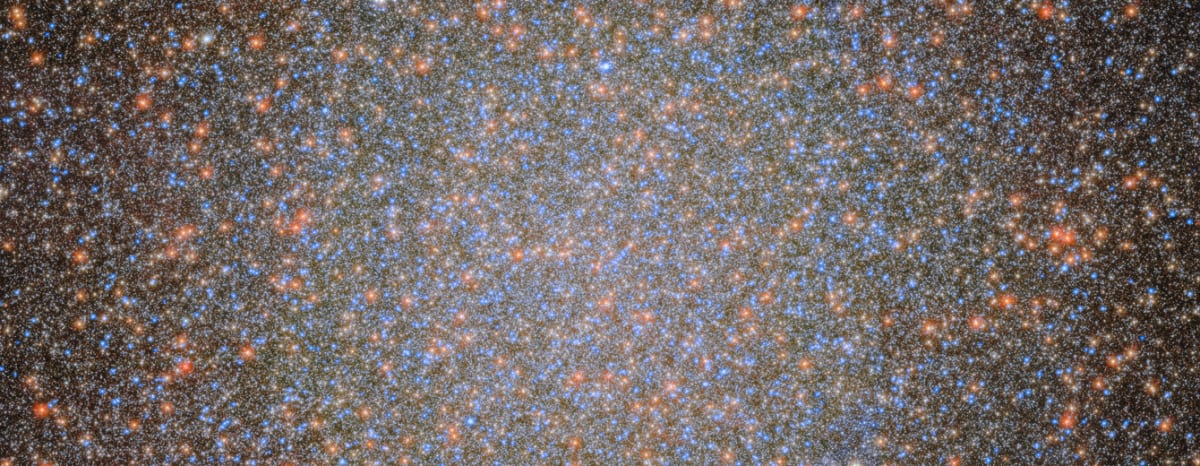
The massive star cluster Omega Centauri should be packed with roughly 10,000 black holes, leftovers from exploded stars that died billions of years ago. Despite years of searching, astronomers couldn't find a single one. Until now.
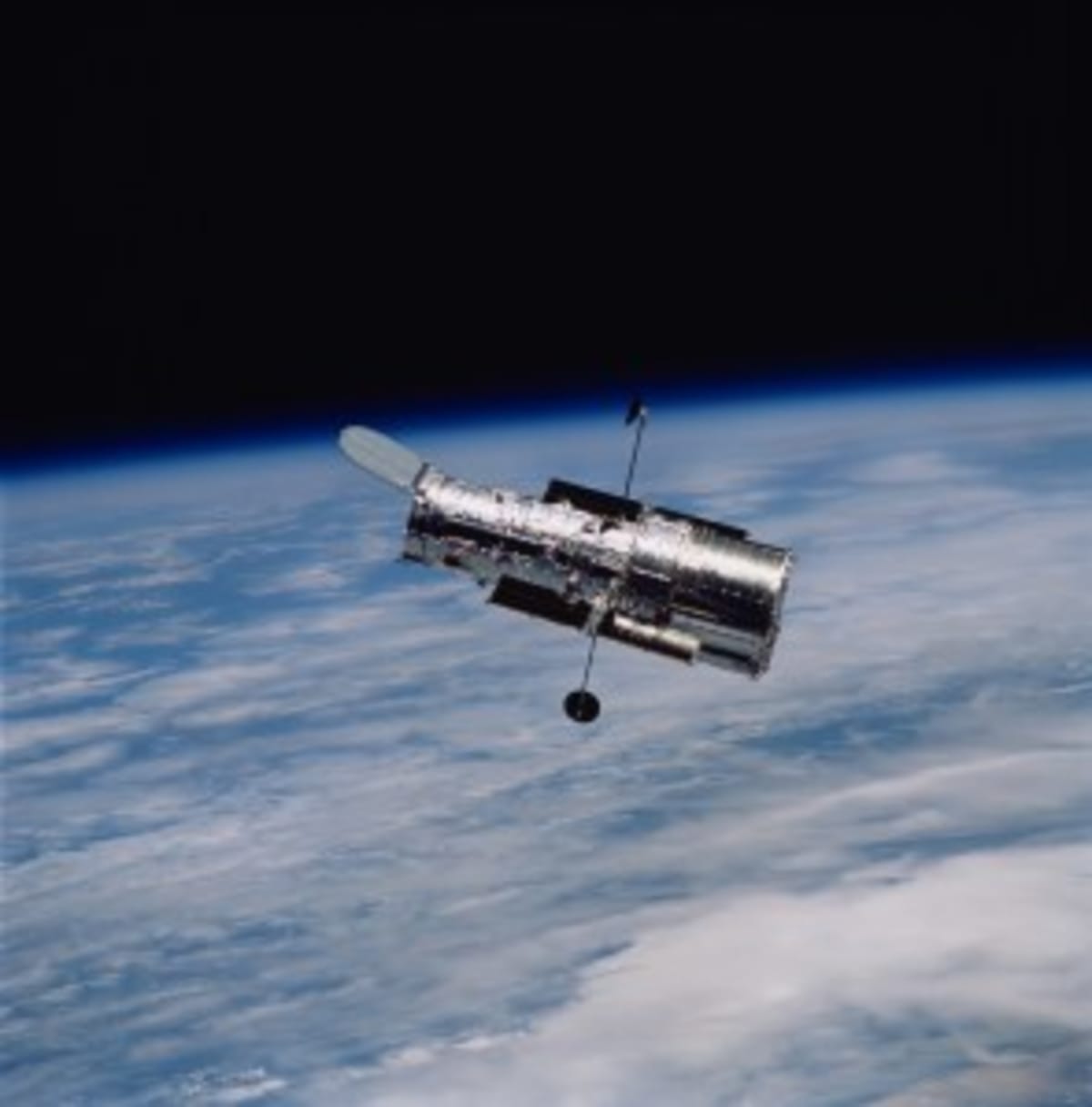
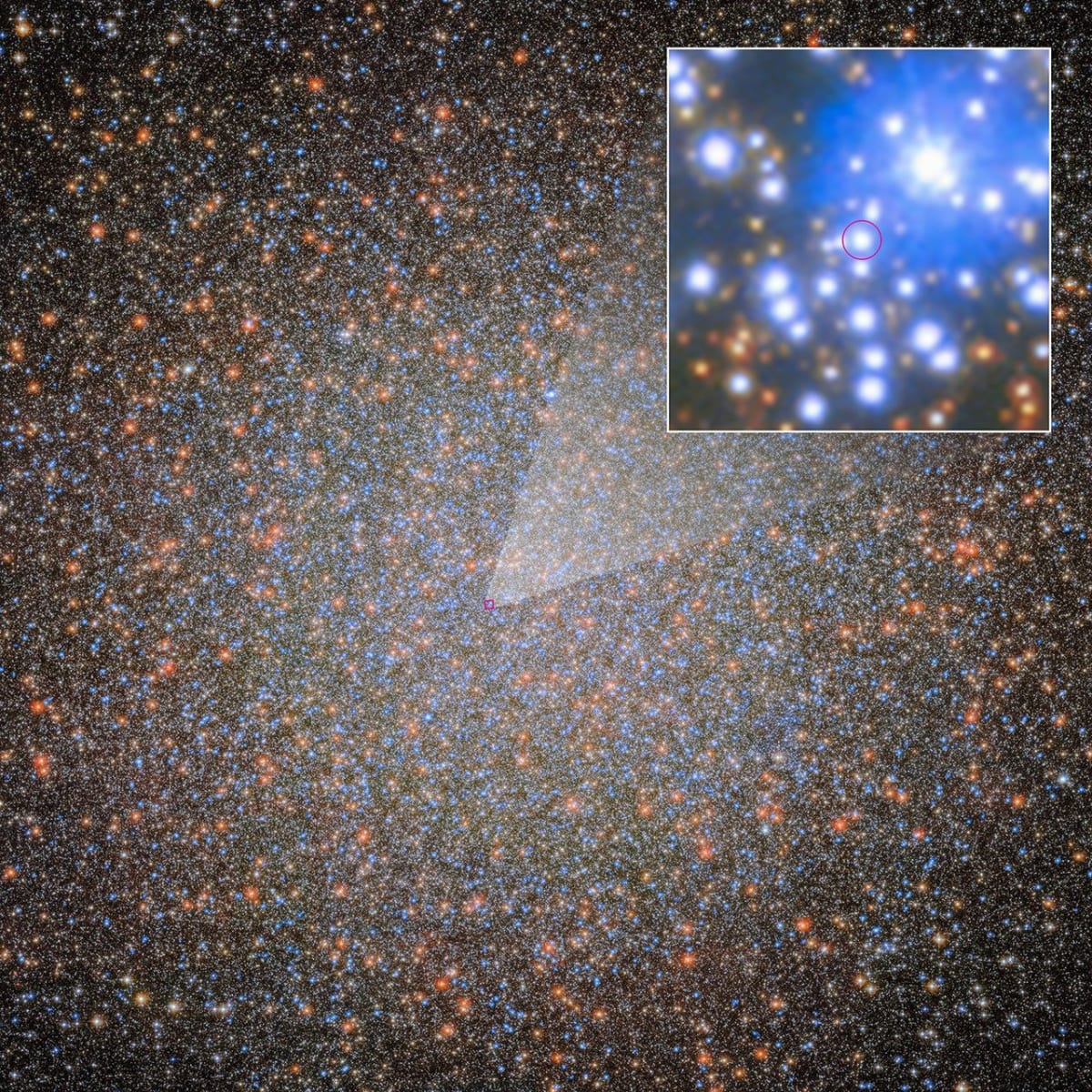
Using more than 20 years of archived data from NASA's Hubble Space Telescope and recent observations from the James Webb Space Telescope, a team from the University of Utah finally located the first stellar-mass black hole hiding in this cluster. They named it oMEGACat BH-2.
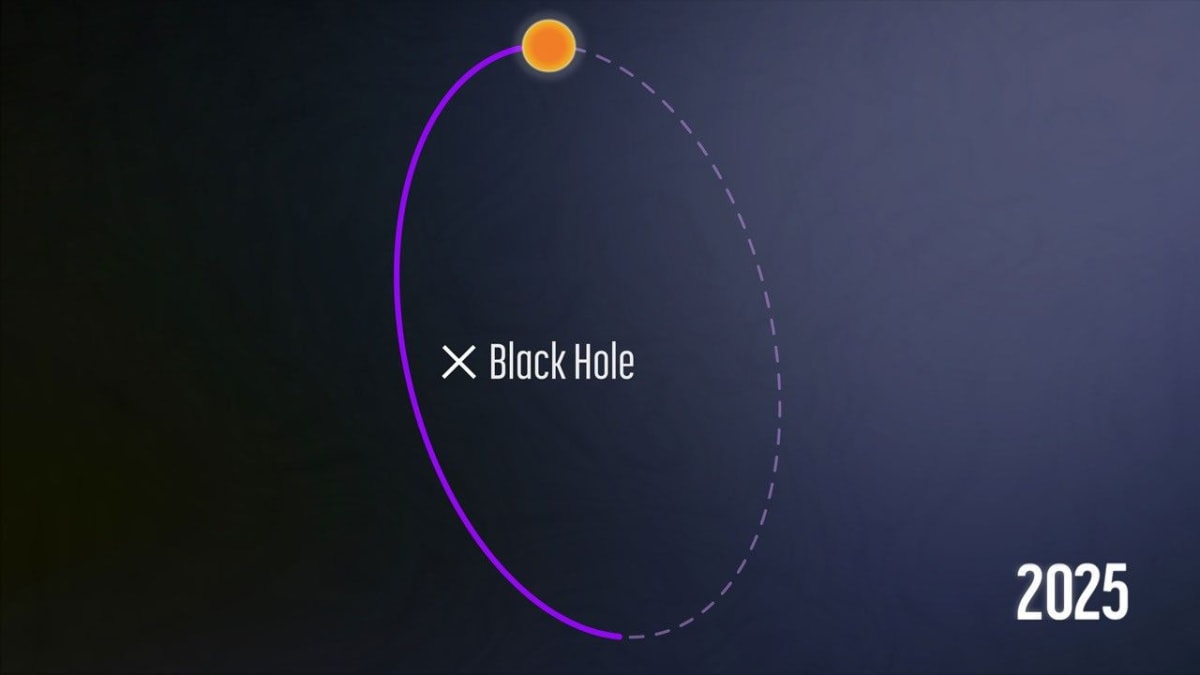
The discovery happened thanks to a clever technique called astrometry, which measures tiny movements of stars over time. Lead author Matthew Whitaker and his team tracked a star orbiting something invisible but incredibly massive, located 18,000 light-years from Earth in the dense heart of Omega Centauri.
"The precision of these measurements is incredible, down to a fraction of a pixel on Hubble and Webb's detectors," Whitaker said. "It would not have been possible to find this black hole without these two space telescopes."
The black hole weighs 4.46 times the mass of our sun and orbits with its companion star once every 94 years. That makes it the longest-period black hole binary system ever discovered.
The Ripple Effect
This single discovery opens doors scientists didn't even know existed. The black hole's surprisingly low mass challenges current theories about how black holes form in metal-poor environments like Omega Centauri.
"We now know that a metal-poor star is able to form a black hole like this, and we need to figure out how that happens," said coauthor Anil Seth. Understanding these systems helps scientists interpret gravitational waves, the ripples in spacetime created when black holes merge.
The team also determined that this star and black hole probably didn't start out together. They found each other dynamically within the crowded cluster, a cosmic dance that will only last less than a billion years before nearby stars tear them apart.
This breakthrough proves the missing black holes are out there waiting to be found. With Hubble and Webb, astronomers can now search for similar systems in Omega Centauri and other globular clusters across the galaxy.
The upcoming Nancy Grace Roman Space Telescope will make the hunt even easier, imaging crowded regions of space with Hubble-like resolution but with a much wider view. Thousands more hidden black holes could soon step into the light.
More Images
Based on reporting by NASA
This story was written by BrightWire based on verified news reports.
Spread the positivity!
Share this good news with someone who needs it