Hubble Finds Giant 'Chaotic' Planet Nursery 400B Miles Wide
NASA's Hubble telescope discovered the largest planet-forming disk ever seen, stretching 400 billion miles across with bizarre one-sided structures that could rewrite our understanding of how planets are born. The massive disk contains enough material to create multiple giant planets.
Astronomers just spotted something so strange in space that it might change everything we thought we knew about how planets form.
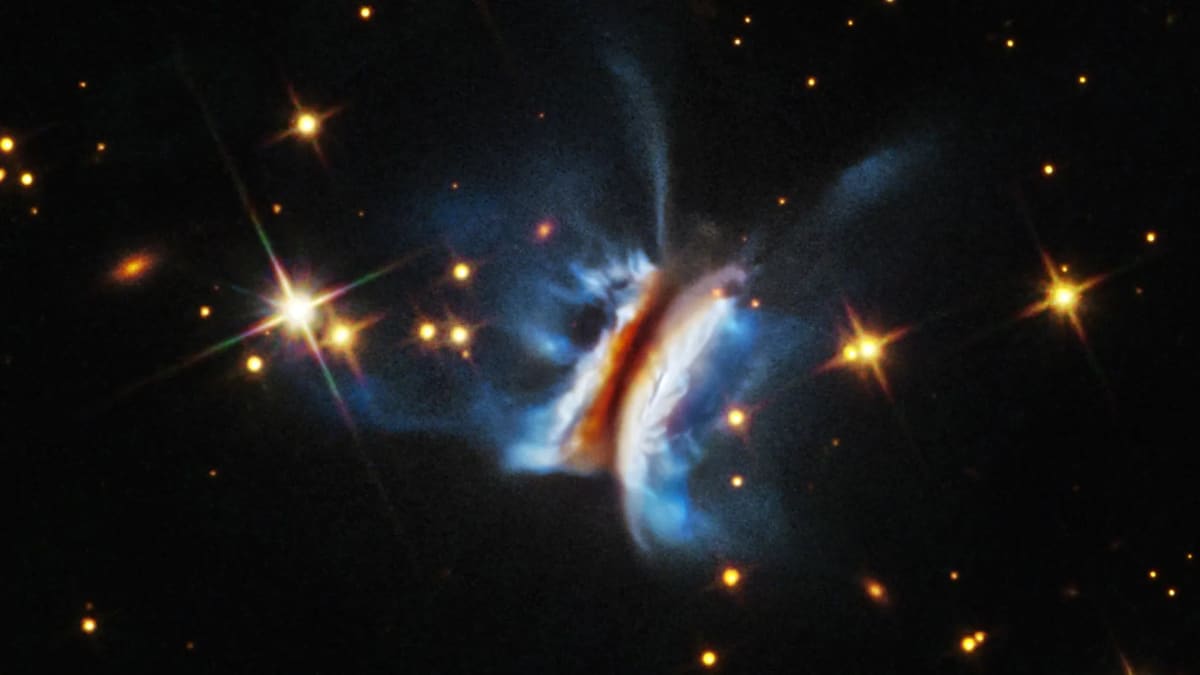
NASA's Hubble Space Telescope captured the most detailed images ever of a colossal planet nursery surrounding a young star 1,000 light-years away. The disk stretches nearly 400 billion miles across, making it 40 times wider than our entire solar system.
Scientists nicknamed the system "Dracula's Chivito" as a playful nod to the research team's diverse backgrounds. But there's nothing playful about what they found inside.
The disk appears wildly chaotic, with towering filaments of gas and dust swirling above and below it. Even stranger, these massive structures only appear on one side of the disk, while the other side looks perfectly smooth and defined.
"The level of detail we're seeing is rare in protoplanetary disk imaging," said lead researcher Kristina Monsch from the Center for Astrophysics at Harvard & Smithsonian. "Planet nurseries can be much more active and chaotic than we expected."
The lopsided appearance has scientists buzzing with theories. Fresh material might be falling into the disk from one direction, or the system could be interacting with its surrounding environment in ways researchers have never observed before.
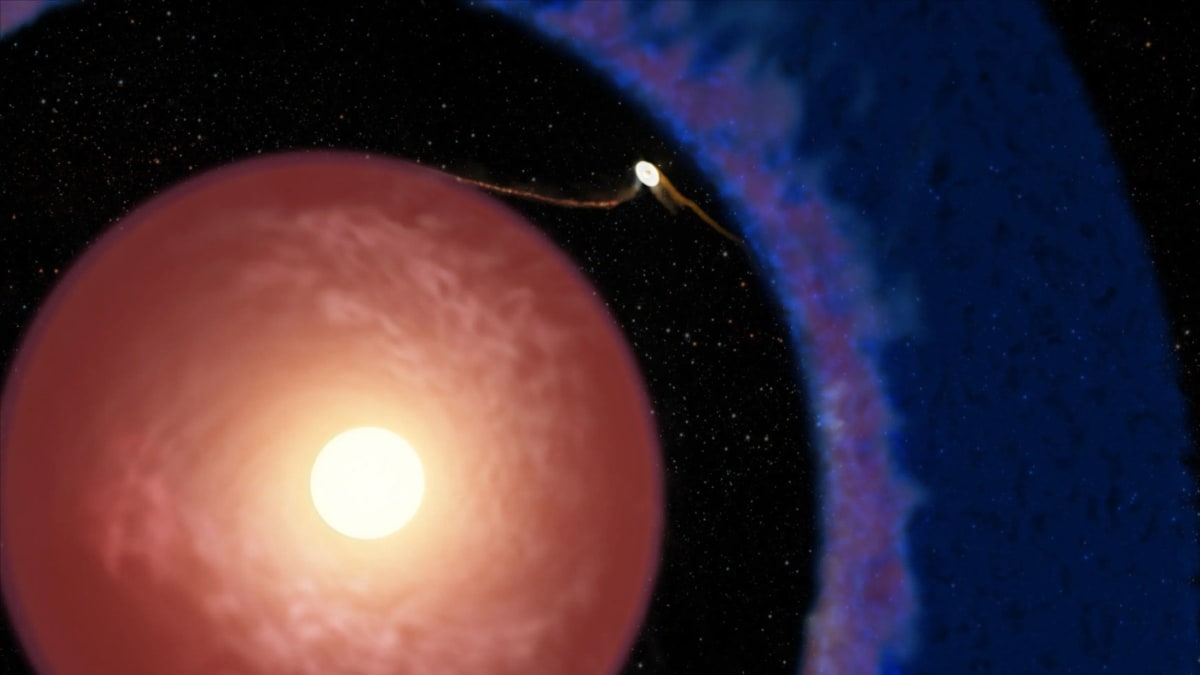
At the disk's center sits a young star buried under thick clouds of dust and gas. It could be a single massive star or possibly two stars orbiting each other, though the dust makes it hard to tell for certain.
Why This Inspires
This discovery reminds us that the universe still holds countless surprises waiting to be uncovered. The massive disk contains 10 to 30 times the mass of Jupiter, providing more than enough raw material to eventually form several giant planets.
Think of it as watching the messy, beautiful process of creation in real time. Somewhere in that swirling chaos, future worlds might be taking shape right now.
"In theory, this system could host a vast planetary system," Monsch explained. The disk might resemble an oversized version of our own early solar system, offering scientists a window into how Earth and its neighbors came to be.
The Hubble Space Telescope has been exploring the cosmos for over 30 years, and discoveries like this prove the aging observatory still has plenty of surprises to share. Working alongside newer tools like the James Webb Space Telescope, Hubble continues pushing the boundaries of what we know about the universe.
Scientists now have a brand new cosmic laboratory to study, full of questions about how planets form in extreme environments. Each answer brings us closer to understanding not just distant worlds, but our own origins as well.
Based on reporting by Science Daily
This story was written by BrightWire based on verified news reports.
Spread the positivity!
Share this good news with someone who needs it